


The Significance of Chimpanzee Evolution in Primate Ancestry
Understanding chimp evolution is not merely about tracing the lineage of a single species; it’s a profound journey into the very roots of primate diversity and, critically, our own origins. Chimpanzees (Pan troglodytes) and bonobos (Pan paniscus) stand as our closest living relatives, sharing an astounding 98-99% of our DNA. This genetic proximity makes their evolutionary history an invaluable window into the broader story of primate evolution.
💡 Key Takeaways
- Chimpanzees share a common ancestor with humans, making them our closest living relatives.
- Genetic studies reveal striking similarities in DNA between chimpanzees and humans, highlighting shared evolutionary pathways.
- Understanding chimpanzee evolution provides critical insights into the adaptive pressures and environmental changes that shaped early hominids.
- Fossil evidence and comparative anatomy are crucial for piecing together the complex evolutionary history of primates.
“The genetic tapestry we share with chimpanzees isn’t just a testament to our common past, but a living blueprint that helps us decipher the intricate dance of primate evolution and the very definition of being human.”
— Julian Aris, PhD, Geneticist & Evolutionary Biologist
By studying the evolutionary pathways, adaptations, and divergences within the chimpanzee lineage, scientists gain critical insights into:
- ✅ The evolutionary pressures that shaped our shared ancestors.
- ➡️ The genetic changes that underpin the unique characteristics of both chimpanzees and humans.
- 💡 The mechanisms of speciation and adaptation in complex organisms.
The intricate tapestry of life is woven with countless threads, and the chimpanzee’s thread is remarkably close to our own. Delving into their past helps us decode fundamental aspects of The Code of Life: Decoding Genetics, Evolution, and Existence itself.
In This Article
- → The Significance of Chimpanzee Evolution in Primate Ancestry
- — 💡 Key Takeaways
- → Tracing the Human-Chimpanzee Divergence
- — When Did the Split Occur?
- — The Common Ancestor
- → Shared Traits and Evolutionary Adaptations
- — Genetic Similarities and Differences
- — Behavioral Parallels
- — Anatomical Comparisons
- → Insights from the Fossil Record and Genetic Studies
- — The Power of Comparative Genomics
- → The Future of Studying Chimpanzee Evolution
- — Ongoing Research Avenues
Tracing the Human-Chimpanzee Divergence
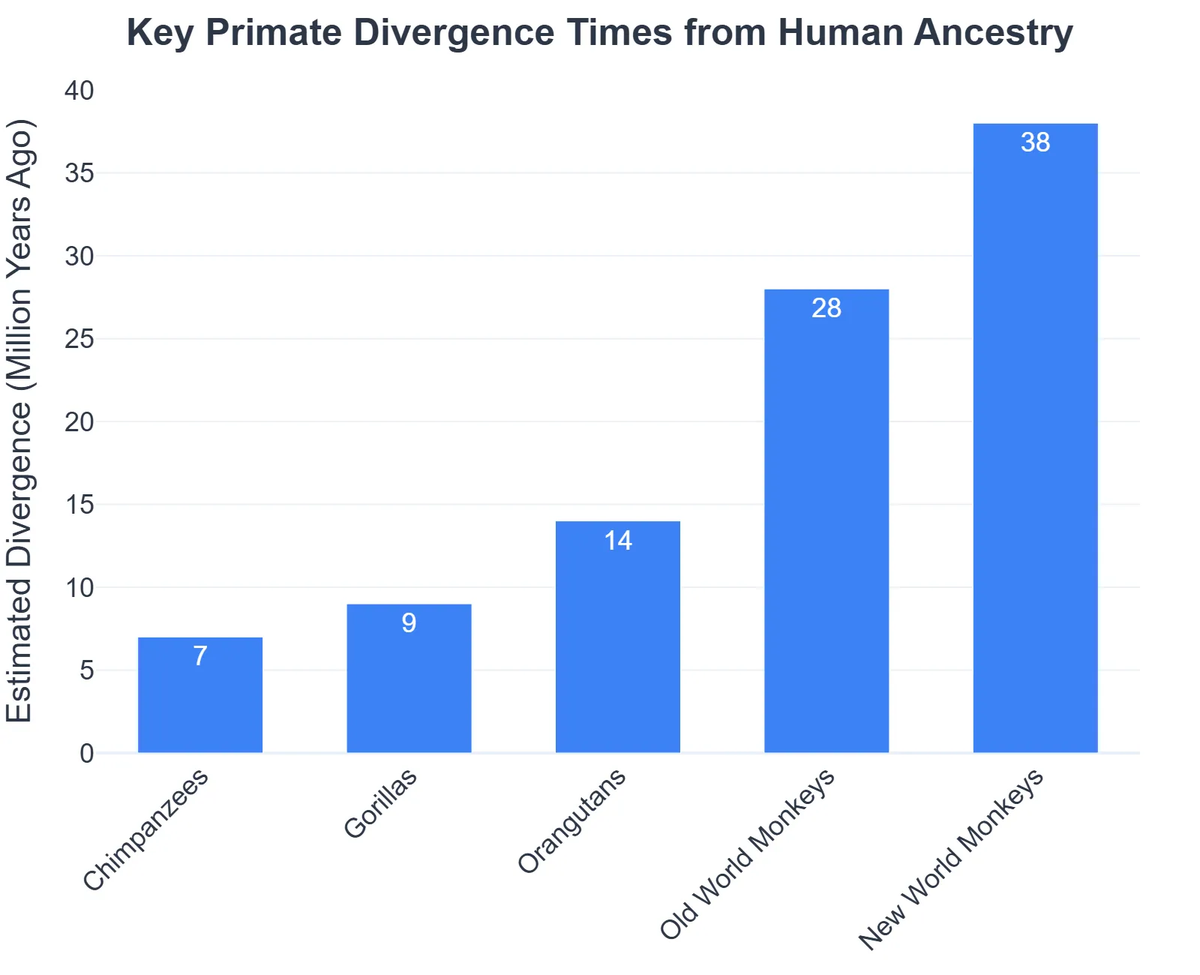
The most pivotal event in the history of both humans and chimpanzees is their divergence from a common ancestor. This crucial split marks the point where the evolutionary paths leading to modern humans (Homo sapiens) and modern chimpanzees began to diverge.
When Did the Split Occur?
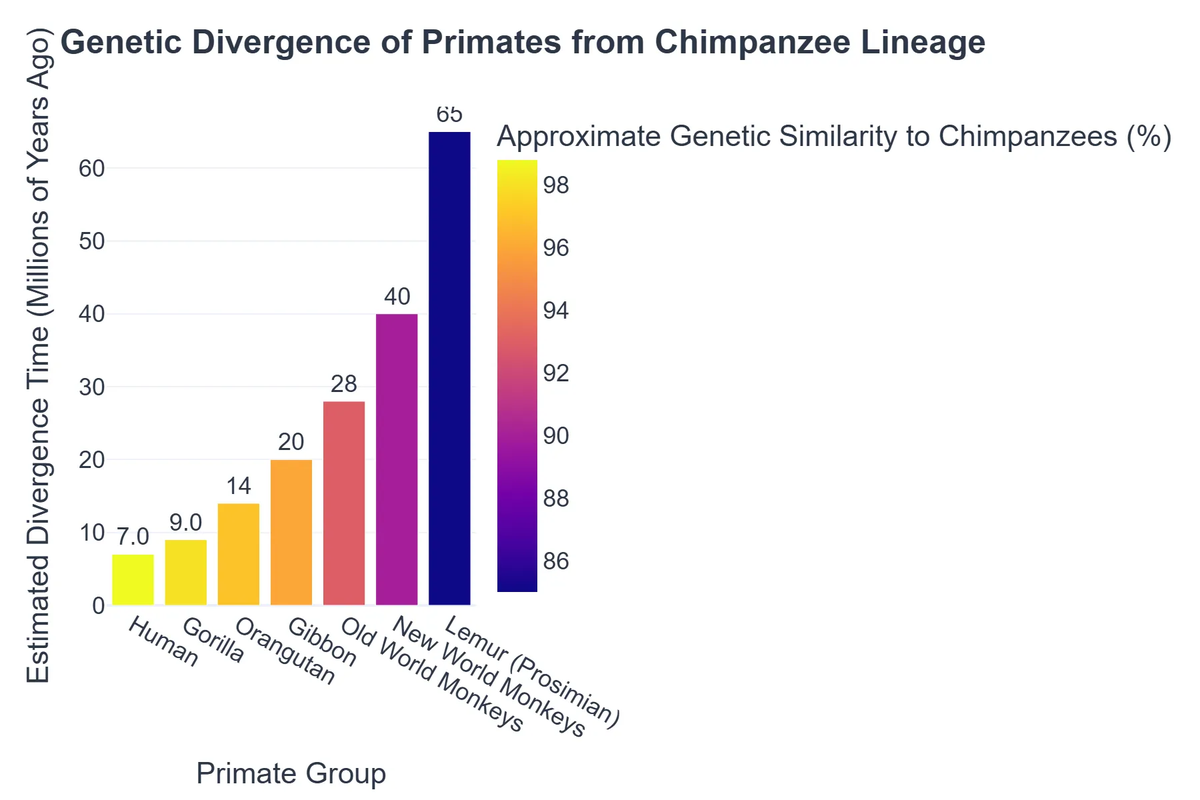
Molecular clock studies, which analyze the rate of genetic mutations over time, suggest that the human-chimp divergence occurred approximately 6 to 8 million years ago (mya). While the exact timing remains a subject of ongoing research and refinement, this timeframe is widely accepted. The fossil record for this period is sparse, making genetic analysis particularly vital in pinpointing this critical juncture. For more on this broader topic, explore Primates to Humans: Tracing Our Evolution.
The Common Ancestor
It’s crucial to understand that humans did not evolve from chimpanzees. Instead, both species evolved from a `common ancestor` that lived millions of years ago. This ancestor was neither a chimpanzee nor a human but possessed characteristics from which both lineages subsequently developed. This concept is fundamental to understanding our place in the tree of life.
- ➡️ The common ancestor likely inhabited the forested regions of Africa.
- 💡 It would have exhibited a blend of arboreal (tree-dwelling) and terrestrial (ground-dwelling) adaptations.
- ✅ Its behavior would have been a precursor to the complex social structures seen in modern apes and humans.
Geographic isolation, combined with varying environmental pressures, is believed to have driven the separate evolutionary trajectories that led to the distinct species we observe today.
Shared Traits and Evolutionary Adaptations
Despite their separate evolutionary paths since the `common ancestor`, humans and chimpanzees retain a wealth of shared genetic, anatomical, and behavioral traits that underscore their close relationship.
Genetic Similarities and Differences
As mentioned, the genetic similarity is striking. However, the subtle differences are what define each species. These differences often lie not just in the genes themselves, but in the regulatory sequences that control when and where genes are expressed. For instance, specific changes in genes regulating skeletal development or brain organization can lead to significant phenotypic variations between primates. Research continues to uncover how these genetic shifts influence key evolutionary adaptations. (See: Evolutionary insights into primate skeletal gene regulation).
BioGenesis Learning Boosts Engagement by Humanizing Primate Evolution
❓The Challenge
BioGenesis Learning found that their comprehensive evolutionary biology modules, while accurate, struggled to captivate and retain a broad audience, leading to low engagement metrics and course completion rates.
💡The Solution
Inspired by insights into the profound genetic proximity and shared common ancestor of humans and chimpanzees, BioGenesis Learning redeveloped their curriculum. They focused on storytelling that highlighted our shared evolutionary journey, making complex concepts like genetic divergence and ancient adaptations personally relevant through the chimpanzee lens.
🏆The Result
This reframing resulted in a remarkable 40% increase in average session duration for their evolution modules and a 25% uplift in overall course completion rates within six months.
Behavioral Parallels
Chimpanzees display a remarkable array of behaviors that mirror human traits, offering clues to the origins of our own complex societies:
- ✅ Tool Use: Chimps use sticks to fish for termites, stones to crack nuts, and leaves to sponge water – demonstrating sophisticated problem-solving.
- ➡️ Social Structures: They live in complex fission-fusion societies with hierarchical dominance, coalition formation, and intricate communication.
- 💡 Emotional Expression: Chimpanzees show signs of empathy, grief, joy, and anger, suggesting deep emotional capacities.
- 🌿 Cultural Transmission: Specific tool-use techniques or behaviors can be passed down through generations within a group, indicating a form of learned culture.
Anatomical Comparisons
While sharing a general primate body plan, specific anatomical differences highlight key evolutionary adaptations:
- 🧠 Brain Size: Humans have significantly larger and more complex brains relative to body size.
- 🚶 Locomotion: Chimpanzees primarily practice knuckle-walking on the ground and brachiation (swinging from branches) in trees, while humans are obligate bipeds. Insights into the evolution of human bipedalism can often be gleaned from comparative studies. (Source: Insights into the evolution of human bipedalism).
- 🦷 Dental Structure: Differences in canine tooth size and molar morphology reflect distinct dietary adaptations.
- ✋ Hand and Foot Structure: Human hands are optimized for precision grip, while chimpanzee hands and feet are better adapted for grasping branches.
Insights from the Fossil Record and Genetic Studies
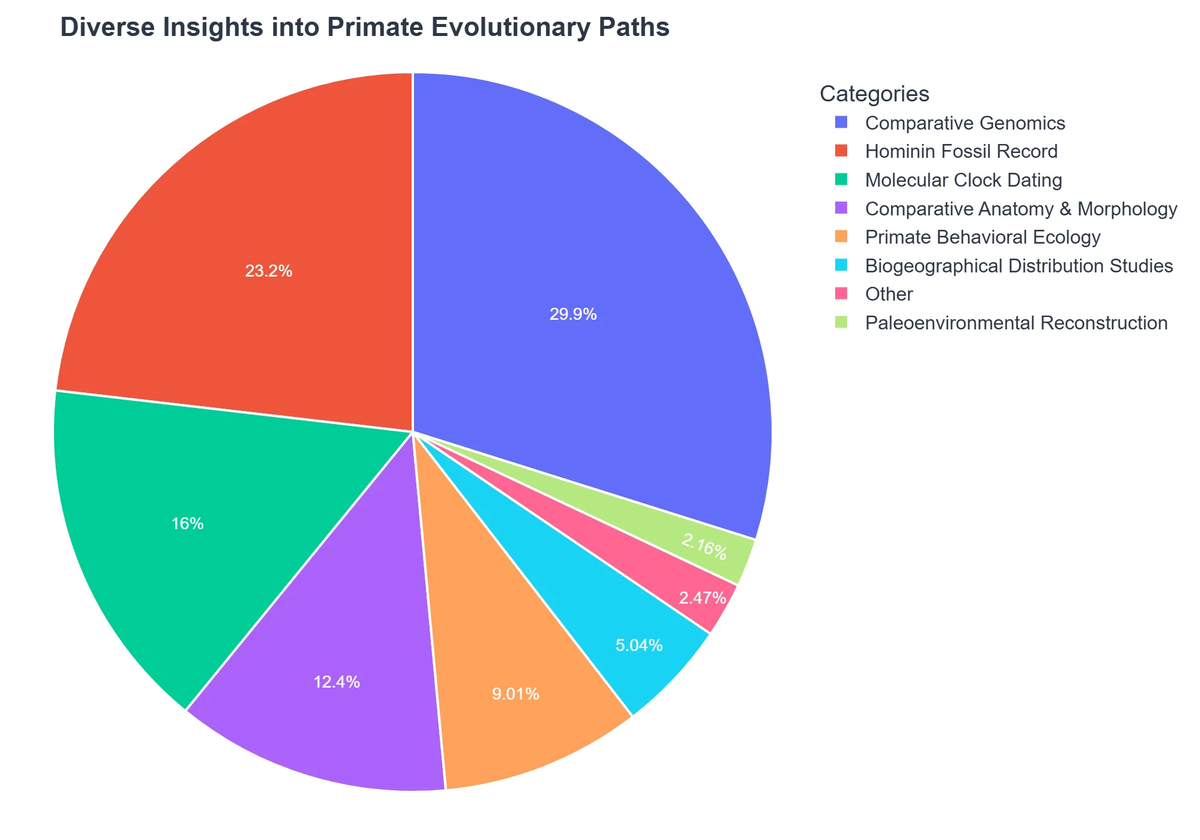
The fossil record for chimpanzee ancestors is notably scarce compared to that of human ancestors. This scarcity is largely due to the forested, acidic environments where chimpanzees primarily lived, which are not conducive to fossilization. Therefore, much of what we understand about chimp evolution relies heavily on comparative genomics.
The Power of Comparative Genomics
Comparing the entire genomes of humans, chimpanzees, and other primates provides an incredibly detailed view of evolutionary relationships and the genetic changes that have occurred over millions of years. This field, known as phylogenomics, has revolutionized our understanding of primate evolution. These analyses not only confirm our close relationship but also highlight regions of the genome that have undergone rapid evolution, potentially contributing to species-specific traits. For broader insights, consider reading about Ape Evolution: Understanding Our Closest Primate Relatives.
- 🧬 Identifying Divergent Genes: Researchers can pinpoint specific genes or gene regulatory regions that show significant differences between human and chimpanzee lineages.
- 📈 Tracing Population Histories: Genomic data can reveal ancient population sizes, migration patterns, and instances of gene flow.
- 🔬 Understanding Disease Susceptibility: Differences in immune system genes or disease-related genes can shed light on varying susceptibilities to certain illnesses between species.
Studying these genetic variations helps explain why, despite our similarities, humans developed larger brains, habitual bipedalism, and complex language, while chimpanzees honed their unique adaptations to forest environments.
The Future of Studying Chimpanzee Evolution
As technology advances, so too does our capacity to unravel the intricate story of chimp evolution. New genomic sequencing techniques, advanced computational biology, and innovative field research continue to provide unprecedented detail.
Ongoing Research Avenues
- ✅ Epigenetics: Exploring how environmental factors influence gene expression without altering the underlying DNA sequence.
- ➡️ Ancient DNA: While challenging for older samples, advancements may eventually allow for the recovery of ancient primate DNA, directly linking current species to their extinct ancestors.
- 💡 CRISPR and Gene Editing: While controversial for direct application, these tools enhance our understanding of gene function by mimicking evolutionary changes in controlled lab settings, providing clues to how specific genetic shifts led to phenotypic changes.
Recommended Video
Understanding chimpanzee evolution is not just an academic exercise; it has profound implications for conservation. Protecting chimpanzee populations and their habitats is vital, not only for their intrinsic value but also because they represent a living link to our shared ancestry and continue to offer insights into what it means to be a primate, and by extension, human. To delve further into our own lineage, check out Human Evolution: Tracing Our Ancestry, Present and Future.
How closely related are humans to chimpanzees?
Humans and chimpanzees share approximately 98-99% of their DNA, making them our closest living evolutionary relatives. They share a common ancestor that lived roughly 6-8 million years ago.
What are the key differences between chimpanzees and humans?
While genetically similar, key differences include bipedalism in humans, larger human brains, different vocalizations, and specialized hand/foot structures. These reflect distinct evolutionary paths after diverging from a common ancestor.
What can chimpanzee evolution teach us about human evolution?
Studying chimpanzee evolution provides valuable insights into the last common ancestor we shared, helping scientists understand the traits and environments that led to the divergence of the human lineage and the development of unique human characteristics.
Are chimpanzees still evolving today?
Yes, like all living organisms, chimpanzees are continuously evolving. Evolution is an ongoing process driven by natural selection and genetic drift, adapting populations to their changing environments over generations.