


Understanding Biodiversity Law: A Foundation for Environmental Protection
In an era defined by rapid environmental change, the deliberate protection of Earth’s diverse life forms is more critical than ever. This is where biodiversity law steps in – a complex yet vital framework of legal instruments, policies, and regulations designed to conserve biological diversity, promote its sustainable use, and ensure the equitable sharing of benefits arising from genetic resources. It acts as the backbone for safeguarding our planet’s invaluable natural heritage.
💡 Key Takeaways
- Biodiversity law establishes legal frameworks to protect species, habitats, and genetic diversity from human-induced threats.
- International agreements like the CBD are crucial, but effective implementation requires national legislation and enforcement.
- Challenges include balancing conservation with economic development, cross-border issues, and adapting to climate change impacts.
- Public awareness and interdisciplinary collaboration are vital for strengthening biodiversity law’s effectiveness globally.
“Biodiversity law isn’t just about preserving species; it’s about preserving the evolutionary potential of life itself. Every gene, every adaptation lost, closes a door on future solutions.”
— Julian Aris, PhD, Geneticist & Evolutionary Biologist
The scope of biodiversity law is expansive, touching upon:
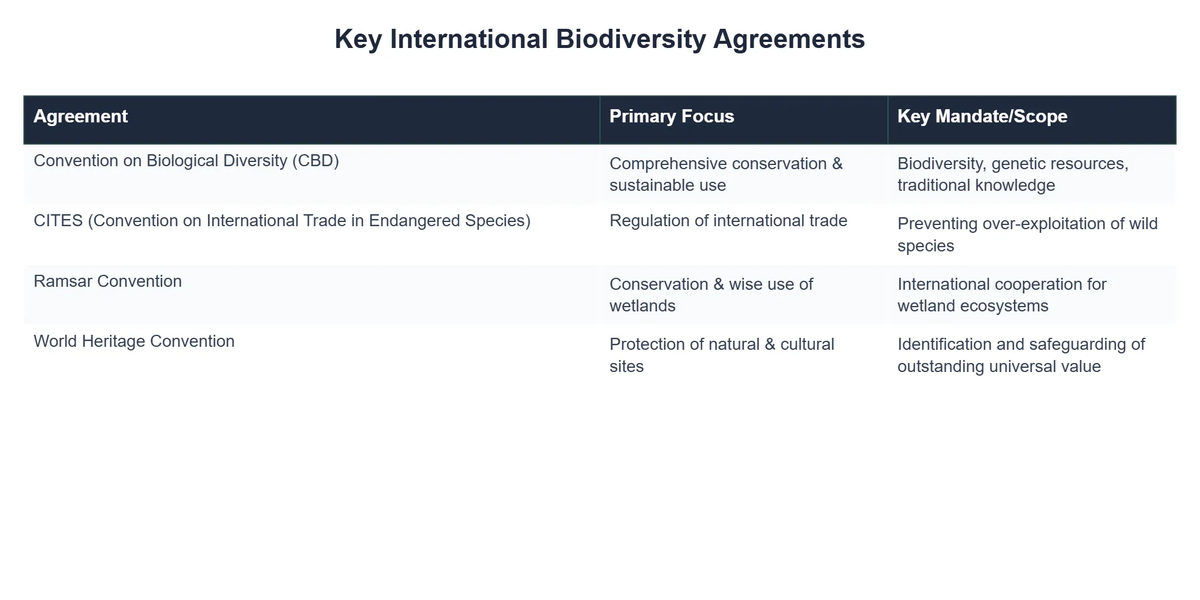
- ✅ Species Protection: Encompassing measures to prevent the extinction of threatened and endangered species, including their identification, listing, and recovery plans.
- ➡️ Habitat Preservation: Protecting critical ecosystems like forests, wetlands, coral reefs, and marine areas through the establishment of national parks, protected reserves, and wildlife sanctuaries.
- 💡 Sustainable Resource Use: Regulating activities such as fishing, logging, and agriculture to ensure they are conducted in a manner that does not deplete natural resources or degrade ecosystems.
- ⚖️ Access and Benefit-Sharing (ABS): Establishing rules for how genetic resources (from plants, animals, or microorganisms) are accessed and how the benefits derived from their use are shared fairly and equitably with the countries and indigenous communities that provide them.
- 🌐 Pollution Control: Addressing environmental pollution that harms biodiversity, including air, water, and soil contaminants.
Ultimately, biodiversity law is not just about protecting individual species; it’s about preserving the intricate web of life that sustains all existence and provides essential ecosystem services, from clean air and water to pollination and climate regulation. For a deeper understanding of the foundational elements of life, explore The Code of Life: Decoding Genetics, Evolution, and Existence.
In This Article
- → UnderstandingBiodiversity Law: A Foundation for Environmental Protection
- — 💡 Key Takeaways
- → Key International Frameworks Shaping GlobalNatural HeritageProtection
- → National Implementation: Translating Global Commitments into Local Action
- → Challenges and the Evolving Landscape of Biodiversity Legislation
Key International Frameworks Shaping Global Natural Heritage Protection
The global nature of biodiversity means that national efforts alone are insufficient. International cooperation and legally binding agreements are paramount to address cross-border environmental challenges and establish common standards for conservation. Several key treaties form the bedrock of international biodiversity law:
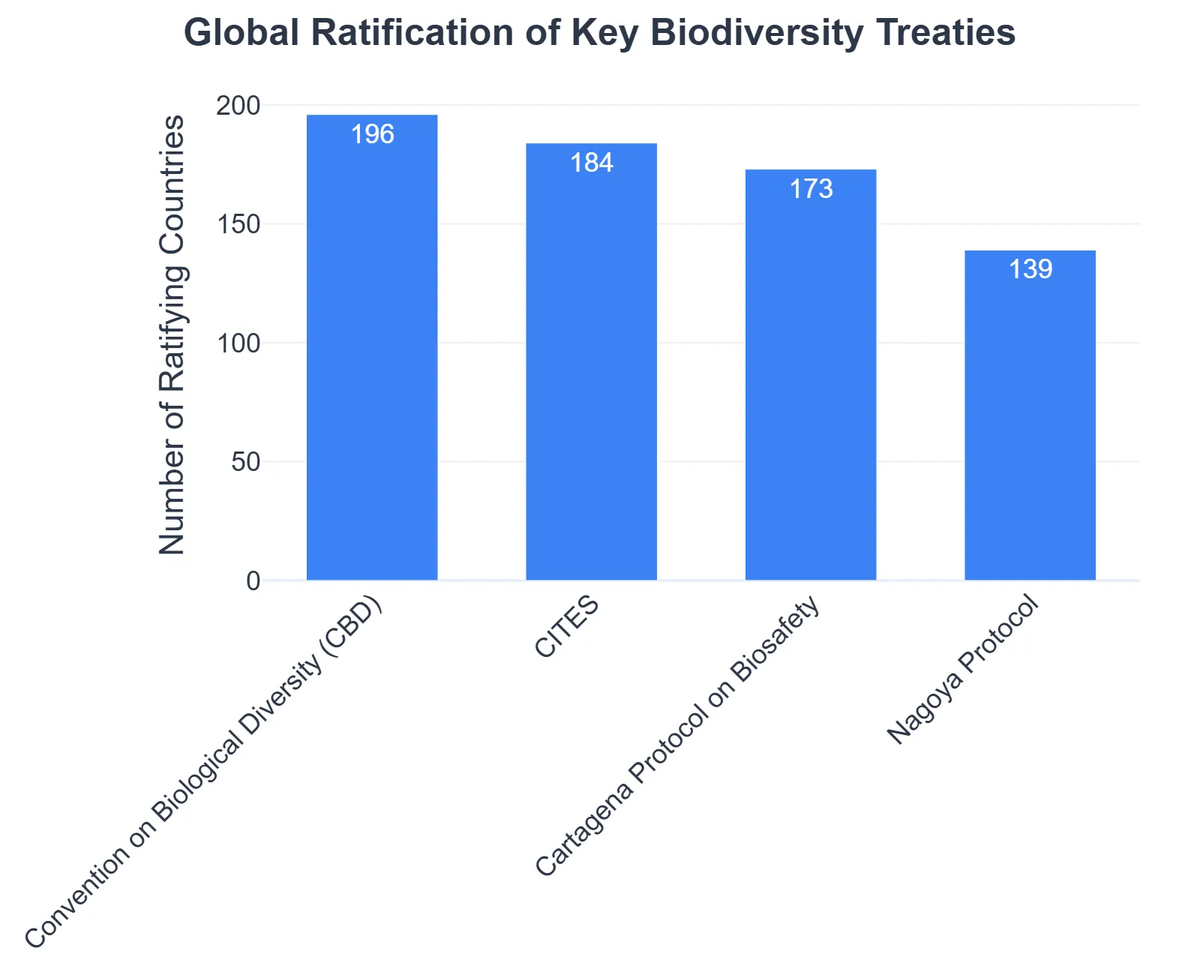
- ✅ Convention on Biological Diversity (CBD): Signed at the 1992 Earth Summit in Rio de Janeiro, the CBD is the most comprehensive international agreement on biodiversity. It has three main objectives: the conservation of biological diversity, the sustainable use of its components, and the fair and equitable sharing of benefits arising from the utilization of genetic resources. Its protocols, like the Cartagena Protocol on Biosafety and the Nagoya Protocol on Access and Benefit-Sharing, further elaborate on specific areas.
- ➡️ Convention on International Trade in Endangered Species of Wild Fauna and Flora (CITES): This agreement aims to ensure that international trade in specimens of wild animals and plants does not threaten their survival. It provides a legal framework for regulating trade in thousands of species listed in its appendices.
- 💡 Ramsar Convention on Wetlands: Focusing on the conservation and wise use of wetlands and their resources, this treaty recognizes the fundamental ecological functions of wetlands and their economic, cultural, scientific, and recreational value.
- 🌍 World Heritage Convention: While broader in scope, this convention identifies and protects natural (and cultural) sites of outstanding universal value, many of which are crucial biodiversity hotspots.
These treaties provide a framework, encouraging member states to develop national strategies and legislation to meet their obligations. Understanding these global efforts is key to appreciating the broader movement to protect life on Earth. To learn more about awareness initiatives, consider reading about International Biodiversity Day: Celebrating Earth’s Life.
National Implementation: Translating Global Commitments into Local Action
While international agreements set ambitious goals, the true impact of biodiversity law is felt at the national and local levels. Countries translate these global commitments into specific national laws, policies, and programs tailored to their unique ecological contexts and legal systems. This involves a multi-faceted approach:
EcoHarvest’s Biodiversity Law Compliance: From Risk to Market Leadership
❓The Challenge
EcoHarvest Sustainable Sourcing faced escalating risks of supply chain disruption and reputational damage due to the complex, evolving landscape of international biodiversity laws.
💡The Solution
By deeply integrating principles from the Convention on Biological Diversity (CBD) and the Nagoya Protocol on Access and Benefit-Sharing (ABS), EcoHarvest revamped its sourcing policies. They established rigorous due diligence for sustainable resource use and fair benefit distribution with local communities.
🏆The Result
This strategic shift led to a verifiable 98% compliance rate across their global suppliers and a 25% increase in consumer trust, directly boosting their sustainable product sales.
- ✅ Protected Areas Legislation: Many nations establish laws for the creation and management of national parks, wildlife reserves, marine protected areas, and other conservation zones. These laws often define permissible activities, management objectives, and enforcement mechanisms. For insights into governance and management, refer to this guide on Protected Area Governance and Management.
- ➡️ Species Protection Acts: Laws like the U.S. Endangered Species Act or similar legislation in other countries identify, list, and protect species at risk of extinction, prohibiting actions that harm them or their habitats.
- 💡 Environmental Impact Assessments (EIAs): Legislation often mandates EIAs for development projects to evaluate potential impacts on biodiversity and propose mitigation measures before projects proceed.
- ⚖️ Biosecurity Laws: Regulations are put in place to prevent the introduction and spread of invasive alien species, which pose a significant threat to native biodiversity.
- 🌱 Access and Benefit-Sharing (ABS) Laws: Nations develop their own legal frameworks to implement the principles of the Nagoya Protocol, regulating access to their genetic resources and ensuring fair benefit-sharing.
Effective national implementation requires strong political will, adequate funding, robust enforcement, and the active participation of diverse stakeholders, including indigenous peoples and local communities. For a deeper dive into how countries strategize, explore National Biodiversity Strategies: Protecting Life Within and Beyond Borders.
Recommended Video
Challenges and the Evolving Landscape of Biodiversity Legislation
Despite the existence of a comprehensive legal framework, biodiversity continues to face unprecedented threats, highlighting significant challenges in the implementation and enforcement of existing laws. Understanding these hurdles is crucial for future legislative efforts and effective conservation. Some primary challenges include:
- ✅ Enforcement Deficiencies: Gaps in monitoring, insufficient resources for enforcement agencies, and corruption can undermine the effectiveness of even well-crafted laws.
- ➡️ Conflicting Interests: Biodiversity conservation often clashes with economic development priorities, such as agriculture, infrastructure projects, and resource extraction, leading to political trade-offs.
- 💡 Climate Change Impacts: The rapid and unpredictable impacts of climate change on ecosystems and species often outpace the ability of static laws to adapt, necessitating more dynamic legal responses.
- ⚖️ Transboundary Issues: Many species migrate across borders, and pollution respects no boundaries, requiring complex international cooperation that can be difficult to achieve.
- 💰 Lack of Funding: Inadequate financial resources hinder conservation efforts, capacity building, and the implementation of ambitious conservation plans.
The legal landscape for biodiversity is also continually evolving to address new threats and emerging concepts. This includes discussions around digital sequence information (DSI) derived from genetic resources, the legal implications of synthetic biology, and the growing movement for the “Rights of Nature,” which advocates for legal standing for ecosystems themselves. Addressing Biodiversity Loss: Understanding Change and Drivers requires continuous adaptation and strengthening of legal instruments. The very fabric of life, as explored in The Code of Life: Decoding Genetics, Evolution, and Existence, is under pressure, and robust legal frameworks are paramount to its preservation.
What is biodiversity law?
Biodiversity law refers to the body of national and international legal instruments and policies aimed at conserving biological diversity, ensuring its sustainable use, and promoting the fair and equitable sharing of benefits arising from genetic resources.
Why is biodiversity protection important?
Protecting biodiversity is crucial because it underpins the ecosystem services essential for human survival, such as clean air and water, pollination, climate regulation, and food security, while also holding intrinsic value and evolutionary potential.
What are major international biodiversity agreements?
Key international agreements include the Convention on Biological Diversity (CBD), the Convention on International Trade in Endangered Species of Wild Fauna and Flora (CITES), and the Ramsar Convention on Wetlands.
How can individuals contribute to biodiversity conservation?
Individuals can contribute by supporting sustainable practices, reducing their ecological footprint, advocating for stronger environmental policies, participating in local conservation efforts, and educating themselves and others about biodiversity’s value.