

In This Article
- → The Indisputable Link: UnderstandingApes and Human Evolution
- — 💡 Key Takeaways
- — Dispelling the “Descended From Monkeys” Myth
- — The Concept of a Last Common Ancestor (LCA)
- → Unpacking theProof of Human Evolution from Apes
- — 💡 Fossil Evidence: Stones That Speak Volumes
- — 🧬 Genetic Insights: Our Shared DNA Blueprint
- — 💪 Anatomical Similarities: Echoes in Our Bones
- → Key Evolutionary Adaptations in Hominins
- — Bipedalism: The Upright Advantage
- — Brain Expansion and Cognitive Development
- — Tool Use and Cultural Complexity
- → Major Hominin Discoveries Shaping Our Understanding
- — Lucy (Australopithecus afarensis)
- — Ardi (Ardipithecus ramidus)
- — Turkana Boy (Homo erectus)
- → The Ongoing Journey ofHuman Evolution
The Indisputable Link: Understanding Apes and Human Evolution
The relationship between apes and human evolution is one of the most fascinating and often misunderstood chapters in our species’ history. Far from a linear progression, it’s a complex story of shared ancestry, divergence, and remarkable adaptation. Understanding this link is fundamental to grasping the full scope of The Human Enigma: Unlocking the Secrets of Our Body and Mind.
💡 Key Takeaways
- Humans share a common ancestor with great apes, not directly evolving from modern-day apes.
- Genetic evidence overwhelmingly supports the close evolutionary relationship between humans and chimpanzees/bonobos.
- Key anatomical and cognitive differences arose during human evolution, such as bipedalism and complex language.
- Studying primate behavior provides critical insights into the roots of human social structures and cognitive abilities.
“Our primate past isn’t just a biological footnote; it’s a living echo within our neurology, profoundly shaping our unique human potential and our capacity for innovation and connection.”
— Dr. Eleanor Vance, PhD, Cognitive Neuroscientist & Human Potential Researcher
Dispelling the “Descended From Monkeys” Myth
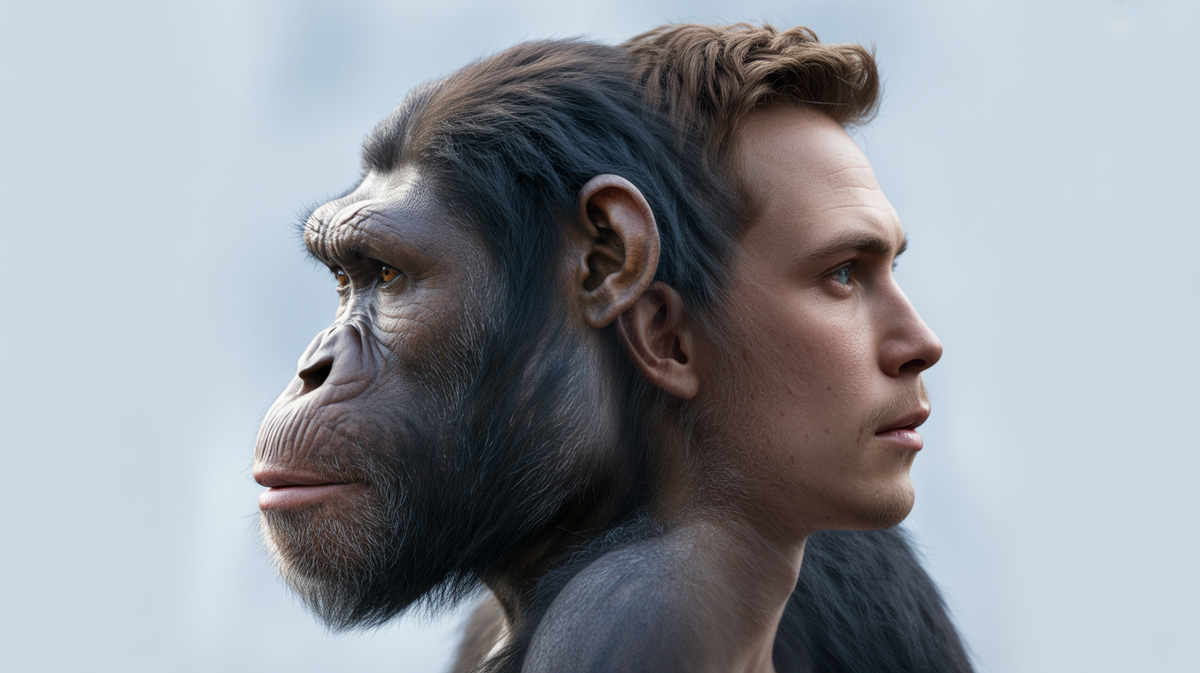
One of the most common misconceptions is that humans evolved directly from modern monkeys or apes. This isn’t accurate. Instead, humans and great apes (chimpanzees, bonobos, gorillas, and orangutans) share a last common ancestor (LCA) that lived millions of years ago. Imagine a family tree: humans and modern apes are like cousins, not direct descendants of each other. Our evolutionary paths diverged from a shared primate ancestor, leading to the diverse forms we see today.
The Concept of a Last Common Ancestor (LCA)
The LCA was a primate species from which both the lineage leading to modern humans and the lineages leading to modern great apes independently evolved. While we don’t have a complete fossil record of this exact ancestor, evidence from comparative anatomy, genetics, and paleontology strongly supports its existence. This ancestor likely possessed a blend of traits, some ape-like and some more ancestral primate characteristics, that allowed for the subsequent diversification into different hominin and ape branches. For more on this, check out Human Evolution: Did We Evolve From Apes?.
Unpacking the Proof of Human Evolution from Apes
The evidence supporting our shared ancestry with apes is robust and multifaceted, providing undeniable proof of human evolution from apes. It comes from various scientific disciplines, painting a comprehensive picture of our past.
Apes and Human Evolution: A Balanced Perspective
Pros
- ✔Provides strong scientific evidence for common ancestry.
- ✔Deepens understanding of human biology, behavior, and disease.
- ✔Aids in primate conservation by highlighting shared genetic heritage.
- ✔Offers insights into fundamental evolutionary processes and adaptation.
Cons
- ✖Can be misinterpreted as humans evolving directly from modern apes.
- ✖Raises complex ethical considerations regarding primate research.
- ✖Challenges some traditional beliefs, leading to societal controversy.
- ✖Complex scientific data is often oversimplified or sensationalized in public discourse.
💡 Fossil Evidence: Stones That Speak Volumes
- ✅ Hominin Fossils: Discoveries like “Lucy” (Australopithecus afarensis) and “Ardi” (Ardipithecus ramidus) provide critical insights into early bipedalism and other human-like features emerging millions of years ago. These fossils showcase a mosaic of ape and human traits, demonstrating transitional forms.
- ➡️ Geographical Distribution: Most early hominin fossils are found in Africa, supporting the “Out of Africa” theory, which posits Africa as the cradle of human evolution. For further reading, consider Out of Africa: Discovering Our Shared Human Family.
- 💡 Dating Techniques: Advanced radiometric dating techniques allow scientists to accurately determine the age of these fossils, creating a precise timeline of evolutionary changes.
🧬 Genetic Insights: Our Shared DNA Blueprint
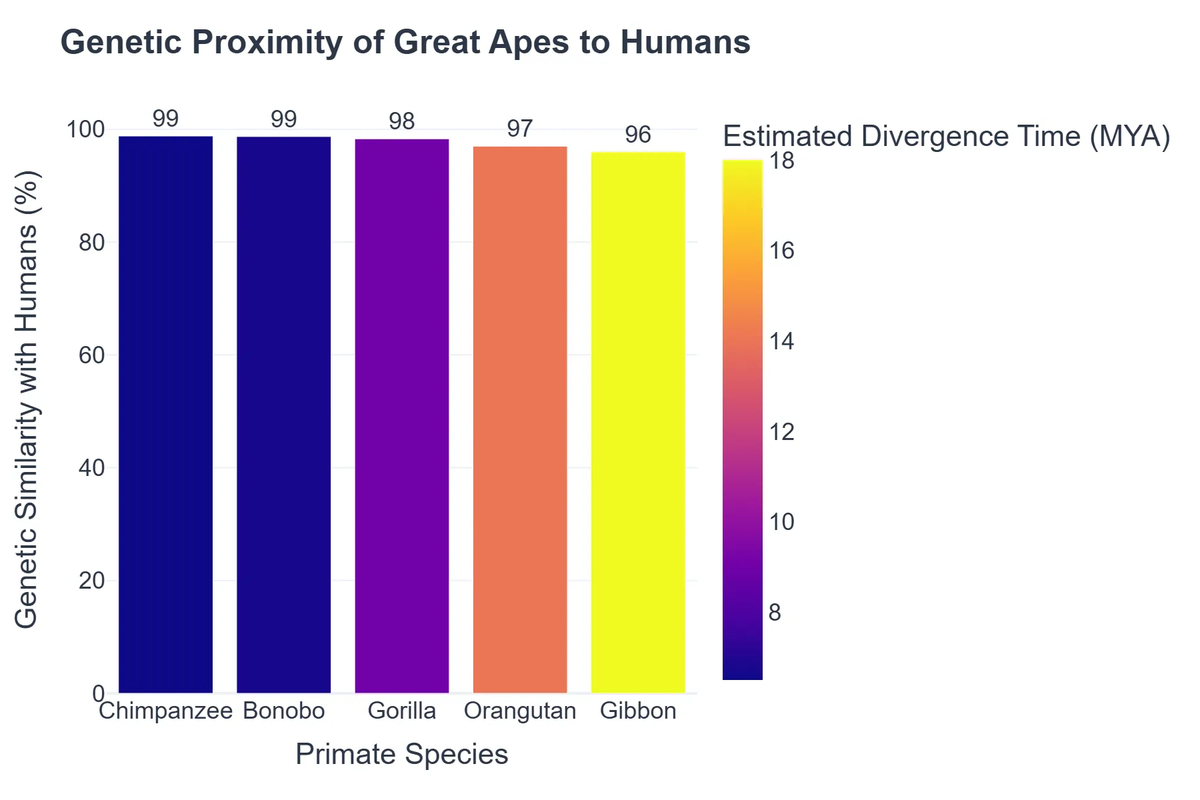
- ✅ DNA Similarity: Humans share approximately 98-99% of their DNA with chimpanzees, our closest living relatives. This remarkably high genetic similarity is a powerful indicator of recent shared ancestry.
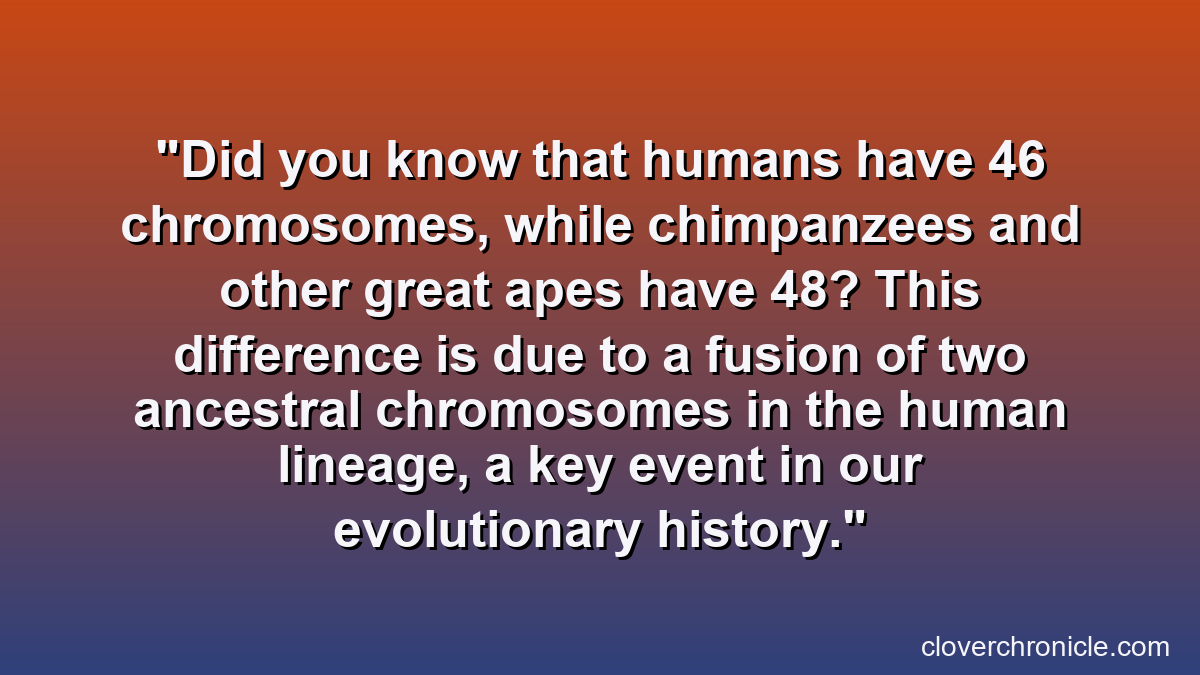
- ➡️ Chromosomal Fusion: Humans have 46 chromosomes, while great apes have 48. Genetic studies have revealed that human chromosome 2 is a result of the fusion of two separate chromosomes that remain distinct in other primate species. This fusion event is strong genetic evidence of our common lineage.
- 💡 Endogenous Retroviruses (ERVs): ERVs are viral DNA sequences that have become integrated into the host genome. Identical ERV insertions at the same chromosomal locations in humans and apes provide compelling evidence of a common ancestor because such insertions are rare and highly unlikely to occur independently in separate lineages. The analysis of primate genomes, like the Rhesus monkey, further illuminates these differences and similarities, as noted by NIH research.
💪 Anatomical Similarities: Echoes in Our Bones
- ✅ Skeletal Structure: Despite obvious differences, the basic skeletal structure of humans and apes is remarkably similar, particularly in the limbs, hands, and feet. This homologous structure points to a common evolutionary origin.
- ➡️ Dental Patterns: The number and types of teeth, as well as their development patterns, show clear similarities between humans and apes, diverging only in specific adaptations related to diet.
- 💡 Brain Structure: While human brains are significantly larger and more complex, the fundamental architecture and organization of the brain are shared with great apes, especially in areas responsible for higher cognitive functions.
Key Evolutionary Adaptations in Hominins
The journey from our last common ancestor to modern humans was marked by several critical adaptations that set the hominin lineage apart. These transformations were pivotal in defining what it means to be human.
Bipedalism: The Upright Advantage
Perhaps the most defining characteristic of early hominins was the development of obligate bipedalism – walking habitually on two legs. This adaptation is evident in:
- ✅ Pelvic Structure: A broader, bowl-shaped pelvis in hominins compared to the narrower, elongated pelvis of quadrupedal apes.
- ➡️ Foramen Magnum: The hole at the base of the skull where the spinal cord connects. In bipedal hominins, it’s positioned more centrally underneath the skull, allowing the head to balance directly on top of the spine.
- 💡 Foot Structure: The development of arches in the foot and a non-opposable big toe, optimized for propulsion rather than grasping branches.
Bipedalism offered numerous advantages, including freeing the hands for carrying objects and tool use, improved long-distance travel efficiency, and better heat regulation in open environments.
Brain Expansion and Cognitive Development
Over millions of years, there was a significant increase in hominin brain size and complexity, particularly in the neocortex, leading to enhanced cognitive abilities. This expansion is linked to:
- ✅ Problem-Solving: The capacity for abstract thought, planning, and complex decision-making.
- ➡️ Language Development: The emergence of sophisticated communication systems.
- 💡 Social Learning: The ability to learn from others and transmit knowledge across generations, contributing to cumulative culture.
Tool Use and Cultural Complexity
The development and refinement of tool-making traditions, starting with simple stone tools (Oldowan) and progressing to more complex forms (Acheulean, Mousterian), mark a significant leap in hominin ingenuity. This wasn’t merely about using existing objects, but modifying them to achieve specific tasks. This cultural complexity is a hallmark of our evolving intelligence and adaptability.
Major Hominin Discoveries Shaping Our Understanding
Paleoanthropological discoveries continue to redefine our understanding of human evolution, providing tangible links to our ancestral past. These fossils offer compelling proof of human evolution from apes.
Lucy (Australopithecus afarensis)
Discovered in Ethiopia in 1974, Lucy is one of the most famous hominin fossils. Dating back approximately 3.2 million years, her remarkably complete skeleton provided definitive evidence of early bipedalism, even while retaining some tree-climbing adaptations. Lucy stands as a powerful testament to the transitional forms in our evolutionary journey. You can explore more on our collective journey with Human Evolution: Tracing Our Ancestral Journey.
Ardi (Ardipithecus ramidus)
Unearthed in Ethiopia over several years and fully described in 2009, “Ardi” represents an even older hominin, dating back 4.4 million years. Her discovery challenged previous assumptions about our earliest ancestors, suggesting a more generalized locomotion – capable of both bipedal walking on the ground and climbing trees. Ardi provides crucial insights into the very early stages of bipedalism, closer to the LCA. Her significance was highlighted as Science’s Breakthrough of the Year.
Turkana Boy (Homo erectus)
Discovered near Lake Turkana in Kenya in 1984, this almost complete skeleton of a 1.6-million-year-old Homo erectus boy offered unprecedented insights into the body proportions, growth patterns, and overall anatomy of an early human ancestor. Turkana Boy’s tall, slender build was well-suited for long-distance walking and running, marking a significant step towards modern human body form.
Recommended Video
The Ongoing Journey of Human Evolution
Our understanding of apes and human evolution is constantly evolving as new fossil discoveries and genetic analyses emerge. It’s a dynamic field, continually refining the narrative of our shared ancestry. From the earliest bipedal hominins to the emergence of modern Homo sapiens, the story of human evolution is a testament to natural selection, adaptation, and the remarkable journey of life on Earth. The intricate connections we share with our primate relatives continue to reveal profound truths about who we are and where we come from.
For a deeper exploration into the timeline of our ancestors, consider reading Ape to Human Evolution Timeline: Charting Primate Ancestry.
Are humans descended from apes?
Humans did not descend from modern-day apes. Instead, humans and apes share a common ancestor that lived millions of years ago, with both lineages evolving separately since then.
What is the closest living relative to humans?
Genetically, the closest living relatives to humans are chimpanzees and bonobos, sharing approximately 98-99% of our DNA.
What is the significance of the shared DNA between humans and apes?
The high percentage of shared DNA underscores our common evolutionary origin and provides compelling evidence for evolution, helping scientists trace the lineage and identify key genetic changes that led to human characteristics.
How do scientists study human-ape shared ancestry?
Scientists use various methods, including genetic sequencing, fossil records (paleoanthropology), comparative anatomy, and behavioral studies of living primates, to piece together the evolutionary puzzle.