


In the vast, enigmatic theater of the cosmos, few phenomena capture the imagination quite like black holes. These regions of spacetime exhibit such strong gravitational effects that nothing—not even particles or electromagnetic radiation like light—can escape from inside their event horizon. But what happens when two of these cosmic behemoths find themselves locked in an eternal gravitational embrace? Enter the binary black hole.
💡 Key Takeaways
- Binary black holes are systems of two black holes orbiting a common center of mass.
- Their mergers produce powerful gravitational waves, detectable on Earth by observatories like LIGO.
- Studying these systems provides crucial data on extreme gravity, the expansion of the universe, and cosmic evolution.
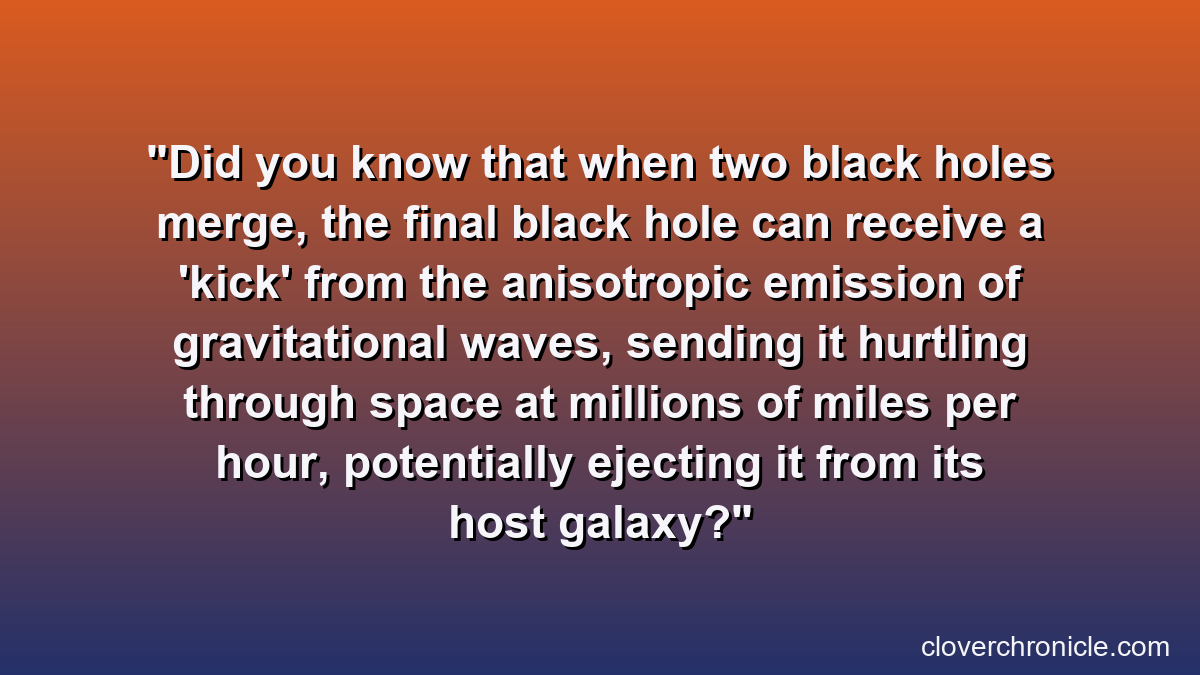
- The final product of a merger is a single, more massive black hole, often with a significant ‘recoil’ velocity.
“Binary black holes aren’t just astrophysical marvels; they’re nature’s grandest waltz, teaching us how gravity can bend reality and echo across the cosmos. It’s the ultimate cosmic show.”
— Astrid Bellweather, Astrophysicist & Science Fiction Consultant
These fascinating systems are not merely theoretical constructs; they are increasingly observed realities that offer unprecedented insights into the most extreme environments in the universe, the nature of gravity itself, and the grand tapestry of cosmic evolution. Prepare to delve into the captivating world of binary black holes, where cosmic dances reshape the very fabric of reality.
In This Article
- — 💡 Key Takeaways
- → What Exactly Are Binary Black Holes?
- — 🌌 Defining the Cosmic Duo
- — Types of Binary Black Hole Systems
- → The Genesis of a Cosmic Dance: How Binary Black Holes Form
- — 💫 Stellar Evolution and Mergers
- — Galactic Encounters and Supermassive Pairs
- → Witnessing the “Dance”: Orbital Mechanics and Gravitational Waves
- — ⚛️ The Warping of Spacetime
- — LIGO and the Symphony of the Cosmos
- → Detecting the Undetectable: Observational Evidence
- — 🔭 Multi-Messenger Astronomy
- — Electromagnetic Signatures (Indirect Evidence)
- → Why Binary Black Holes Matter: Scientific Significance
- — Understanding Gravity in Extremes
- — Cosmic Evolution and Galaxy Formation
- → Conclusion: A Universe of Unfolding Mysteries
What Exactly Are Binary Black Holes?
At its core, a binary black hole system consists of two black holes orbiting a common center of mass. Much like binary star systems, these pairs are gravitationally bound, perpetually circling each other in a celestial waltz that can span millions, even billions, of years.
🌌 Defining the Cosmic Duo
- ✅ Gravitational Pairing: Two distinct black holes that are gravitationally bound, meaning they orbit each other.
- ✅ Shared Center of Mass: They don’t orbit a fixed point in space, but rather a point between them, determined by their respective masses.
- ✅ Vast Distances: While they are “close” in cosmic terms, the separation between the black holes can range from light-seconds to light-years, depending on their stage of evolution.
Types of Binary Black Hole Systems
While the concept is singular, binary black holes manifest in different forms, largely categorized by their mass:
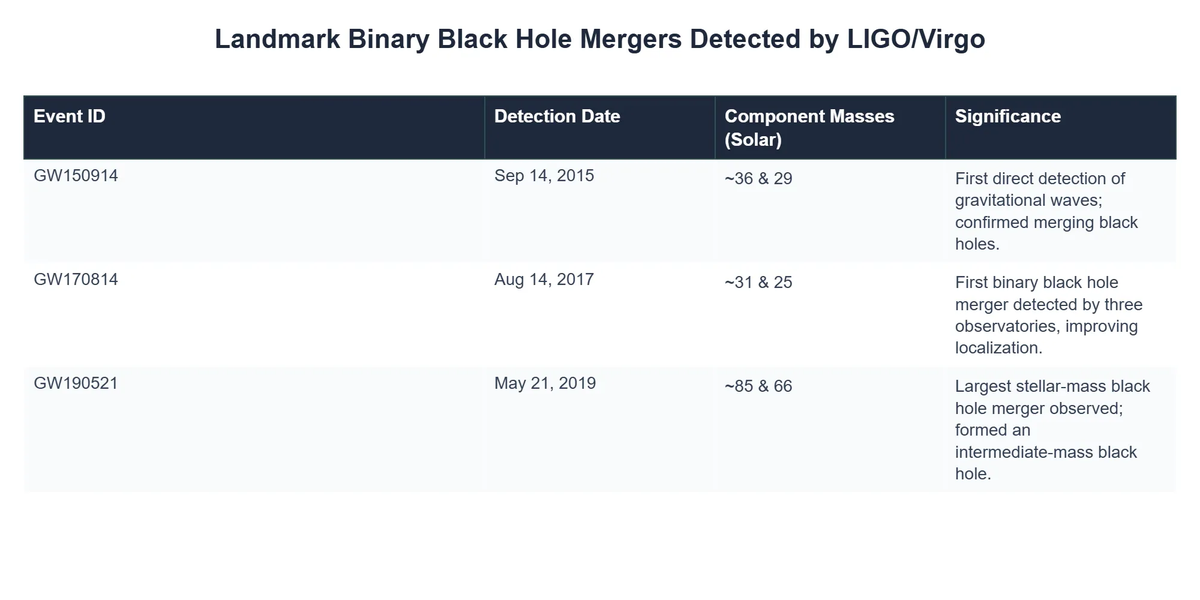
- ➡️ Stellar-Mass Binary Black Holes: These are formed from the remnants of massive stars. When two massive stars in a binary system both exhaust their fuel and undergo supernova explosions, they can collapse into black holes, which then continue to orbit each other. The discovery of such systems through Binary Black Holes: When Cosmic Giants Collide has revolutionized our understanding.
- ➡️ Supermassive Binary Black Holes: Found at the hearts of galaxies, these colossal entities can have masses millions or even billions of times that of our Sun. Such binaries typically form when two galaxies merge, bringing their central Supermassive Black Holes: Cosmic Giants Explained into a gravitational embrace.
- ➡️ Mixed Binaries: Less common but still possible, these systems involve one stellar-mass black hole and one supermassive black hole, or even a black hole orbiting a neutron star.
The Genesis of a Cosmic Dance: How Binary Black Holes Form
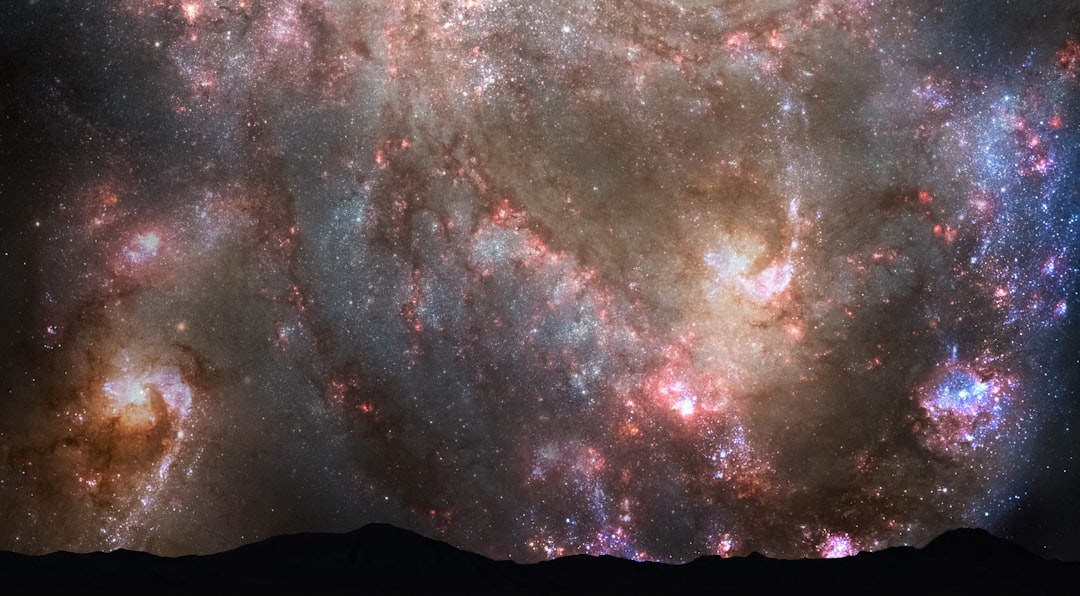
The formation pathways for binary black holes are as diverse as the universe itself, involving processes that unfold over cosmic timescales and often culminate in spectacular events.
💫 Stellar Evolution and Mergers
The primary route for stellar-mass binary black holes begins with massive binary star systems. Imagine two colossal stars, born together, orbiting each other. As these stars reach the end of their lives:
- 💡 Each star will expand into a red supergiant.
- 💡 They will eventually undergo supernova explosions, leaving behind stellar remnants.
- 💡 If the initial stars were massive enough (typically >20-30 solar masses), their remnants will collapse directly into black holes.
- 💡 The resulting two black holes continue their orbital dance, gradually spiraling inward over immense periods.
This process is theorized to be the source of many of the gravitational wave events detected by observatories like LIGO.
Galactic Encounters and Supermassive Pairs
For supermassive binary black holes, the story is grander still, tied to the evolution of entire galaxies:
- ✅ Galaxy Mergers: When two galaxies collide and merge, their central supermassive black holes eventually sink to the new galaxy’s core.
- ✅ Gravitational Drag: Through a process called dynamical friction, the black holes lose orbital energy as they interact with surrounding gas and stars, drawing them closer.
- ✅ Inspiraling Duo: Over millions of years, they form a bound pair, spiraling closer and closer until they eventually merge, producing an even larger supermassive black hole. Researchers are actively observing such processes, with discoveries of titanic black holes locked in a cosmic embrace at the heart of galaxies. For instance, observations have shown colossal black holes locked in a dance at the heart of galaxy as reported by Caltech News.
Witnessing the “Dance”: Orbital Mechanics and Gravitational Waves
The “cosmic dance” of binary black holes is far from a silent ballet. It’s a violent, energetic spectacle that warps the very fabric of reality, sending ripples across the universe.
⚛️ The Warping of Spacetime
According to Einstein and Black Holes: Theory of Relativity’s Cosmic Legacy, massive objects warp the spacetime around them. When two black holes orbit each other, this warping becomes dynamic. As they spiral inward, accelerating and gaining speed, they generate incredibly powerful ripples in spacetime known as gravitational waves.
- 💡 Energy Loss: The emission of gravitational waves carries away energy from the binary system, causing the black holes to lose orbital energy and spiral even closer together.
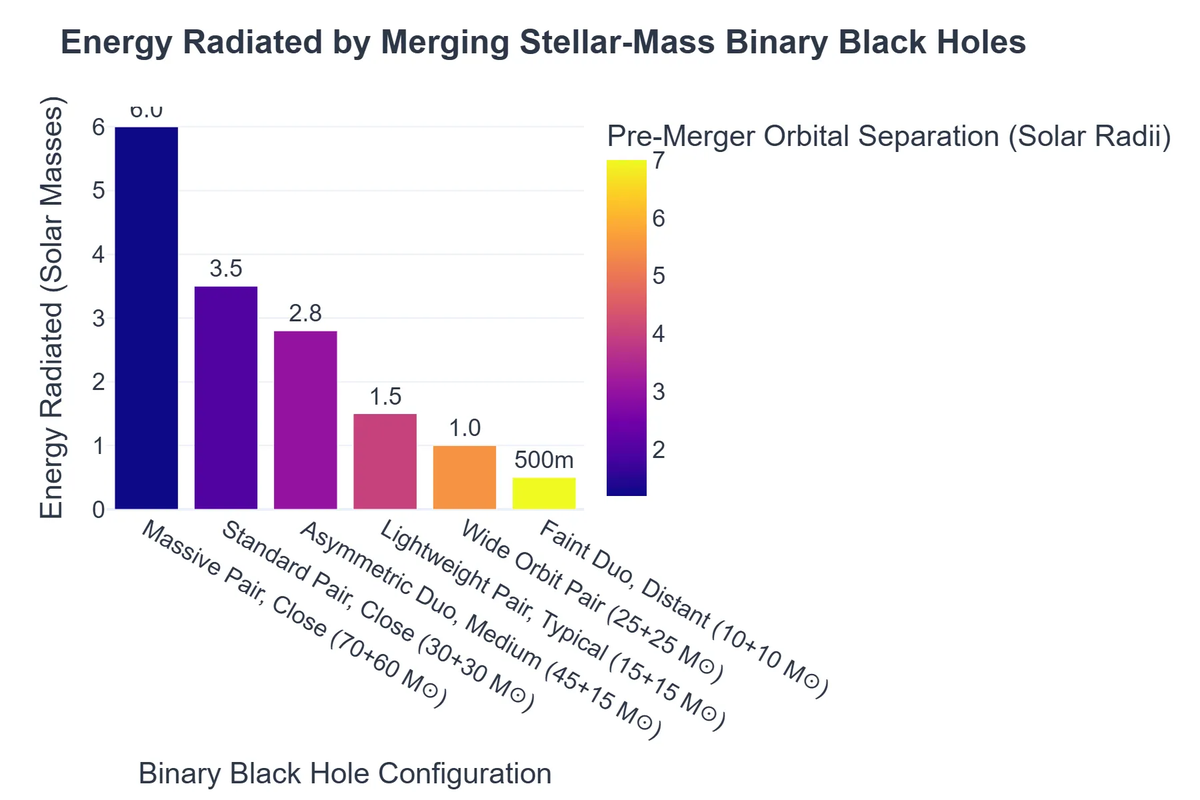
- 💡 Final Plunge: This inspiral accelerates, culminating in a violent merger where the two black holes coalesce into a single, more massive black hole, emitting a final, incredibly powerful burst of gravitational waves.
LIGO and the Symphony of the Cosmos
The detection of gravitational waves from merging binary black holes marked a monumental achievement in astrophysics. Instruments like the Laser Interferometer Gravitational-Wave Observatory (LIGO) are designed to detect these minuscule ripples as they pass through Earth.
- ✅ Direct Detection: Since 2015, LIGO and its collaborators (Virgo, KAGRA) have directly detected numerous gravitational wave events, nearly all of which originate from merging stellar-mass binary black holes.
- ✅ Cosmic Insights: These detections provide unique information about the masses, spins, and orbital characteristics of black holes, offering an entirely new way to “see” the universe. They have confirmed long-held predictions of general relativity and opened the era of multi-messenger astronomy.
Detecting the Undetectable: Observational Evidence
While gravitational waves offer direct evidence of mergers, other observational techniques provide crucial insights into binary black hole systems before their final cosmic embrace.
🔭 Multi-Messenger Astronomy
The future of black hole research lies in combining different observational techniques:
- ✅ Gravitational Wave Observatories: As mentioned, LIGO and its counterparts are the primary tools for detecting the final inspiral and merger of stellar-mass binary black holes.
- ✅ Pulsar Timing Arrays (PTAs): For supermassive binary black holes, their orbital periods can be decades to millennia. PTAs, which precisely measure the timing of pulsars, can detect the nanosecond-level distortions in spacetime caused by the gravitational waves emitted by these colossal pairs.
Electromagnetic Signatures (Indirect Evidence)
While black holes themselves are invisible, their gravitational influence on surrounding matter can create observable electromagnetic (light) signals:
- 💡 Accretion Disks: Gas and dust falling towards a black hole can form a superheated accretion disk, emitting X-rays, UV, and visible light. In binary systems, each black hole can have its own disk, or they can share a larger circumbinary disk.
- 💡 Jets: Some black holes launch powerful jets of plasma that can be observed across vast distances. Binary systems might exhibit complex jet dynamics.
- 💡 Variability: The orbital motion of black holes within a binary system can cause periodic variations in the brightness or emission profiles of surrounding material, providing indirect evidence of their presence. Recent studies suggest that the alignment of black hole spins in a binary pair could influence their “cosmic love story” as highlighted by Northwestern Now.
Recommended Video
Why Binary Black Holes Matter: Scientific Significance
The study of binary black holes is not just about observing exotic phenomena; it’s about unlocking fundamental secrets of the universe.
Understanding Gravity in Extremes
- ✅ Testing General Relativity: Binary black holes are natural laboratories for testing Einstein’s theory of general relativity under the most extreme conditions imaginable – strong gravity, rapid motion, and dynamic spacetime. The precision of gravitational wave detections allows for unprecedented tests of gravitational theory.
- ✅ Black Hole Physics: They provide data on the properties of black holes themselves, including their masses, spins, and how they merge. This helps refine our models of black hole formation and evolution.
Cosmic Evolution and Galaxy Formation
Supermassive binary black holes, in particular, play a crucial role in shaping galaxies:
- ➡️ Galaxy Mergers: Their existence confirms the prevalence of galaxy mergers throughout cosmic history, a key driver of galaxy growth and evolution.
- ➡️ Feedback Mechanisms: The energy released during the inspiral and merger of supermassive black holes can influence the distribution of gas and stars in the host galaxy, potentially impacting star formation rates and the growth of the galaxy itself.
- ➡️ Population Statistics: Studying the prevalence of binary black holes helps us understand the overall population of black holes in the universe and their role in the grand narrative of cosmic structure formation. For a deeper dive into the broader topic, explore Cosmic Queries: Probing the Mysteries of the Universe.
Conclusion: A Universe of Unfolding Mysteries
Binary black hole systems are more than just astronomical curiosities; they are dynamic, energetic powerhouses that offer a unique window into the most profound aspects of our universe. From their violent stellar origins to their cataclysmic gravitational wave-emitting mergers, these cosmic dancers continue to challenge our understanding of gravity, spacetime, and the very evolution of galaxies.
As gravitational wave observatories become more sensitive and new multi-messenger astronomy techniques emerge, our ability to “listen” to the universe’s most extreme events will only grow. The cosmic dance of binary black holes is far from over, and with each new observation, we move closer to unraveling the deepest mysteries of the cosmos.
Frequently Asked Questions
What are binary black holes?
Binary black holes are systems composed of two black holes gravitationally bound, orbiting each other. They eventually spiral inward and merge into a single, larger black hole.
How are gravitational waves related to binary black holes?
The merger of binary black holes is one of the most powerful sources of gravitational waves, which are ripples in the fabric of spacetime that propagate outward at the speed of light.
Can we observe binary black holes directly?
While we cannot observe black holes directly with light, we detect the gravitational waves produced by their mergers using advanced detectors like LIGO and Virgo, providing indirect ‘sound’ of their existence.
What happens after binary black holes merge?
After merging, the two black holes coalesce into a single, more massive black hole. This process releases an immense amount of energy in the form of gravitational waves, temporarily making it one of the most energetic events in the universe.