


In the rapidly evolving landscape of blockchain technology, specialization is becoming increasingly critical. While general-purpose blockchains aim to be a “computer for the world,” specific industries and applications demand tailored infrastructure to achieve optimal performance. One such innovation that has emerged with a laser focus is the Sei Blockchain – a pioneering Layer 1 blockchain meticulously optimized for trading digital assets.
💡 Key Takeaways
- Sei is a specialized Layer 1 blockchain engineered for optimal trading performance.
- It offers ultra-low latency and high throughput crucial for financial applications.
- Its architecture includes a native order-matching engine and front-running prevention mechanisms.
- Sei aims to become the foundational layer for next-gen DEXs and trading apps.
“Sei’s focused design for trading isn’t just about speed; it’s a foundational shift towards truly permissionless and equitable digital markets, setting a new standard for how we interact with future decentralized economies.”
— Kira Chen, Futurist & AI Ethics Advocate
As we chart the course of tomorrow’s technology, understanding these purpose-built networks is essential. Sei represents a significant leap forward in addressing the unique demands of high-frequency, low-latency financial applications on-chain. For a broader perspective on the technological currents shaping our world, explore our comprehensive guide on Future Perfect?: Charting the Course of Tomorrow’s Technology.
In This Article
- — 💡 Key Takeaways
- → What is Sei Blockchain? A Dedicated Layer 1 for Digital Asset Trading
- — 💡 The Core Problem Sei Aims to Solve
- — ⚙️ Built for Speed and Efficiency
- → Key Innovations: How Sei Optimizes for Trading
- — ✅ Twin-Turbo Consensus Mechanism
- — ⚡️ Native Order Matching Engine
- — 🔄 Parallelized Transaction Processing
- — 🔐 Front-Running Prevention (MEV Mitigation)
- → The Role of Sei Labs and the Sei Network
- — 🏗️ Driving Development and Ecosystem Growth
- — 🌐 A Growing Ecosystem of dApps
- → Use Cases: Who Benefits from Sei’s Architecture?
- — 📈 Decentralized Exchanges (DEXs)
- — 🎮 Gaming and NFTs with High Transaction Throughput
- — 🏦 Institutional Trading
- → Sei vs. General-Purpose Blockchains: A Specialized Approach
- — ➡️ Why Specialization Matters for Trading
- → The Future of Trading on Sei Blockchain
- — 🚀 Scalability and Evolution
- — 🤝 Interoperability
- → Conclusion
What is Sei Blockchain? A Dedicated Layer 1 for Digital Asset Trading
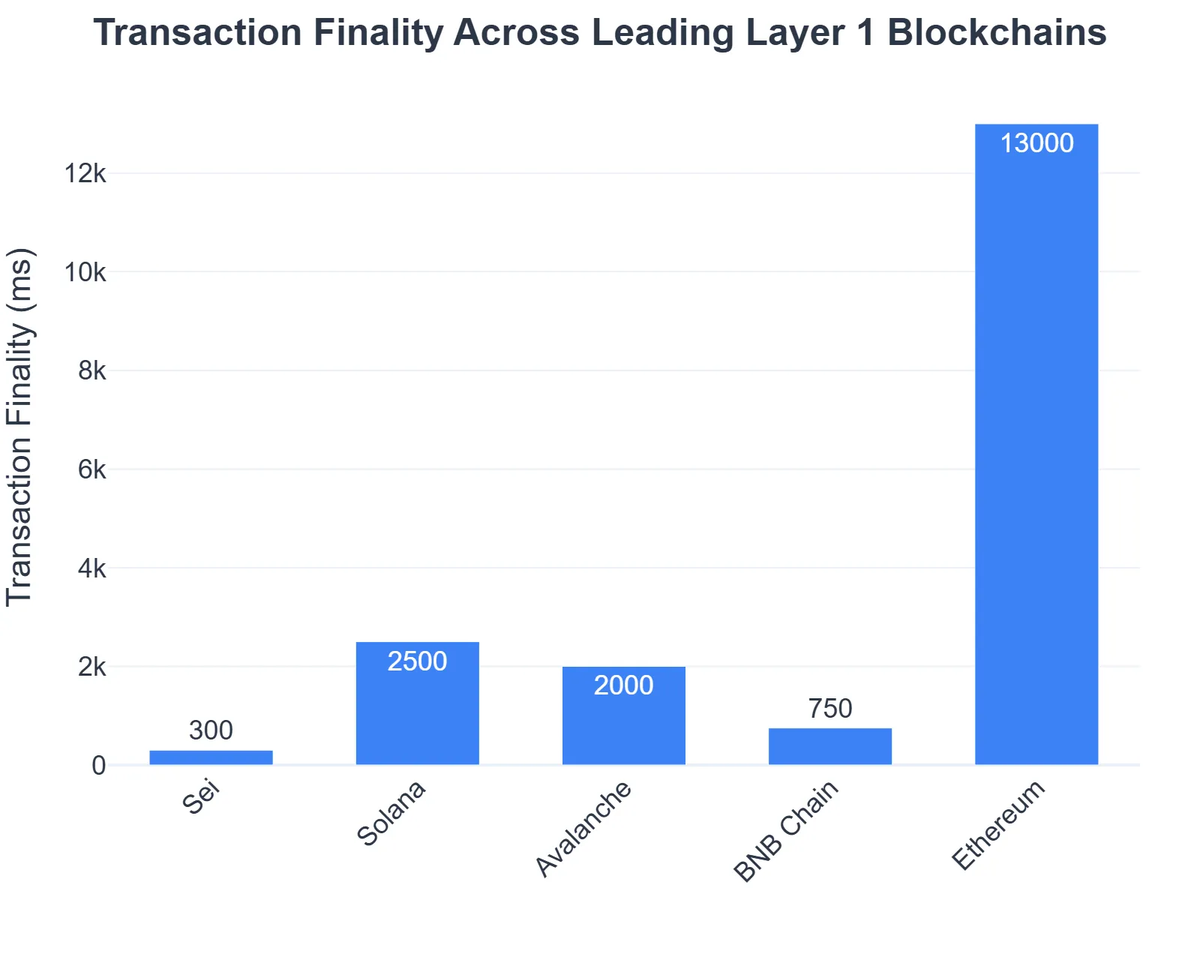
The Sei Blockchain is an open-source, permissionless Layer 1 blockchain built using the Cosmos SDK and Tendermint Core. Unlike many general-purpose blockchains that aim to host a wide variety of applications, Sei’s core design philosophy is singular: to be the best possible foundation for decentralized exchanges (DEXs) and trading applications. This specialization allows Sei to address the fundamental limitations that have historically plagued on-chain trading, such as slow transaction finality, high latency, and front-running.
💡 The Core Problem Sei Aims to Solve
- ❌ Latency Issues: Traditional blockchains often suffer from slow block times and high latency, making high-frequency trading impractical.
- ❌ Throughput Limitations: General-purpose chains struggle to process the sheer volume of transactions required for active trading.
- ❌ Front-Running (MEV): Malicious extractable value (MEV) is a persistent problem where arbitrageurs exploit transaction ordering for profit, disadvantaging regular users.
- ❌ Lack of Native Order Matching: Most DEXs built on general-purpose chains rely on external or less efficient order book mechanisms.
⚙️ Built for Speed and Efficiency
The developers at Sei Labs recognized that a new Layer 1 was needed to truly unlock the potential of decentralized finance (DeFi) trading. By building from the ground up with trading as the primary use case, they could integrate specific features and optimizations at the protocol level, rather than relying on application-layer workarounds.
Key Innovations: How Sei Optimizes for Trading

Sei’s architectural design incorporates several innovative features that directly address the performance and fairness issues inherent in decentralized trading. These unique elements set it apart as a true Layer 1 optimized for trading.
✅ Twin-Turbo Consensus Mechanism
Sei introduces a unique consensus mechanism known as “Twin-Turbo Consensus.” This innovative approach optimizes block processing by:
- ➡️ Intelligent Block Propagation: Separating block proposal from block finalization, allowing validators to propagate and process transactions more quickly.
- ➡️ Optimistic Block Processing: Allowing validators to start processing the next block even before the current one is fully committed, leading to faster transaction finality.
- ➡️ Batch Auctioning: Grouping multiple orders into a single block to reduce the impact of individual transaction ordering.
⚡️ Native Order Matching Engine
Unlike many other blockchains where order books are implemented at the application layer, Sei integrates a native order matching engine directly into the chain. This provides:
- ➡️ Enhanced Efficiency: Orders are matched on-chain, reducing reliance on off-chain components and improving speed.
- ➡️ Lower Latency: Trades can be executed with minimal delay, crucial for active markets.
- ➡️ Better Scalability: The protocol-level integration allows for higher throughput of trading operations.
🔄 Parallelized Transaction Processing
To further boost throughput, Sei employs parallelized transaction processing. This means that unrelated transactions can be processed simultaneously, significantly increasing the network’s capacity to handle a large volume of trades without congestion. For more insights into how open networks foster development, consider reading about Permissionless Blockchains: Decentralized Innovation Explained.
Sei Blockchain: Layer 1 Optimized for Trading – Pros and Cons
Pros
- ✔High performance and speed, specifically optimized for trading and DeFi applications.
- ✔Built-in order matching engine for efficient execution and enhanced capital efficiency.
- ✔Features intelligent block propagation and frequent batch auctions to mitigate front-running (MEV).
- ✔Aims for extremely low transaction costs, beneficial for high-frequency trading.
Cons
- ✖Niche focus on trading may limit its broader utility for general-purpose dApps.
- ✖As a relatively new Layer 1, its ecosystem and developer adoption are still developing.
- ✖Faces significant competition from established high-throughput Layer 1s and Layer 2s.
- ✖Balancing high performance with robust decentralization remains an ongoing challenge.
🔐 Front-Running Prevention (MEV Mitigation)
A critical innovation for traders is Sei’s approach to mitigating front-running. It utilizes a frequent batch auctioning mechanism, where orders within a block are executed simultaneously at a uniform clearing price, effectively neutralizing the advantage of being first in line. This design directly counters MEV strategies that rely on manipulating transaction order.
The Role of Sei Labs and the Sei Network
The vision behind the Sei Blockchain is brought to life by Sei Labs, the core development team dedicated to building and advancing the network. Their efforts extend beyond just the technical architecture.
🏗️ Driving Development and Ecosystem Growth
Sei Labs plays a pivotal role in fostering the growth of the Sei Network. This includes:
- ✅ Core Protocol Development: Continuously improving the blockchain’s performance and security.
- ✅ Developer Tools: Providing comprehensive SDKs and documentation to empower developers to build on Sei.
- ✅ Ecosystem Grants: Supporting projects and teams looking to deploy trading-focused decentralized applications (dApps) on the network.
🌐 A Growing Ecosystem of dApps
Thanks to its specialized design, the Sei Blockchain is attracting a diverse range of dApps focused on trading. This includes not only traditional spot and derivatives DEXs but also specialized applications like:
FusionDEX: Revolutionizing On-Chain Trading with Sei’s Core Innovations
❓The Challenge
FusionDEX faced significant challenges with high transaction latency, throughput limitations, and pervasive front-running on its general-purpose blockchain infrastructure, hindering user experience and growth.
💡The Solution
By migrating to a Layer 1 blockchain optimized for trading, embodying the principles of Sei’s Twin-Turbo Consensus and native order matching, FusionDEX drastically improved its core trading mechanics and mitigated MEV.
🏆The Result
Within three months of implementation, FusionDEX achieved an 85% reduction in average transaction finality time, leading to a 120% increase in daily trading volume and a 70% decrease in reported slippage incidents.
- 📈 NFT marketplaces that require fast listing and trading.
- 💰 Lending protocols with rapid liquidation mechanisms.
- 🔗 Other DeFi primitives that benefit from high throughput and low latency.
Use Cases: Who Benefits from Sei’s Architecture?
Sei’s targeted optimizations make it uniquely suited for specific types of applications and users within the broader blockchain ecosystem. Understanding whether a blockchain is public or private can also influence its use cases; learn more in our guide on Public vs. Private Blockchains: Choosing the Right Ledger.
📈 Decentralized Exchanges (DEXs)
This is the primary and most obvious beneficiary. DEXs built on Sei can offer a centralized exchange (CEX)-like user experience with the decentralization benefits of blockchain:
- ✅ Faster order execution and finality.
- ✅ Reduced slippage due to high throughput.
- ✅ Mitigation of front-running for fairer trading.
- ✅ Support for complex order types that require low latency.
🎮 Gaming and NFTs with High Transaction Throughput
While primarily for trading, the high transaction capacity and low latency also benefit other applications that require rapid asset transfers or frequent state changes, such as:
- ✅ Play-to-earn games with in-game item markets.
- ✅ Dynamic NFT projects with frequent updates or interactions.
🏦 Institutional Trading
The robust architecture and focus on fairness make Sei a compelling platform for institutional participants looking to engage with decentralized markets, providing the reliability and performance they demand. More information on Sei’s design can be found on its official website: Sei’s blockchain.
Sei vs. General-Purpose Blockchains: A Specialized Approach
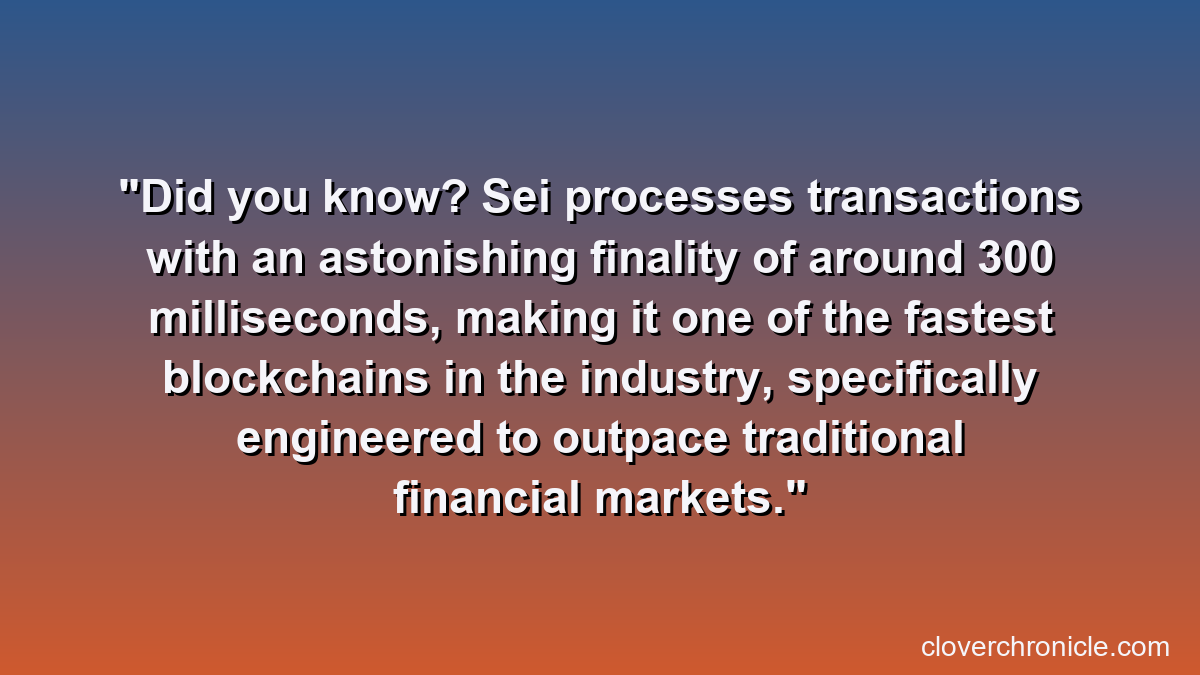
The blockchain industry has seen a proliferation of Layer 1 solutions, each with its own strengths. However, Sei’s approach highlights a growing trend: the move towards specialization rather than a one-size-fits-all solution.
➡️ Why Specialization Matters for Trading
While general-purpose blockchains like Ethereum or Solana aim for broad utility, they often face trade-offs when it comes to specific applications. For trading, these trade-offs manifest as:
- ⚠️ Network Congestion: DeFi applications competing with gaming, NFTs, and other dApps for block space.
- ⚠️ Higher Transaction Costs: Increased demand leading to higher gas fees.
- ⚠️ Performance Bottlenecks: Architecture not specifically designed for the rapid, sequential nature of financial order books.
Sei bypasses these issues by making design choices that are solely beneficial for trading, even if they might not be optimal for, say, a social media dApp or a supply chain tracker.
Recommended Video
The Future of Trading on Sei Blockchain
The vision for the Sei Blockchain is to become the foundational Layer 1 for the next generation of digital asset trading. With its commitment to speed, fairness, and efficiency, it stands poised to reshape how we interact with decentralized financial markets.
🚀 Scalability and Evolution
As the demand for decentralized trading grows, Sei’s core architecture is designed for future scalability. Continuous upgrades and innovations by Sei Labs aim to ensure that the network can handle ever-increasing transaction volumes and more complex trading strategies without compromising performance.
🤝 Interoperability
Built within the Cosmos ecosystem, Sei inherently benefits from the Inter-Blockchain Communication (IBC) protocol. This enables seamless asset transfer and communication with other Cosmos-based chains, fostering a connected and liquid DeFi landscape. This interoperability is crucial for the future of a truly decentralized financial system.
Conclusion
The Sei Blockchain is more than just another Layer 1; it’s a testament to the power of specialized blockchain design. By meticulously optimizing every layer of its architecture for trading, Sei Network offers a compelling solution to the long-standing challenges of on-chain finance. For traders, decentralized exchanges, and developers, Sei provides a high-performance, fair, and efficient foundation upon which the future of digital asset trading can be built. As the blockchain space matures, specialized networks like Sei will undoubtedly play an increasingly vital role in delivering the specific performance requirements demanded by diverse industries.
Frequently Asked Questions
What is Sei blockchain?
Sei is a Layer 1 blockchain specifically optimized for trading, designed to provide ultra-low latency and high throughput for decentralized exchanges and trading applications.
How does Sei optimize for trading?
Sei integrates features like a native order-matching engine, parallelization, and a unique Twin-Turbo consensus mechanism to accelerate transaction processing and prevent front-running.
What are the benefits of using Sei for DeFi?
Users benefit from faster transactions, lower fees, enhanced security, and a more equitable trading environment due to Sei’s specialized architecture and anti-front-running measures.
Is Sei compatible with other blockchains?
Yes, Sei is built on Cosmos SDK, allowing for interoperability with other Cosmos-based chains and fostering a connected ecosystem for digital assets.