Deep Space 1: Revolutionizing Space Exploration
In the vast canvas of cosmic exploration, certain missions stand out not just for their discoveries, but for fundamentally changing how we approach the universe. Deep Space 1 (DS1), launched by NASA in 1998, is one such trailblazer. Part of NASA’s New Millennium Program, this pioneering spacecraft was designed as a technology demonstrator, pushing the boundaries of what was thought possible for interplanetary probes. It didn’t just explore; it revolutionized the very mechanics of deep space travel, setting the stage for an entirely new generation of deep space probes.
💡 Key Takeaways
- Deep Space 1 was NASA’s first mission to test advanced, high-risk technologies in space, primarily its ion propulsion system.
- Its successful deployment of ion propulsion proved the viability of highly efficient, long-duration deep-space travel.
- The mission also pioneered autonomous navigation, significantly reducing reliance on constant ground control for spacecraft operation.
- DS1 performed successful flybys of asteroid 9969 Braille and comet 19P/Borrelly, providing unprecedented scientific data.
“Deep Space 1 wasn’t just a mission; it was a blueprint for the future. Its ion drive, once the stuff of science fiction, unlocked the potential for voyages that transcend conventional limits, bridging our dreams of interstellar travel with engineering reality.”
— Astrid Bellweather, Astrophysicist & Science Fiction Consultant
This article will delve into the groundbreaking innovations of Deep Space 1, from its revolutionary propulsion system to its autonomous navigation capabilities, and explore its lasting legacy on space exploration. For a broader look at humanity’s incredible journeys beyond Earth, you might also be interested in our article on Space Exploration: Iconic Journeys, Probes, and Missions.
In This Article
- → Deep Space 1: Revolutionizing Space Exploration
- — 💡 Key Takeaways
- → The Vision Behind Deep Space 1: A New Millennium of Exploration
- — 💡 A New Paradigm for Spacecraft Design
- — ➡️ The New Millennium Program’s Ambition
- → Pioneering Ion Propulsion: The Game-Changer
- — ⚙️ How Ion Thrusters Work
- — 🚀 Efficiency and Endurance in Deep Space
- → Autonomous Navigation: AI in Space Exploration
- — 🛰️ AutoNav: The Self-Driving Spacecraft
- — 📉 Reducing Ground Control Dependency
- → Key Technologies & Scientific Payloads Onboard
- → Mission Highlights and Celestial Encounters
- — ☄️ The Asteroid 9969 Braille Flyby
- — 💫 The Comet 19P/Borrelly Encounter
- → Deep Space 1’s Enduring Legacy
- — ➡️ Paving the Way for Future Deep Space Probes
- — 🛰️ Impact on NASA JPL Missions and Beyond
- → Conclusion: A Small Probe with a Giant Impact
The Vision Behind Deep Space 1: A New Millennium of Exploration
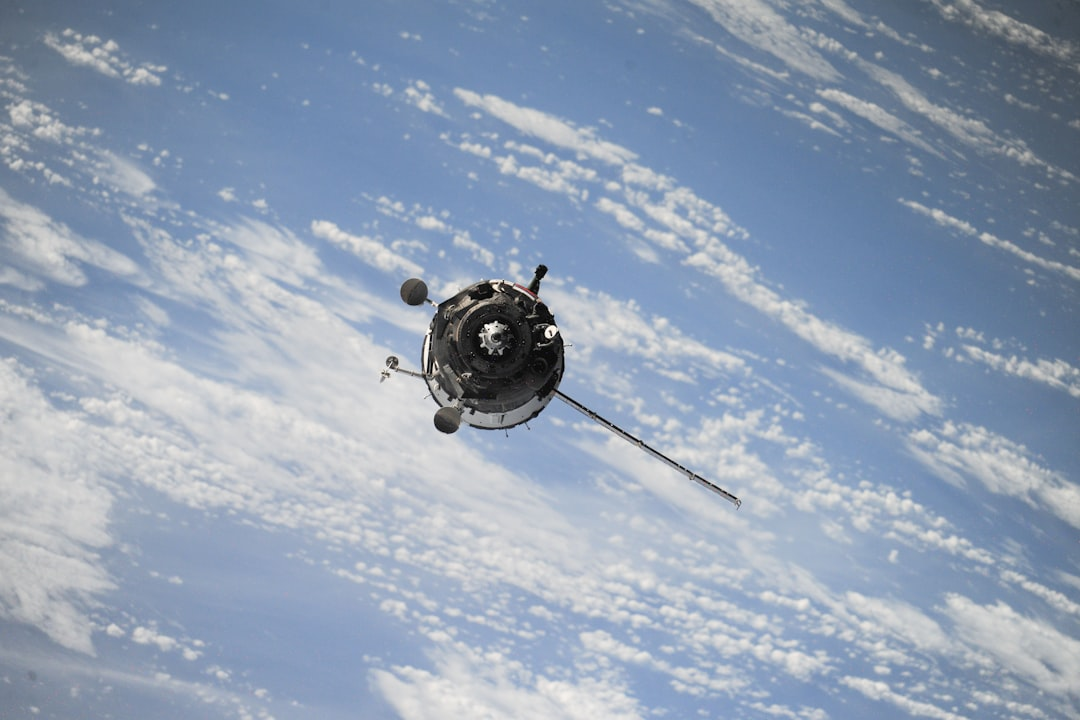
Before Deep Space 1, most spacecraft relied on traditional chemical propulsion and extensive ground control. The vision for DS1, conceived and managed by NASA’s Jet Propulsion Laboratory (JPL), was to break these molds, demonstrating advanced technologies that would make future missions more efficient, autonomous, and cost-effective. It was a bold step into an era where spacecraft could be more independent and explore deeper with fewer resources.
💡 A New Paradigm for Spacecraft Design
DS1 was not primarily a scientific mission, though it did achieve significant scientific firsts. Its core purpose was to test a dozen high-risk, high-reward technologies in the harsh environment of deep space. This approach, part of the New Millennium Program, marked a shift in how NASA developed and deployed space missions, focusing on proving out crucial components before integrating them into flagship science missions.
➡️ The New Millennium Program’s Ambition
The New Millennium Program (NMP) aimed to develop and flight-test breakthrough technologies for space and Earth science missions of the 21st century. DS1 was the program’s first mission, specifically targeting technologies to enable cheaper, smaller, and more capable deep space probes. Its success proved the NMP concept viable and paved the way for subsequent NMP missions.
Pioneering Ion Propulsion: The Game-Changer
Perhaps the most significant innovation tested by Deep Space 1 was its primary propulsion system: an ion engine. Unlike conventional chemical rockets that produce massive thrust for short bursts, ion engines provide very low thrust continuously over long periods, achieving incredibly high exhaust velocities and fuel efficiency. This seemingly subtle difference has profound implications for interstellar and interplanetary travel.
⚙️ How Ion Thrusters Work
- ✅ Ionization: Xenon gas atoms are bombarded with electrons, stripping them of their own electrons and turning them into positively charged ions.
- ⚡ Acceleration: These ions are then accelerated by an electric field, expelled at speeds of up to 90,000 mph (145,000 km/h) through a pair of grids.
- ⚛️ Neutralization: An electron emitter neutralizes the ion beam as it leaves the thruster, preventing the spacecraft from building up a negative charge.
The thrust produced by an ion engine is equivalent to the weight of a sheet of paper. However, because it operates continuously for months or even years, it can achieve much higher velocities than chemical rockets, using far less propellant. This drastically reduces the mass of fuel needed for a mission, allowing for more scientific instruments or smaller launch vehicles.
Deep Space 1: Innovations and Challenges
Pros
- ✔Successfully pioneered and validated ion propulsion for primary spacecraft thrust.
- ✔Demonstrated autonomous navigation (AutoNav) capabilities for deep-space missions.
- ✔Tested and proved multiple high-risk, high-reward technologies in a space environment.
- ✔Provided a foundation for future cost-effective and self-sufficient space exploration.
Cons
- ✖As an experimental mission, it faced numerous technical challenges and component failures.
- ✖Initial focus on technology demonstration limited its dedicated scientific objectives.
- ✖High development costs associated with testing revolutionary, unproven technologies.
- ✖Relatively short operational lifespan primarily due to its experimental nature and specific goals.
🚀 Efficiency and Endurance in Deep Space
Deep Space 1’s ion engine operated for more than 16,000 hours, consuming only about 70 kg of xenon propellant during its primary mission. This unprecedented efficiency demonstrated the viability of ion propulsion for long-duration missions to distant corners of the solar system. It proved that deep space travel could be sustained over much longer periods, opening up possibilities for missions that were previously impractical due to fuel constraints.
Autonomous Navigation: AI in Space Exploration
Another revolutionary technology tested on Deep Space 1 was AutoNav, an autonomous navigation system. Historically, spacecraft navigation has relied heavily on ground control, with commands sent from Earth to correct trajectories. AutoNav enabled DS1 to determine its own position and plan its trajectory using images of asteroids and planets, significantly reducing the need for constant human oversight.
🛰️ AutoNav: The Self-Driving Spacecraft
AutoNav worked by taking images of known celestial bodies against the background stars. By comparing these images to an onboard star catalog and ephemeris, the spacecraft could precisely determine its own position and velocity. This information then allowed it to make real-time adjustments to its trajectory without waiting for instructions from NASA JPL Missions control.
📉 Reducing Ground Control Dependency
The success of AutoNav demonstrated a pathway towards more independent spacecraft. This has profound implications for future deep space missions, especially those traveling to destinations where communication delays make real-time control impossible. It also frees up valuable ground control time, allowing personnel to focus on more complex challenges. This kind of autonomy is crucial as we consider even more ambitious undertakings, as discussed in the context of Orion Spacecraft: Deep Space Human Exploration.
Key Technologies & Scientific Payloads Onboard
Beyond ion propulsion and AutoNav, Deep Space 1 carried several other innovative technologies designed to advance future spacecraft capabilities:
- 🤖 Remote Agent Experiment (RAX): This was the first artificial intelligence program to control a spacecraft without human intervention. RAX could diagnose problems on board and autonomously reschedule activities to compensate, showcasing a significant leap in spacecraft self-reliance.
- 📸 Miniature Integrated Camera and Spectrometer (MICAS): This compact instrument combined a camera for visible light, an infrared spectrometer, and an ultraviolet spectrometer into a single, lightweight package. It demonstrated the ability to integrate multiple instruments into smaller, more efficient designs.
- 📡 Small Deep Space Transponder (SDST): A more compact and efficient radio system for communication, reducing power consumption and mass.
- ☀️ Solar Concentrator Arrays (SCARLET): Lightweight and highly efficient solar arrays, critical for powering the power-intensive ion engine.
Each of these technologies, while seemingly minor on their own, contributed to a holistic vision of a new generation of spacecraft capable of deeper, longer, and more independent missions.
Mission Highlights and Celestial Encounters
Although primarily a technology demonstration, Deep Space 1 also achieved notable scientific successes, proving the capabilities of its new instruments and propulsion system.
☄️ The Asteroid 9969 Braille Flyby
In July 1999, DS1 conducted a flyby of the asteroid 9969 Braille. This was its first close encounter and a critical test of its autonomous navigation system. While technical issues limited the data gathered, it was a crucial demonstration of the spacecraft’s ability to precisely target and approach a celestial body using its new technologies.
💫 The Comet 19P/Borrelly Encounter
Perhaps Deep Space 1’s most famous scientific achievement was its successful flyby of Comet 19P/Borrelly in September 2001. After its primary mission was extended, DS1, operating on minimal fuel and with a degrading attitude control system, provided the best images and scientific data of a comet nucleus at that time. This spectacular success proved the robustness of its technology, even under challenging conditions, and provided invaluable insights into cometary structures.
Deep Space 1’s Enduring Legacy
Deep Space 1 might not be as famous as the Voyager probes or Hubble, but its impact on space exploration is arguably just as profound. It was a true pioneer that validated technologies now considered standard for advanced missions.
➡️ Paving the Way for Future Deep Space Probes
The success of DS1’s ion propulsion system directly led to its adoption in subsequent high-profile missions. The most notable example is NASA’s Dawn spacecraft, which used ion propulsion to orbit two celestial bodies – the asteroid Vesta and the dwarf planet Ceres – a feat impossible with traditional chemical propulsion. Other missions, like Europe’s SMART-1 lunar orbiter, also utilized ion engines, showcasing the technology’s global impact.
Moreover, the autonomous navigation and AI capabilities demonstrated by DS1 continue to influence the design of complex missions, including those related to New Horizons Space Probe: Exploring Pluto, Arrokoth, and Beyond and future robotic explorers. These advancements are key to extending humanity’s reach further into the solar system and beyond, as explored in discussions around Interstellar Spacecraft: Voyagers and Beyond.
🛰️ Impact on NASA JPL Missions and Beyond
Deep Space 1’s bold approach to technology validation has become a blueprint for NASA JPL Missions and other space agencies. It proved that investing in high-risk technological leaps can yield immense returns, enabling missions that are more capable, efficient, and ultimately, more successful. The mission’s legacy is a testament to innovation and a precursor to the advanced capabilities we see in space exploration today. Learn more about NASA’s broader efforts at NASA.gov.
Recommended Video
Frequently Asked Questions
What was the primary purpose of Deep Space 1?
Deep Space 1 was a technology demonstration mission designed to test 12 advanced technologies in space, most notably its ion propulsion system and autonomous navigation capabilities.
How did ion propulsion revolutionize space travel?
Ion propulsion provides continuous, low-thrust acceleration, leading to much higher velocities over long durations compared to traditional chemical rockets, making deep-space missions more efficient and feasible for distant targets.
Did Deep Space 1 encounter any celestial bodies?
Yes, Deep Space 1 performed successful flybys of asteroid 9969 Braille in 1999 and comet 19P/Borrelly in 2001, providing the best images and scientific data of Borrelly at that time.
What was Deep Space 1’s most significant legacy?
Its most significant legacy is the validation of ion propulsion, which has since been adopted by subsequent missions like Dawn and Psyche, opening new possibilities for exploring the solar system with unprecedented efficiency.