


Geology Today: Latest Discoveries Shaping Our Understanding
Geology, often perceived as the study of ancient rocks and slow-moving processes, is in reality one of the most dynamic and rapidly evolving scientific disciplines. Far from being a static field, geology today is at the forefront of uncovering Earth’s deepest secrets, deciphering its intricate past, and predicting its future. New technologies, interdisciplinary collaborations, and daring explorations are continuously reshaping our understanding of our planet and even beyond.
💡 Key Takeaways
- Recent geological findings are redefining our models of Earth’s internal processes and surface evolution.
- New data reveals unprecedented connections between deep Earth activity and climate change.
- Advancements in sensing technology are unlocking secrets of previously inaccessible geological phenomena.
- Interdisciplinary research is crucial for comprehensive understanding of Earth systems.
“The pace of geological discovery is astounding. We’re not just observing Earth; we’re actively deciphering its complex language, linking deep interior dynamics to surface climate patterns with unprecedented clarity.”
— Marcus Sterling, Geophysical Explorer & Climate Dynamics Analyst
From the fiery depths of the mantle to the frozen expanses of polar ice caps, and extending to the surfaces of distant planets, geologists are making groundbreaking discoveries. These insights not only satisfy our innate curiosity about the world beneath our feet but also provide critical knowledge for addressing some of humanity’s most pressing challenges, from natural hazard mitigation and resource management to climate change adaptation.
In This Article
- → Geology Today: Latest Discoveries Shaping Our Understanding
- — 💡 Key Takeaways
- → Unveiling Earth’s Deepest Secrets: Mantle Dynamics and Core Research
- — Seismic Tomography and Planetary Imaging
- — Superplumes and Mantle Convection
- → Reshaping Plate Tectonics: New Perspectives on Crustal Processes
- — Microplates and Intraplate Deformation
- — Subduction Zones and Volcanic Activity
- → Pl anetary Geology: Expanding Our Understanding Beyond Earth
- — Martian Seismology and the InSight Mission
- — Venusian Volcanism and Atmospheric Interactions
- → Climate Change and Geological Response: A Deep-Time Perspective
- — Paleoclimate Reconstruction and Ice Cores
- — Sea-Level Rise and Coastal Geology
- → Advanced Technologies Driving Geological Discoveries
- — Remote Sensing and Satellite Imagery
- — AI, Machine Learning, and Big Data in Geosciences
- → Applied Geology in the Modern World: Addressing Global Challenges
- — Resource Exploration and Sustainable Practices
- — Natural Hazard Mitigation
- → Staying Current in Geology: Resources for the Enthusiast and Professional
- → Conclusion
Unveiling Earth’s Deepest Secrets: Mantle Dynamics and Core Research
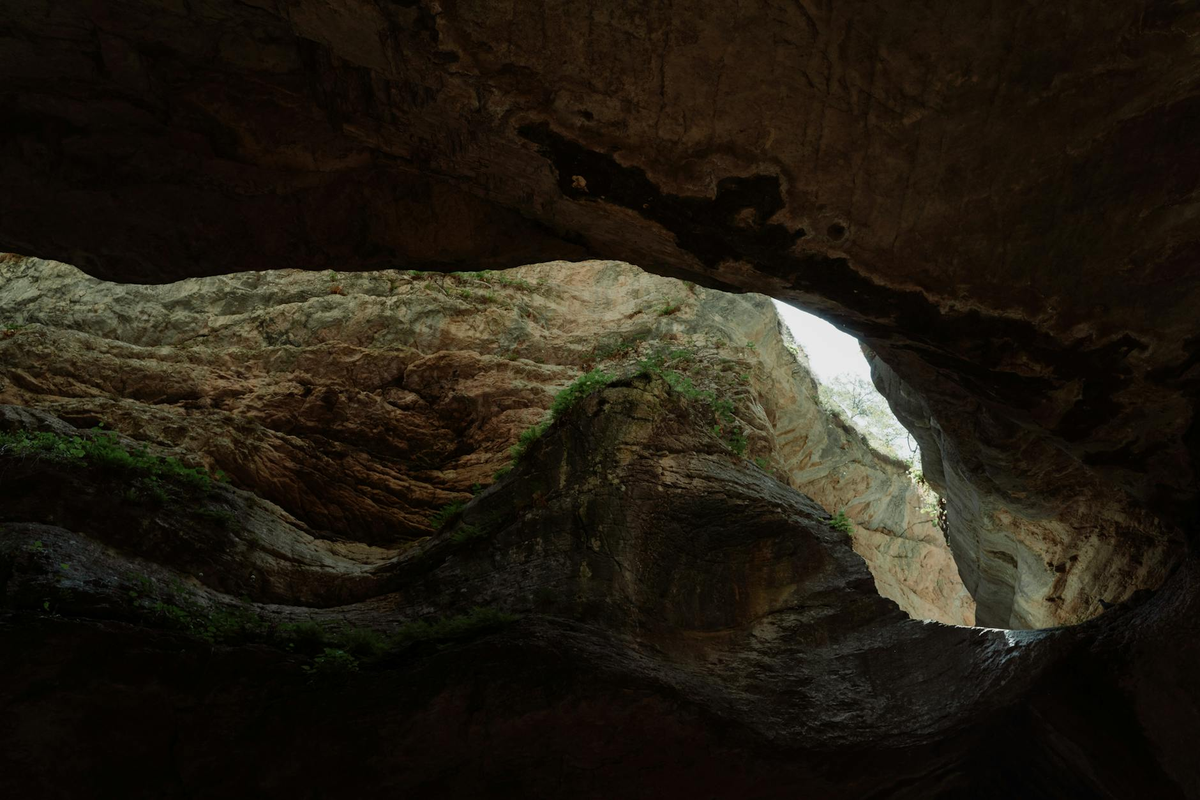
The Earth’s interior remains largely a mystery, yet recent advancements in seismology and geophysics are providing unprecedented glimpses into its hidden dynamics. The mantle, a vast layer between the crust and the core, plays a pivotal role in driving plate tectonics and volcanic activity. Modern seismic tomography, which uses earthquake waves to create 3D images of the Earth’s interior, continues to reveal surprising structures.
Seismic Tomography and Planetary Imaging
New high-resolution seismic models are mapping ancient subducted slabs deep within the mantle, some extending all the way to the core-mantle boundary. These “slab graveyards” provide vital clues about the long-term history of subduction and mantle convection patterns. Researchers are also using these techniques to identify anomalies that could signify rising superplumes, massive upwellings of hot rock from the deep mantle.
Superplumes and Mantle Convection
The concept of superplumes, vast columns of hot material rising from the core-mantle boundary, has gained significant traction. Discoveries of their scale and distribution are fundamentally changing our understanding of how heat escapes Earth’s interior and how it influences surface geology, including the formation of large igneous provinces and the break-up of supercontinents. Understanding these deep-seated processes is crucial for comprehending Earth’s Unseen Forces: The Hidden Dynamics of Our Planet, which govern everything from earthquake patterns to the very shape of our continents.
Reshaping Plate Tectonics: New Perspectives on Crustal Processes
While the theory of plate tectonics is foundational to geology, continuous research refines our understanding of how these massive plates interact, deform, and reshape the Earth’s surface. Recent discoveries highlight the complexities of plate boundaries and intraplate deformation, moving beyond the simplistic model of rigid plates.
Microplates and Intraplate Deformation
Geologists are increasingly identifying and characterizing numerous microplates and smaller tectonic blocks that accommodate strain in complex regions, particularly in zones of diffuse deformation or continental collision. Satellite-based GPS and InSAR (Interferometric Synthetic Aperture Radar) data allow scientists to measure minute ground movements, revealing previously undetectable strain accumulation within seemingly stable continental interiors. This intraplate deformation can lead to significant seismic hazards far from conventional plate boundaries.
Subduction Zones and Volcanic Activity
Research into subduction zones, where one plate slides beneath another, is yielding critical insights into the mechanics of megathrust earthquakes and the origins of arc volcanism. New seismic imaging techniques and drilling projects are exploring the frictional properties of fault zones, the fluid pathways within the overriding plate, and the processes that control the release of seismic energy. Understanding these complex systems is vital for predicting hazardous events. To truly grasp the power and majesty of these geological phenomena, consider watching high-quality Documentaries on Earth science, which often vividly illustrate plate interactions and volcanic eruptions.
Pl anetary Geology: Expanding Our Understanding Beyond Earth
Geology is no longer confined to Earth. Planetary missions are extending our geological investigations to other celestial bodies, offering comparative insights that deepen our understanding of Earth’s own formation and evolution.
Martian Seismology and the InSight Mission
NASA’s InSight lander, which operated on Mars from 2018 to 2022, revolutionized our understanding of the Red Planet’s interior. By deploying a seismometer, InSight detected over 1,300 “Marsquakes,” providing the first direct measurements of Mars’s crust, mantle, and core. These data reveal that Mars has a surprisingly large, liquid core and a crust that is thinner than previously thought, offering crucial comparisons to Earth’s internal structure.
Venusian Volcanism and Atmospheric Interactions
For decades, Venus was thought to be volcanically inactive. However, recent analyses of archival data from NASA’s Magellan mission (1990s) have provided compelling evidence of ongoing volcanic activity on Venus. For instance, a study published in 2023 utilizing Magellan radar data identified a vent that changed shape and enlarged over an eight-month period, consistent with recent lava flow or collapse following an eruption (Ongoing Venus Volcanic Activity Discovered With NASA’s Magellan Data, JPL). This discovery transforms our understanding of Venus’s geological processes and its potential for resurfacing, highlighting that even seemingly “dead” planets can harbor active geological processes.
Climate Change and Geological Response: A Deep-Time Perspective
Geology provides the essential long-term context for understanding current climate change. By studying Earth’s past climate shifts, geologists can reconstruct past atmospheric compositions, temperatures, and sea levels, offering critical insights into natural climate variability and the unprecedented scale of human-induced changes.
Paleoclimate Reconstruction and Ice Cores
Advanced techniques in paleoclimate reconstruction, utilizing proxies from ice cores, sediment cores, tree rings, and stalagmites, are yielding ever more detailed records of Earth’s past climate. Ice cores, for example, trap ancient atmospheric gases, allowing scientists to directly measure past CO2 and methane concentrations over hundreds of thousands of years. These records unequivocally show that current greenhouse gas levels are far beyond natural variations seen in the geological past.
Sea-Level Rise and Coastal Geology
Geological research on past sea-level changes, including the study of ancient coastlines and marine sediments, is vital for predicting future coastal impacts. Understanding the geological controls on coastal erosion, sediment transport, and the response of deltas and estuaries to rising seas informs critical adaptation strategies. Moreover, the dynamic interaction between geological processes and biological activity in the uppermost layers of our planet is highlighted in topics like Soil Geology: Rock, Water, and Life’s Dynamic Interface, which is crucial for understanding carbon sequestration and ecosystem resilience in the face of climate change.
Advanced Technologies Driving Geological Discoveries
The pace of geological discovery is accelerating thanks to an array of cutting-edge technologies that allow scientists to collect, process, and interpret vast amounts of data with unprecedented precision and scale.
Remote Sensing and Satellite Imagery
Satellite-based remote sensing, including LiDAR (Light Detection and Ranging), Synthetic Aperture Radar (SAR), and multispectral imaging, has transformed geological mapping and monitoring. These technologies can penetrate vegetation, map subtle changes in elevation, detect ground deformation from earthquakes or volcanic activity (using InSAR), and identify mineral compositions from orbit. They enable large-scale, non-invasive studies of remote or hazardous areas, revolutionizing everything from landslide prediction to resource exploration.
AI, Machine Learning, and Big Data in Geosciences
The sheer volume of geological data—from seismic surveys and well logs to satellite imagery and geochemical analyses—necessitates advanced computational approaches. Artificial intelligence (AI) and machine learning (ML) algorithms are increasingly employed to identify patterns, classify geological features, predict natural hazards, and optimize resource extraction. These tools can process data far more efficiently than humans, leading to faster insights and more accurate models. Staying updated on these technological leaps can be achieved effortlessly by subscribing to Science news apps, which often feature breakthroughs in geoscience technology.
Applied Geology in the Modern World: Addressing Global Challenges
The latest geological discoveries are not merely academic pursuits; they have profound practical implications for society. Applied geology leverages scientific understanding to solve real-world problems, from securing vital resources to safeguarding communities.
Resource Exploration and Sustainable Practices
Modern geological exploration uses advanced seismic techniques, remote sensing, and geochemical analyses to locate new deposits of critical minerals, rare earth elements, and geothermal energy sources. Crucially, contemporary applied geology also focuses on sustainable extraction methods, minimizing environmental impact, and developing strategies for responsible resource management to ensure long-term availability. The ongoing challenges and innovative solutions in this field are comprehensively discussed in articles on Applied Geology: Solving Real-World Challenges.
Natural Hazard Mitigation
From earthquake prediction and volcanic eruption forecasting to landslide mapping and tsunami early warning systems, geological research is instrumental in mitigating natural hazards. New discoveries about fault behavior, magma chamber dynamics, and ground stability directly inform hazard assessments, building codes, and emergency preparedness plans, saving countless lives and protecting infrastructure. Understanding the historical context of Earth’s dynamic processes, as detailed by sources like the Historical perspective from USGS, underscores the continuous need for geological vigilance.
Staying Current in Geology: Resources for the Enthusiast and Professional
Given the rapid pace of discoveries, staying abreast of the latest advancements in geology requires continuous engagement with scientific literature and professional communities. Whether you’re a seasoned geologist or an enthusiastic amateur, numerous resources can help you remain informed.
One of the most effective ways to access cutting-edge research is through Geology journals subscriptions. Leading publications such as Geology, Nature Geoscience, GSA Bulletin, and Journal of Geophysical Research publish peer-reviewed articles on the latest findings across all sub-disciplines. Many academic libraries offer access, and individual subscriptions are also available. Beyond journals, attending geological conferences, joining professional organizations (like the Geological Society of America or the American Geophysical Union), and participating in online forums provide opportunities for networking and learning directly from researchers.
Recommended Video
Conclusion
The field of geology is experiencing a renaissance, driven by technological innovation, interdisciplinary collaboration, and an insatiable curiosity about our planet. From probing the Earth’s deep interior and refining our understanding of plate tectonics to exploring the geology of other planets and providing critical data for climate change models, the latest discoveries are fundamentally reshaping our knowledge base.
These ongoing revelations not only expand our scientific horizons but also provide the essential foundation for addressing complex societal challenges. As we continue to push the boundaries of exploration and data analysis, the insights offered by geology today will remain indispensable for ensuring a safer, more sustainable future for humanity on Earth and perhaps, among the stars.
Frequently Asked Questions
How do geological discoveries impact our understanding of climate change?
New geological findings help us understand Earth’s past climate cycles, providing critical context for current climate shifts and predicting future scenarios.
What role does technology play in modern geology?
Advanced technologies like satellite imaging, seismic tomography, and remote sensing are revolutionizing data collection and analysis, allowing geologists to probe deeper and with greater precision.
Where can I learn more about ongoing geological research?
Reputable scientific journals, university research departments, and geological societies’ publications are excellent sources for the latest research.