


Unearthing Opportunities: Why Pursue Geology and Earth Sciences at IITs?
For aspiring geoscientists in India, the Indian Institutes of Technology (IITs) stand as beacons of academic excellence and research innovation. These premier institutions offer some of the most rigorous and rewarding geology programs India has to offer, blending foundational earth science principles with cutting-edge technological advancements.
💡 Key Takeaways
- IITs lead in Earth Science education and research in India.
- Programs offer comprehensive curriculum & practical field exposure.
- Graduates pursue diverse careers in energy, environment, and research.
- Admission is competitive, but yields strong professional foundations.
“Understanding Earth’s complex systems, from its deep interior to its evolving climate, begins with robust foundational education. IIT’s geology programs are pivotal in shaping the next generation of geoscientists equipped to tackle global challenges, much like exploring other planetary bodies requires a similar depth of knowledge.”
— Dr. Marcus Sterling, PhD, Planetary Geoscientist & Climatologist
A degree in Earth Sciences or Geology from an IIT isn’t just a qualification; it’s a gateway to understanding the intricate dynamics of our planet, from its deepest core to the vastness of its oceans and atmosphere. Whether your passion lies in deciphering ancient rock formations, exploring mineral resources, modeling climate change, or mitigating natural disasters, IITs provide the comprehensive education and research environment to transform that passion into a impactful career.
This guide delves into the specific strengths and offerings of IIT Earth Science and geology programs, providing a roadmap for students considering a future in this vital field.
In This Article
- → Unearthing Opportunities: Why Pursue Geology and Earth Sciences at IITs?
- — 💡 Key Takeaways
- → What Defines an IIT Earth Science Program?
- — Core Principles and Rigor
- — Interdisciplinary Approach in IIT Earth Science
- — Research-Driven Curriculum
- → Key IITs Offering Earth Science and Geology Programs
- — IIT Kharagpur: A Legacy in Geological Sciences
- — IIT Roorkee: Pioneering Earth Sciences Education
- — IIT Bombay: Interdisciplinary Excellence
- — IIT (ISM) Dhanbad: Mining and Applied Geology Focus
- — IIT Bhubaneswar: Emerging Hub for Earth & Ocean Sciences
- → Navigating the Admissions Process for IIT Geology Programs
- — Undergraduate (B.Tech/Integrated M.Sc.) Admissions
- — Postgraduate (M.Tech/M.Sc.) Admissions
- — Doctoral (PhD) Admissions
- → Curriculum and Specializations: Diving Deep into Earth’s Processes
- — Core Geology Subjects
- — Interdisciplinary Courses in Earth Science
- — Specializations and Electives
- — Fieldwork and Practical Training: The Core of Geology Education
- → Research Opportunities and Facilities
- — State-of-the-Art Laboratories
- — Faculty Expertise and Research Areas
- — Collaborative Research and Industry Partnerships
- → Career Pathways for IIT Geology Graduates
- — Energy Sector (Oil & Gas, Coal)
- — Mining and Mineral Exploration
- — Water Resources and Environmental Consulting
- — Academia and Research
- — Government and Public Sector Undertakings (PSUs)
- → The Future of Earth Sciences in India: An IIT Perspective
- — Addressing Critical Global Challenges
- — Technological Advancements and Innovation
- — Growing Demand for Geoscientists
- → Choosing the Right IIT for Your Earth Science Journey
- — Consider Your Research Interests
- — Faculty Profiles and Research Output
- — Campus Culture and Resources
- — Placement Records and Alumni Network
- — Infrastructure and Laboratory Facilities
What Defines an IIT Earth Science Program?
The distinctive character of an IIT Earth Science program lies in its unparalleled academic rigor, emphasis on research, and an inherently interdisciplinary approach. Unlike conventional geology courses, IITs integrate core geological principles with aspects of physics, chemistry, mathematics, computer science, and engineering.
Core Principles and Rigor
- ✅ Foundational Knowledge: Students gain a deep understanding of subjects like mineralogy, petrology, structural geology, stratigraphy, paleontology, and economic geology.
- ➡️ Analytical Skills: A strong emphasis is placed on developing analytical and problem-solving skills, crucial for tackling complex geological challenges.
- 💡 Quantitative Focus: IIT programs often incorporate advanced mathematics and computational techniques, preparing students for data-driven geological research and applications.
Interdisciplinary Approach in IIT Earth Science
Modern Earth science is inherently interdisciplinary. IITs recognize this by fostering an environment where students explore the connections between various scientific domains. This approach ensures graduates are well-equipped to address multifaceted environmental and resource challenges.
- 🌍 Geophysics: Integrating physics to study Earth’s physical phenomena, including seismic activity, gravity, and magnetism.
- 🧪 Geochemistry: Applying chemical principles to understand the composition and processes of Earth’s materials.
- 🌊 Oceanography & Atmospheric Sciences: Expanding the scope beyond solid Earth to include marine and atmospheric dynamics.
- 💻 Computational Earth Science: Utilizing advanced computing for modeling, simulation, and data analysis in geological studies.
Research-Driven Curriculum
A hallmark of IIT geology education is its strong research orientation. Students are exposed to active research projects from early stages, often participating in faculty-led initiatives. This cultivates a scientific temperament and encourages innovative thinking.
- 🔬 Laboratory Work: Extensive practical sessions in state-of-the-art laboratories.
- 📝 Project-Based Learning: Regular individual and group projects designed to foster research skills.
- 🧑🎓 Dissertation Opportunities: Mandatory thesis work at the master’s and doctoral levels, contributing to original research.
Key IITs Offering Earth Science and Geology Programs
Several IITs have established strong departments focusing on Earth Sciences, Geology, and related fields. While their core offerings align, each institution often has unique strengths and research specializations.
IIT Kharagpur: A Legacy in Geological Sciences
IIT Kharagpur boasts one of the oldest and most distinguished Departments of Geology and Geophysics. Its comprehensive curriculum covers a wide spectrum of earth science disciplines, making it a top choice for students seeking a robust foundation.
- 🌐 Diverse Programs: Offers B.Tech (Exploration Geophysics), Integrated M.Sc. (Applied Geology, Applied Geophysics), and M.Tech/PhD in various specializations.
- ⛏️ Resource Exploration Focus: Strong emphasis on hydrocarbon exploration, mineral prospecting, and groundwater resources.
- 🔬 Advanced Research: Active research in areas like seismology, paleontology, structural geology, and remote sensing.
IIT Roorkee: Pioneering Earth Sciences Education
With a rich history in engineering and applied sciences, IIT Roorkee’s Department of Earth Sciences is renowned for its contributions to areas like seismology, hydrogeology, and environmental geology.
- ⛰️ Hazard Mitigation: Significant research focus on natural hazards, including earthquake prediction and landslide assessment.
- 💧 Water Resources: Strong programs and research in hydrogeology and groundwater management.
- 🛠️ Applied Geology: Offers B.Tech, M.Tech, and PhD programs with a strong emphasis on practical applications of geological knowledge.
IIT Bombay: Interdisciplinary Excellence
The Department of Earth Sciences at IIT Bombay is known for its modern, interdisciplinary approach, integrating fundamental earth science with cutting-edge computational and experimental techniques.
- 🧪 Geochemistry & Paleoclimate: Prominent research in isotope geochemistry, paleoclimate studies, and oceanography.
- 📊 Computational Geosciences: Strong focus on numerical modeling and data science applications in Earth science.
- 🌍 Environmental Geosciences: Addressing contemporary issues like pollution, land degradation, and sustainable resource management.
IIT (ISM) Dhanbad: Mining and Applied Geology Focus
Formerly the Indian School of Mines, IIT (ISM) Dhanbad has a historical legacy deeply rooted in mining and applied geology. It remains a premier institution for those interested in mineral exploration and resource engineering.
- ⛏️ Mineral Resources: Specialization in geology of mineral deposits, exploration techniques, and mining geology.
- 🛢️ Petroleum Geology: Strong ties with the oil and gas industry, offering specialized courses in petroleum systems.
- 👷 Engineering Geology: Focus on geological aspects relevant to civil engineering projects.
IIT Bhubaneswar: Emerging Hub for Earth & Ocean Sciences
The School of Earth, Ocean, and Climate Sciences at IIT Bhubaneswar represents a growing hub for integrated studies of Earth’s systems, with a particular emphasis on marine and atmospheric sciences. For more detailed information, you can visit the official page of the School of Earth, Ocean & Climate Sciences at IIT Bhubaneswar.
- 🌊 Oceanography & Climate: Unique focus on physical, chemical, geological, and biological oceanography, alongside climate change studies.
- 🌪️ Atmospheric Sciences: Research into meteorology, atmospheric dynamics, and air pollution.
- 🔬 Integrated Research: Promotes holistic understanding of Earth, ocean, and atmosphere as interconnected systems.
Navigating the Admissions Process for IIT Geology Programs
Gaining admission to an IIT Earth science program is highly competitive and requires meticulous preparation. The process varies significantly depending on the level of study (undergraduate, postgraduate, or doctoral).
Undergraduate (B.Tech/Integrated M.Sc.) Admissions
For aspiring undergraduate students, admission is primarily through the JEE Advanced (Joint Entrance Examination Advanced).
- 📚 JEE Main & Advanced: Candidates must first qualify JEE Main to be eligible for JEE Advanced. Success in JEE Advanced is the primary criterion for admission to B.Tech programs, including those in Exploration Geophysics or related fields at IITs.
- 📋 Eligibility: Typically requires a strong performance in Physics, Chemistry, and Mathematics (PCM) in the 10+2 examination.
- 🏆 Rank Matters: Admission is based on the All India Rank (AIR) in JEE Advanced, with specific cut-offs for different IITs and programs.
Postgraduate (M.Tech/M.Sc.) Admissions
For postgraduate programs, the primary gateway is the GATE (Graduate Aptitude Test in Engineering) examination.
- ⚙️ GATE Score: A valid GATE score in relevant disciplines (e.g., Geology and Geophysics, Mining Engineering, Civil Engineering) is usually mandatory for M.Tech admissions.
- 📖 JAM for M.Sc.: For M.Sc. in Applied Geology or Applied Geophysics, students typically need to clear the Joint Admission Test for M.Sc. (JAM).
- 📝 Written Test & Interview: Many departments conduct their own written tests and/or interviews to assess a candidate’s subject knowledge and research aptitude.
Doctoral (PhD) Admissions
Admission to PhD programs is highly research-centric.
- 👨🎓 Academic Record: A strong academic background in relevant M.Tech/M.Sc. disciplines is essential.
- 🧪 Research Proposal: Candidates often need to submit a research proposal outlining their area of interest.
- 🗣️ Interview: A crucial step involving a detailed interview with the departmental faculty to assess research potential and alignment with ongoing projects.
- 💰 Funding: Availability of research funding or fellowships (e.g., through GATE, CSIR-UGC NET, or sponsored projects) can be a factor.
Curriculum and Specializations: Diving Deep into Earth’s Processes
An IIT Earth science curriculum is meticulously designed to provide a broad yet deep understanding of our planet. It blends theoretical knowledge with extensive practical and field experience, offering numerous specialization avenues.
Core Geology Subjects
Regardless of the IIT, certain foundational subjects form the bedrock of any geology or Earth science program:
- 🪨 Mineralogy & Petrology: Study of minerals and rocks, their formation, classification, and properties.
- 🌍 Structural Geology: Analysis of rock deformation, folds, faults, and their implications for Earth’s crust.
- 🕰️ Stratigraphy & Paleontology: Understanding the sequence of rock layers and the fossil record to decipher Earth’s history. For an introduction to these concepts, refer to our guide on Earth’s Epochs: An Introduction to Geologic Time.
- 💧 Hydrogeology: The study of groundwater, its movement, distribution, and quality.
- ⛏️ Economic Geology: Focus on the formation and exploration of mineral and energy resources.
- 🗺️ Geomorphology: Study of landforms and the processes that shape them.
Interdisciplinary Courses in Earth Science
Beyond core geology, IIT programs integrate subjects from various scientific disciplines:
- ⚛️ Geochemistry: Chemical analysis of Earth materials and processes.
- ⚡ Geophysics: Application of physics to study Earth’s interior (seismology, magnetism, gravity).
- 🛰️ Remote Sensing & GIS: Utilizing satellite imagery and geographic information systems for geological mapping and analysis.
- 💻 Computational Geosciences: Numerical modeling and simulation of geological processes.
- 🌐 Oceanography & Atmospheric Science: Comprehensive study of marine environments and atmospheric dynamics.
Specializations and Electives
As students progress, they can choose electives and specialize in areas aligning with their interests and career goals. Common specializations include:
- 🌊 Marine Geosciences: Exploration of ocean floors, marine resources, and coastal processes.
- 🌬️ Climate Science: Understanding past, present, and future climate change.
- 🚨 Natural Hazard Management: Studying earthquakes, landslides, floods, and volcanic activity for risk assessment and mitigation.
- 🌿 Environmental Geology: Addressing geological aspects of environmental issues like pollution and waste disposal.
- 🛢️ Petroleum Geosciences: Detailed study of oil and gas exploration and reservoir characterization.
- ⛏️ Mineral Exploration: Advanced techniques for locating and evaluating mineral deposits.
Fieldwork and Practical Training: The Core of Geology Education
A crucial component of any geology education at IITs is extensive fieldwork. This hands-on experience is indispensable for developing practical geological skills.
- 🏞️ Field Trips: Regular excursions to geologically significant regions for mapping, rock identification, and structural analysis.
- 🧪 Laboratory Sessions: Practical training in mineral identification, rock thin-section analysis, geochemical analysis, and geophysical data interpretation.
- 💻 Software Proficiency: Training in industry-standard software for geological modeling, data visualization, and GIS.
This comprehensive curriculum ensures that graduates are not only theoretically sound but also possess the practical skills demanded by the industry and research sectors.
Research Opportunities and Facilities
The IITs are primarily research-driven institutions, and their Earth Science departments are no exception. They provide an intellectually stimulating environment with cutting-edge facilities and ample opportunities for students to engage in groundbreaking research.
State-of-the-Art Laboratories
IITs invest heavily in providing world-class laboratory infrastructure to support advanced research. These facilities are integral to understanding complex geological processes.
- 🔬 Geochemistry Labs: Equipped with instruments like ICP-MS, XRF, XRD for elemental and isotopic analysis of rocks, minerals, and water.
- 🧫 Paleomagnetism & Geochronology Labs: For studying Earth’s magnetic field history and precise dating of geological events.
- 📊 Geophysical Labs: With seismographs, gravity meters, magnetometers, and electrical resistivity meters for data acquisition and analysis.
- 💻 Computational Labs: High-performance computing clusters for geological modeling, simulation, and big data analysis.
- 🛠️ Rock Mechanics Labs: For testing the physical properties of rocks under various stress conditions.
Faculty Expertise and Research Areas
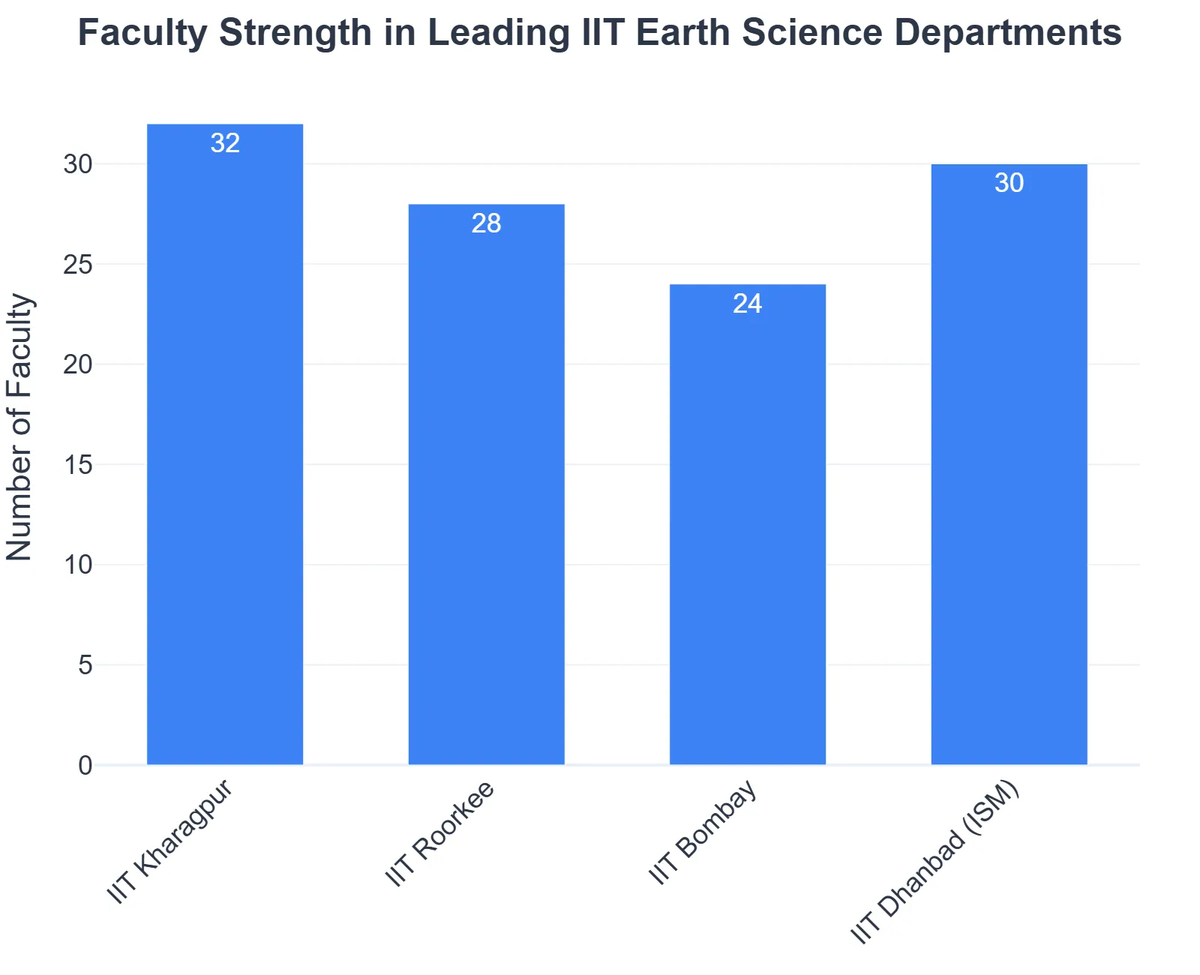
The faculty members at IIT Earth Science departments are leading experts in their respective fields, actively engaged in national and international research projects. Their diverse specializations provide students with a wide array of research avenues.
- 🌊 Marine & Coastal Processes: Research into ocean dynamics, marine ecosystems, and coastal zone management.
- 🚨 Natural Hazards: Focus on seismic hazard assessment, landslide susceptibility mapping, and flood modeling.
- 🌱 Environmental Geosciences: Studies on groundwater contamination, soil degradation, and geological aspects of waste disposal.
- 🌋 Igneous & Metamorphic Petrology: Investigating the formation of volcanic and metamorphic rocks.
- ⛏️ Ore Deposit Geology: Research on the genesis and exploration of metallic and non-metallic mineral deposits.
Collaborative Research and Industry Partnerships
IITs foster a collaborative research environment, often partnering with national and international institutions, government agencies, and private industries. This provides students with exposure to real-world challenges and networking opportunities.
- 🤝 Inter-departmental Projects: Collaborations with departments like Civil Engineering, Chemical Engineering, and Computer Science on interdisciplinary problems.
- 🏛️ Government Agencies: Partnerships with organizations like the Geological Survey of India (GSI), Oil and Natural Gas Corporation (ONGC), and National Institute of Oceanography (NIO). For more on NIO’s work, consider exploring National Institute of Oceanography: Pioneering Marine Science Research.
- 🏭 Industry Tie-ups: Joint research projects with major players in the oil and gas, mining, and environmental consulting sectors.
Career Pathways for IIT Geology Graduates
An IIT degree in geology or Earth science opens doors to a diverse range of career opportunities across various sectors, both in India and globally. The blend of theoretical knowledge, practical skills, and research exposure makes graduates highly sought after.
Energy Sector (Oil & Gas, Coal)
This is historically one of the largest employers of geoscientists.
- 🛢️ Exploration Geologist/Geophysicist: Identifying and assessing potential oil, gas, and coal reserves.
- 📈 Reservoir Geologist: Characterizing hydrocarbon reservoirs and optimizing production.
- ड्रिल Drilling & Production Geoscientist: Supporting drilling operations and managing well integrity.
Mining and Mineral Exploration
With India’s rich mineral resources, this sector offers significant roles.
- ⛏️ Mine Geologist: Overseeing geological aspects of mining operations, resource estimation, and grade control.
- 🗺️ Exploration Geologist: Discovering new mineral deposits.
- 📊 Geometallurgist: Bridging geology and metallurgy for efficient mineral processing.
Water Resources and Environmental Consulting
Growing concerns about water scarcity and environmental degradation have created a demand for hydrogeologists and environmental geoscientists.
- 💧 Hydrogeologist: Managing groundwater resources, assessing water quality, and designing remediation strategies.
- 🌿 Environmental Consultant: Conducting environmental impact assessments, site characterization, and risk assessments for various projects.
- ♻️ Waste Management Specialist: Dealing with geological aspects of solid and hazardous waste disposal.
Academia and Research
For those passionate about furthering knowledge, academia and research institutions offer rewarding paths.
- 🧑🏫 Professor/Researcher: Teaching at universities and conducting cutting-edge research.
- 🔬 Research Scientist: Working in national labs (e.g., GSI, NIO, NGRI) or R&D divisions of private companies.
- Postdoctoral Fellow: Continuing research at universities or specialized institutes.
Government and Public Sector Undertakings (PSUs)
Various government bodies and PSUs regularly recruit Earth science graduates.
- 🇮🇳 Geological Survey of India (GSI): Roles in geological mapping, mineral exploration, and natural hazard assessment.
- 🛢️ Oil and Natural Gas Corporation (ONGC): Geoscientist roles in exploration and production.
- 🏞️ Central Ground Water Board (CGWB): Positions related to groundwater management and regulation.
- 🌐 National Centre for Seismology (NCS): Research and monitoring of seismic activity.
The versatility of an IIT Earth science degree allows graduates to adapt to evolving industry needs and contribute significantly to sustainable development and planetary well-being. For a broader perspective on the field, delve into Different Types of Geology: Exploring Earth Science.
The Future of Earth Sciences in India: An IIT Perspective
The field of Earth Sciences in India is poised for significant growth, driven by an increasing demand for resources, the imperative to address climate change, and the need for natural hazard mitigation. IITs are at the forefront of preparing the next generation of geoscientists to meet these challenges.
Addressing Critical Global Challenges
Earth scientists play a crucial role in solving some of the most pressing global issues:
- 🌡️ Climate Change: Understanding past climates, predicting future climate scenarios, and assessing their impacts on Earth systems.
- 🚨 Natural Disasters: Developing early warning systems and mitigation strategies for earthquakes, tsunamis, landslides, and floods.
- 🌱 Sustainable Resources: Ensuring sustainable management of water, mineral, and energy resources for future generations.
- Pollution Control: Investigating geological aspects of environmental pollution and developing remediation techniques.
Technological Advancements and Innovation
The future of Earth Sciences is deeply intertwined with technological innovation. IITs emphasize the integration of cutting-edge tools and methodologies:
- 🛰️ Remote Sensing & GIS: Advanced satellite imagery and geospatial analysis for mapping, monitoring, and modeling Earth processes.
- 🤖 Artificial Intelligence & Machine Learning: Application of AI/ML for data interpretation, predictive modeling, and resource exploration.
- 📊 Big Data Analytics: Managing and interpreting vast datasets from seismic surveys, remote sensing, and environmental monitoring.
- 🔬 Advanced Laboratory Techniques: Development and application of sophisticated analytical instruments for precise geological analysis.
Growing Demand for Geoscientists
As India’s economy grows and its infrastructure develops, the demand for qualified geoscientists continues to rise across various sectors:
- Infrastructure Development: Geotechnical assessments for dams, bridges, tunnels, and urban planning.
- Renewable Energy: Geological studies for geothermal energy, hydropower projects, and offshore wind farms.
- Urban Planning: Assessing geological hazards and resource availability for sustainable urban growth.
IITs are pivotal in nurturing the talent and fostering the research necessary to drive these advancements, ensuring that India remains at the forefront of Earth science innovation. The fundamental understanding provided by fields like Bedrock Geology: Earth’s Unseen Foundation becomes ever more critical as we build and grow.
Recommended Video
Choosing the Right IIT for Your Earth Science Journey
Deciding which IIT Earth science program is best for you requires careful consideration of your academic interests, career aspirations, and research preferences. While all IITs maintain high standards, their unique strengths can align with different student profiles.
Consider Your Research Interests
- 🔬 Specialized Focus: If you have a specific research interest (e.g., paleoclimate, seismology, marine geology), research the faculty profiles at different IITs. Look for professors whose work aligns with your passion.
- 📚 Departmental Strengths: Each IIT’s Earth Science department might have a historical or contemporary strength in certain sub-disciplines (e.g., IIT (ISM) Dhanbad for mining, IIT Bhubaneswar for ocean sciences).
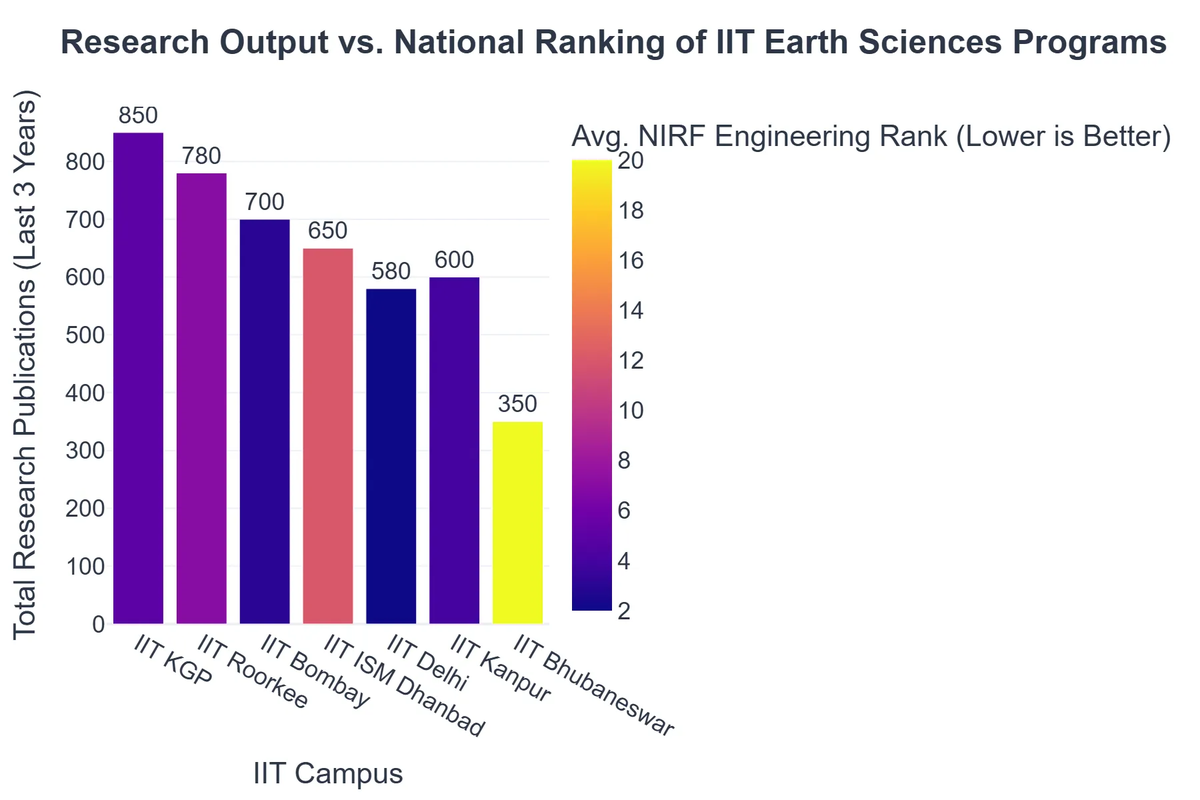
Faculty Profiles and Research Output
The quality of faculty and their ongoing research are critical indicators of a program’s strength.
- 🧑🎓 Publications & Projects: Explore faculty publications, ongoing research projects, and collaborations. This gives insight into the cutting-edge work being done.
- 🏆 Recognition: Look for faculty who have received national or international awards, grants, or hold leadership positions in professional societies. You can often find information on leading researchers, such as those listed by Research.com’s best Earth Science Scientists in India.
Campus Culture and Resources
Beyond academics, the campus environment plays a significant role in your overall experience.
- 🏡 Student Life: Consider factors like hostel facilities, extracurricular activities, student clubs, and overall campus vibrancy.
- 📚 Library & Computational Resources: Access to extensive libraries, online databases, and high-performance computing facilities is crucial for research.
Placement Records and Alumni Network
Investigate the career outcomes of graduates from different IIT Earth Science programs.
- 💼 Placement Statistics: While not always publicly detailed for specific departments, general placement reports can offer insights into the industries and roles graduates enter.
- 🤝 Alumni Network: A strong alumni network can provide mentorship, internship opportunities, and career guidance. Connect with alumni on professional platforms like LinkedIn.
Infrastructure and Laboratory Facilities
The availability of advanced laboratories and field equipment directly impacts the quality of practical training and research.
- 🧪 Modern Equipment: Ensure the department has state-of-the-art instruments for analytical, geophysical, and computational work that aligns with your interests.
- 🏞️ Fieldwork Opportunities: Inquire about the frequency and nature of field trips, as hands-on experience is paramount in geology.
By thoroughly researching these aspects, you can make an informed decision and embark on a fulfilling journey into the fascinating world of Earth sciences at an IIT.
What makes IIT geology programs unique?
IIT geology programs are distinguished by their interdisciplinary research focus, advanced laboratory facilities, strong industry collaborations, and emphasis on practical field training, providing a holistic education.
What are the career prospects after studying geology at an IIT?
Graduates find diverse career opportunities in sectors like oil & gas exploration, mining, environmental consulting, hydrogeology, academic research, remote sensing, and governmental geological surveys.
Is an entrance exam required for IIT geology programs?
Yes, for undergraduate programs, admission is primarily through the JEE Advanced exam. Postgraduate admissions typically require GATE scores or specific entrance tests conducted by the IITs, along with interviews.
Do IITs offer postgraduate geology programs?
Absolutely. Many IITs offer M.Sc., M.Tech., and PhD programs in specialized areas of Earth Sciences, including applied geology, geophysics, environmental science, and geological engineering.