


NASA Sounds of Space: Exploring the Cosmos
The universe, in its vast, echoing silence, often appears as a purely visual spectacle. We gaze at distant galaxies, swirling nebulae, and shimmering stars, captivated by their light. Yet, what if we told you that the cosmos holds a symphony, not merely a silent ballet? NASA, in its relentless pursuit of understanding the universe, has pioneered an incredible field known as sonification, transforming astronomical data into auditory experiences. This article dives deep into the fascinating world of NASA sounds, revealing how scientists translate light, radio waves, and other cosmic phenomena into an accessible and profound listening experience, enriching our exploration of the cosmos through space audio.
💡 Key Takeaways
- NASA translates various cosmic data (like radio waves, plasma vibrations) into audible frequencies.
- These ‘sounds’ aren’t literal sounds heard in space but interpretive data sonifications.
- Listening to space data provides new insights and a unique sensory understanding of the cosmos.
- Projects like these make complex astrophysical phenomena accessible and engaging for the public.
“The ‘sounds’ of space are more than just data sonification; they are a profound artistic and scientific endeavor, allowing us to perceive the universe not just visually, but through an entirely new, hauntingly beautiful dimension – bridging the gap between scientific discovery and the human imagination.”
— Astrid Bellweather, Astrophysicist & Science Fiction Consultant
For those eager to delve further into the grand questions of existence, our comprehensive guide, Cosmic Queries: Probing the Mysteries of the Universe, offers a broader perspective on the universe’s most perplexing enigmas.
In This Article
- → NASA Sounds of Space: Exploring the Cosmos
- — 💡 Key Takeaways
- → The Silence of Space vs. The Sounds of Science
- → What Are “NASA Sounds” Exactly? Understanding Sonification
- — 💡 How Sonification Works
- — 🚀 Beyond Auditory Experience: Scientific Value
- → Iconic Cosmic Concerts: Notable NASA Sonifications
- — 🌌 The Symphony of Black Holes
- — 🪐 Planetary Melodies
- — ☀️ Solar Flares and Stellar Whispers
- → The Technology Behind the Tones: Instruments and Data
- — 🛰️ Telescopes as Cosmic Microphones
- — 💻 Data Processing and Translation
- → Why Sonify? The Purpose and Impact of Space Audio
- — ✅ Enhancing Accessibility for All
- — 🧠 New Insights for Scientists
- — 🚀 Engaging the Public with the Cosmos
- → Where to Experience NASA’s Soundscapes
- → Conclusion: The Universe, Reimagined Through Sound
The Silence of Space vs. The Sounds of Science
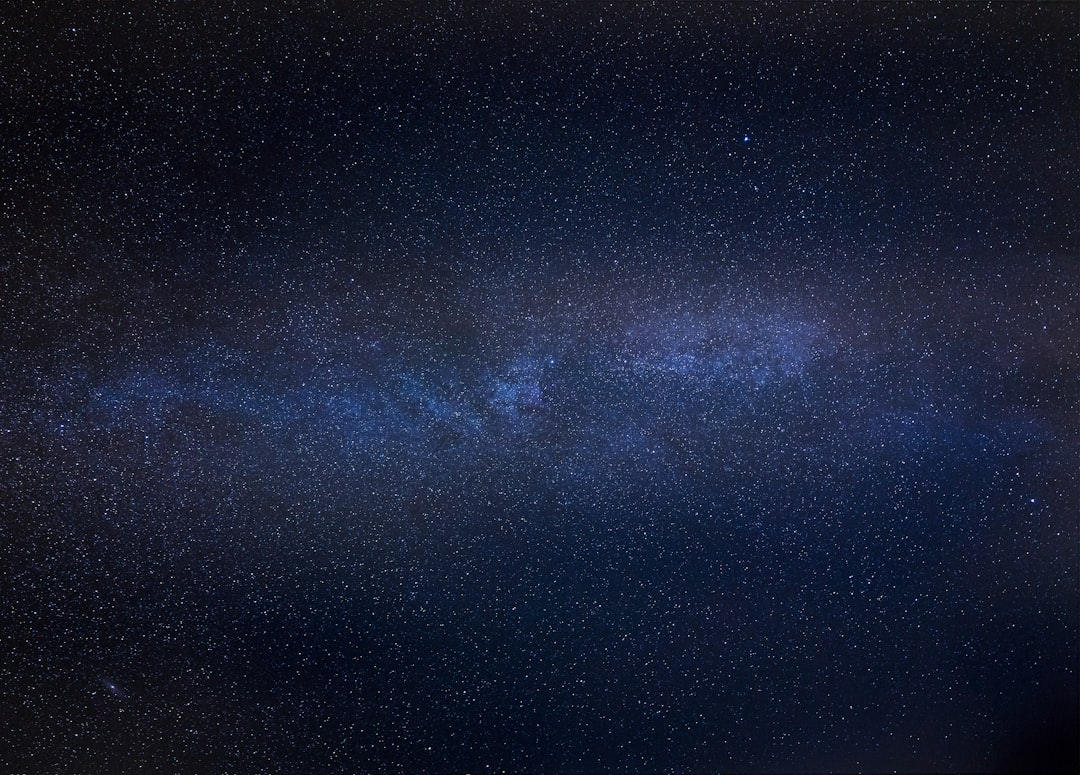
It’s a common misconception that space is entirely silent. While it’s true that the vacuum of space prevents sound waves (which require a medium to travel) from propagating in the way they do on Earth, space is far from devoid of activity that can be detected and translated. Planets emit radio waves, stars vibrate, and black holes create ripples in spacetime. These phenomena produce various forms of energy – light, radio waves, X-rays, magnetic field fluctuations – that, while inaudible to the human ear directly, contain rich information.
- ✅ No Atmospheric Medium: Traditional sound waves can’t travel across the vacuum of space.
- ✅ Electromagnetic Vibrations: Data from celestial objects are collected as electromagnetic signals across the spectrum.
- ✅ The Role of Sonification: This scientific process translates these non-auditory signals into audible frequencies.
What Are “NASA Sounds” Exactly? Understanding Sonification
When we talk about “NASA sounds,” we’re referring to a process called data sonification. This isn’t about capturing raw sounds from space, but rather translating complex datasets into auditory patterns. It’s an innovative approach that allows us to perceive cosmic phenomena through a different sensory modality, offering new insights and enhancing accessibility.
💡 How Sonification Works
Sonification involves mapping non-auditory data parameters to auditory attributes like pitch, volume, timbre, and rhythm. Here’s a simplified breakdown:
- ➡️ Data Collection: Telescopes (like Hubble, Chandra, Kepler, Spitzer) and spacecraft collect vast amounts of data across the electromagnetic spectrum (visible light, X-ray, infrared, radio waves, etc.).
- ➡️ Parameter Mapping: Scientists identify key characteristics within the data – for instance, the brightness of a star, the energy of an X-ray photon, or the distance of a galaxy.
- ➡️ Auditory Translation: Each data parameter is then assigned to a specific auditory property. For example, higher energy X-rays might be mapped to higher pitches, or increasing light intensity to increasing volume.
- ➡️ Composition: These individual auditory elements are then combined, often layered, to create a sonic landscape that reflects the original data’s structure and dynamics.
🚀 Beyond Auditory Experience: Scientific Value
Sonification isn’t just for entertainment or novelty. It serves several crucial purposes:
- 🧠 New Analytical Tools: For scientists, listening to data can reveal patterns, anomalies, or trends that might be less obvious in purely visual representations.
- 📊 Multi-Modal Understanding: Combining auditory and visual data analysis provides a more comprehensive understanding of complex phenomena.
- 🔬 Educational Outreach: It makes abstract scientific concepts more tangible and engaging for the public, including students and educators.
Iconic Cosmic Concerts: Notable NASA Sonifications
NASA has released numerous compelling sonifications over the years, transforming breathtaking images and complex datasets into audible masterpieces. These examples showcase the diversity of cosmic phenomena translated into sound.
🌌 The Symphony of Black Holes
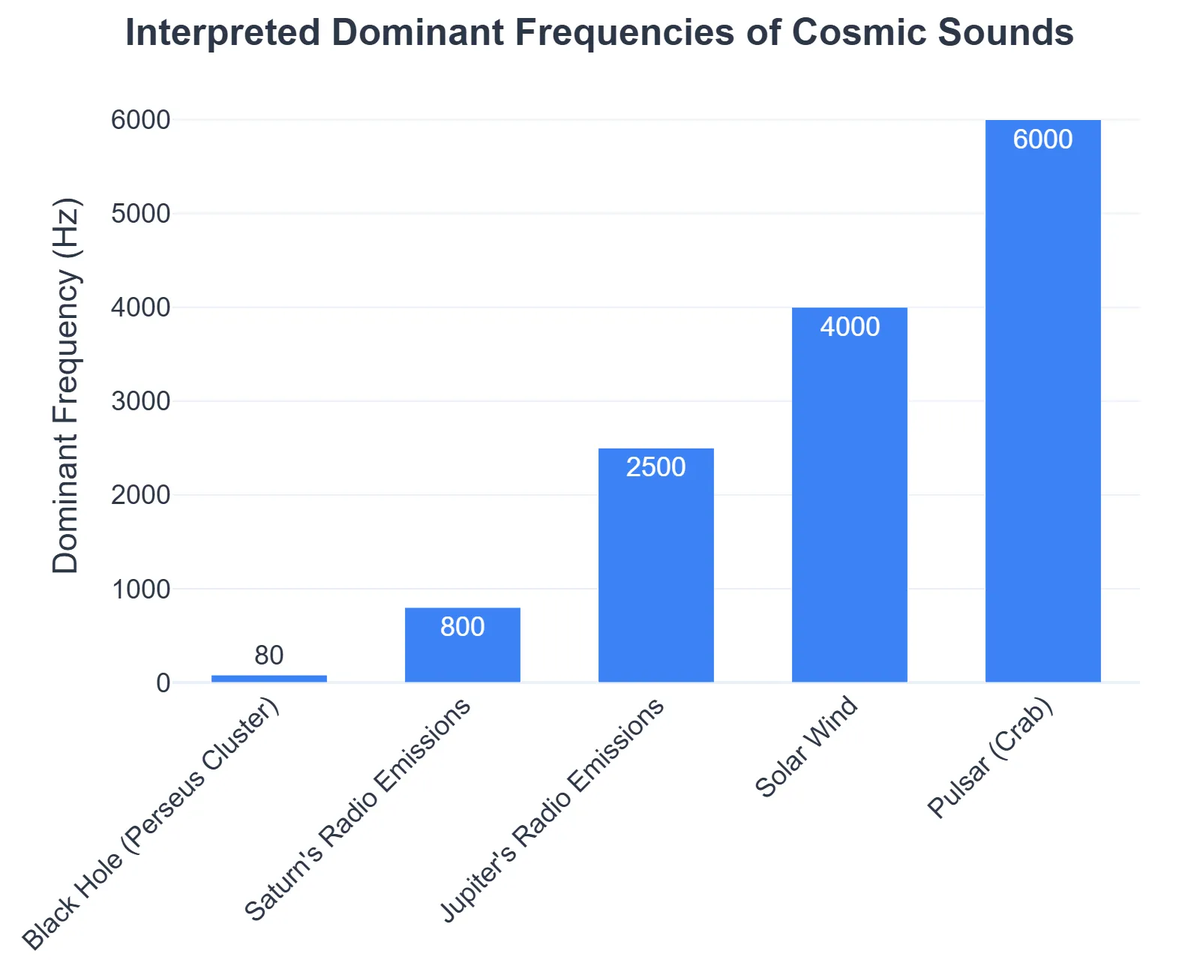
Perhaps one of the most famous examples is the sonification of the Perseus Galaxy Cluster’s central black hole. For years, scientists believed there was no sound in space, but the Chandra X-ray Observatory detected pressure waves from the black hole that ripple through the cluster’s hot gas, creating a cosmic hum. This data was then sonified to reveal an actual auditory wave, albeit at a frequency far too low for human ears to detect naturally. To learn more about these powerful cosmic entities, explore our article on Quasi-Black Hole: Exploring Near-Horizon Phenomena.
🪐 Planetary Melodies
Data from planets within our own solar system has also been sonified. For instance, Juno spacecraft’s observations of Jupiter’s intense magnetic field and aurora have been translated into eerie, captivating sounds. Similarly, Cassini’s journey through Saturn’s rings produced data that, when sonified, unveiled the intricate dynamics of the ring system. For discoveries closer to home, you might be interested in Unearthing Mars: Rover Discoveries, which details findings from Martian explorations.
☀️ Solar Flares and Stellar Whispers
Our own Sun, a dynamic star, is another source of fascinating sonifications. Data from missions like the Solar Dynamics Observatory (SDO) often reveal solar flares, coronal mass ejects, and sunspots. When translated into sound, these events offer a unique “listen” to our star’s fiery temperament. Discover more about our star’s activities in NASA’s Solar Dynamics Observatory (SDO): A Window to the Sun.
The Technology Behind the Tones: Instruments and Data
The ability to create these cosmic harmonies relies heavily on the sophisticated instruments and meticulous data processing employed by NASA and its partners.
🛰️ Telescopes as Cosmic Microphones
Different telescopes “hear” different aspects of the universe by detecting various forms of electromagnetic radiation:
- 🔭 Chandra X-ray Observatory: Excellent for high-energy phenomena like black holes, galaxy clusters, and supernova remnants. Its data is often mapped to pitch and volume.
- 🔭 Hubble Space Telescope: Captures visible and ultraviolet light, providing stunning visual data that can be translated based on brightness, color, or distance.
- 🔭 Spitzer Space Telescope: Observes in infrared, revealing dust, gas, and cooler objects often hidden from visible light.
- 🔭 Radio Telescopes: Detect radio waves emitted by various celestial objects, which can then be directly mapped to audio frequencies (though often shifted for human hearing).
💻 Data Processing and Translation
Once raw data streams back to Earth, it undergoes rigorous processing. Scientists and data sonification experts use specialized software and algorithms to perform the translation:
- ✅ Filtering & Cleaning: Removing noise and isolating relevant signals from the raw data.
- ✅ Mapping Rules: Defining how specific data points correspond to specific sound parameters (e.g., color to frequency, intensity to amplitude).
- ✅ Creative Interpretation: While scientifically accurate, the final sonification often involves artistic choices to make the resulting sound engaging and informative. This is not arbitrary, but rather a way to best convey the scientific data in an audible format, much like choosing a color palette for a scientific visualization.
Why Sonify? The Purpose and Impact of Space Audio
The commitment to sonification stems from a multi-faceted approach to scientific discovery and public engagement.
✅ Enhancing Accessibility for All
One of the most profound impacts of sonification is its ability to make the universe accessible to individuals who are blind or visually impaired. By translating visual data into sound, NASA opens up new avenues for exploration and understanding for a broader audience. This initiative aligns with a growing movement to ensure that scientific discoveries are available to everyone, regardless of sensory ability. NASA actively promotes “Exploring the Universe Through Sight, Touch, and Sound” as a key educational strategy (Source: NASA Science).
🧠 New Insights for Scientists
For researchers, sonification provides an alternative method of data analysis. The human ear is remarkably adept at detecting subtle changes in rhythm, pitch, and timbre that might be missed in a purely visual analysis. Listening to data can reveal hidden patterns, correlations, or anomalies that lead to new hypotheses and discoveries.
🚀 Engaging the Public with the Cosmos
Sonification makes astronomy more relatable and captivating for the general public. It transforms abstract numbers and complex charts into evocative soundscapes, fostering a deeper appreciation for the universe’s beauty and complexity. These “Cosmic Harmonies” are often shared through public events, online platforms, and educational initiatives, captivating imaginations worldwide (Source: NASA Chandra).
Where to Experience NASA’s Soundscapes
Ready to embark on your own auditory journey through the cosmos? NASA provides numerous resources where you can listen to these incredible sonifications:
- ➡️ NASA Science Sonifications: The official NASA Science website features a dedicated section for sonifications, often with accompanying visuals and explanations. This includes fascinating sonifications from missions like Hubble (Source: NASA Science).
- ➡️ Chandra X-ray Observatory’s Multimedia: Chandra has been a pioneer in sonification, with a rich archive of X-ray data translated into sound.
- ➡️ NASA+ Video Platform: New sonifications and related documentaries are frequently released on NASA’s dedicated video platform (Source: NASA+).
- ➡️ YouTube Channels: Many NASA centers and missions maintain official YouTube channels where they share sonification videos.

Recommended Video
Conclusion: The Universe, Reimagined Through Sound
The world of NASA sounds is a testament to human ingenuity and our endless quest to understand the universe around us. By transforming the “silent” data of space into an audible tapestry, sonification has not only made cosmic exploration more accessible but has also opened up entirely new avenues for scientific discovery. It reminds us that the cosmos is a multi-sensory wonder, waiting to be explored not just with our eyes, but with our ears, deepening our connection to the grand cosmic symphony.
Listen closely, and you might just hear the universe whisper its deepest secrets.
Frequently Asked Questions
What kind of cosmic phenomena are ‘soundified’?
Scientists convert various data, including radio emissions from planets, vibrations from black holes, solar flares, and plasma waves in Earth’s magnetosphere, into sound.
How do these sonifications help scientists?
Sonifications provide another way for scientists to analyze data, sometimes revealing patterns or anomalies that might be harder to discern visually. They also serve as powerful educational tools.
Can the public access these space sounds?
Yes, NASA often releases these sonifications through various channels, including their official websites, social media, and dedicated sound libraries, making them widely accessible for public listening and education.