

Understanding Biodiversity: The Foundation of Life
In the vast tapestry of Earth’s existence, few concepts are as fundamental and far-reaching as biodiversity. Often referred to as the “biological diversity” of life, it encompasses the incredible variety of living organisms, from the smallest bacteria to the largest whales, and the complex ecosystems they inhabit. To truly define biodiversity is to grasp the very essence of our planet’s ecological health and resilience.
💡 Key Takeaways
- Biodiversity encompasses the variety of life at genetic, species, and ecosystem levels.
- It is crucial for stable ecosystems, providing essential services like clean air and water.
- Human activities are the primary drivers of biodiversity loss, necessitating urgent conservation efforts.
- Understanding biodiversity’s components helps in developing effective strategies for its protection.
“This guide meticulously unpacks biodiversity, revealing it not just as a count of species, but as the intricate, dynamic tapestry of life that underpins all ecological stability and evolutionary potential.”
— Julian Aris, PhD, Geneticist & Evolutionary Biologist
Biodiversity is more than just a count of species; it’s a multi-faceted concept that includes the diversity within species, between species, and of ecosystems. It represents the variability among living organisms from all sources, including terrestrial, marine, and other aquatic ecosystems, and the ecological complexes of which they are part. This includes diversity within species, between species, and of ecosystems.
In This Article
- → Understanding Biodiversity: The Foundation of Life
- — 💡 Key Takeaways
- — Etymology and Core Concept
- — Why is Defining Biodiversity Crucial?
- → The Three Pillars of Biodiversity: A Deeper Dive
- — Genetic Diversity 🧬
- — Species Diversity 🦒
- — Ecosystem Diversity 🌳
- → Measuring Biodiversity: Tools and Techniques
- — Indices and Metrics
- — Challenges in Measurement
- → The Intrinsic Value and Benefits of Biodiversity
- — Ecosystem Services: Nature’s Free Gifts
- — Economic and Social Benefits
- — Cultural and Ethical Significance
- → Threats to Biodiversity: A Looming Crisis
- — Habitat Loss and Fragmentation
- — Climate Change
- — Pollution and Overexploitation
- — Invasive Alien Species
- → The Role of Biodiversity in Evolution and Adaptation
- — Resilience in Changing Environments
- — The Engine of Natural Selection
- → Conservation Strategies: Protecting Our Natural Heritage
- — In-situ Conservation
- — Ex-situ Conservation
- — Policy, Legislation, and International Cooperation
- → Biodiversity and Human Well-being: An Interconnected Future
- — Food Security and Health
- — Disease Regulation
- — Sustainable Development Goals
- → The Future of Biodiversity: Challenges and Opportunities
- — Technological Advancements in Conservation
- — Global Initiatives and Citizen Science
Etymology and Core Concept
The term “biodiversity” is a contraction of “biological diversity.” It was coined by Walter G. Rosen in 1985 and popularized by sociobiologist E.O. Wilson in 1988 as the title of the first American National Forum on Biological Diversity. Before this, the concept was often referred to as “natural heritage” or “wildlife.”
- ✅ Bio: Pertaining to life or living organisms.
- ✅ Diversity: The state of being diverse; variety.
Together, they encapsulate the entire spectrum of life on Earth, from the genetic variations within a single population to the vast array of ecosystems found across the globe. Understanding this foundational definition is the first step in appreciating the immense value of our natural world and the urgency of its conservation.
Why is Defining Biodiversity Crucial?
Precisely defining biodiversity is not merely an academic exercise; it’s a critical prerequisite for effective conservation, policy-making, and sustainable development. Without a clear understanding, efforts to protect the natural world can be misguided or insufficient.
- 💡 Guides Conservation Efforts: A clear definition helps pinpoint what needs to be protected, whether it’s a rare gene, an endangered species, or a unique ecosystem.
- 💡 Informs Policy: Governments and international bodies rely on comprehensive definitions to formulate effective environmental laws and treaties. For instance, global initiatives require a shared understanding of what they aim to preserve.
- 💡 Raises Awareness: It educates the public and stakeholders about the multifaceted nature of life on Earth, fostering a greater appreciation and sense of responsibility.
- 💡 Supports Research: Scientists use established definitions to standardize their research, allowing for comparable data and better understanding of ecological processes.
Ultimately, a robust definition empowers us to address the challenges of biodiversity loss and work towards a more sustainable future for all life on Earth. For a broader perspective on the rich tapestry of life, explore our guide on Biodiversity: A Comprehensive Guide to Life on Earth.
The Three Pillars of Biodiversity: A Deeper Dive
To fully define biodiversity and its types, we must break it down into its three primary levels: genetic, species, and ecosystem diversity. Each level offers a unique lens through which to appreciate the intricate web of life.
Genetic Diversity 🧬
Genetic diversity refers to the variation in the genes within a particular species. Every individual within a species possesses a unique set of genes, which dictates their characteristics and capabilities. This internal variation is the raw material for adaptation and evolution, making it critical for the long-term survival of species.
- ➡️ Within Individuals: Each human, for example, has a unique genetic code, leading to differences in appearance, disease resistance, and countless other traits.
- ➡️ Within Populations: A population of deer might have individuals with varying resistance to a particular disease due to their genetic makeup. If one variant is susceptible, others might be resistant, ensuring the population’s survival.
- ➡️ Benefits: Higher genetic diversity within a species makes it more resilient to environmental changes, diseases, and other threats. It allows species to adapt and evolve over generations. Conversely, low genetic diversity can make a species vulnerable to extinction, as seen in many critically endangered animals.
Species Diversity 🦒
Species diversity refers to the variety of different species present in a particular area. This is arguably the most commonly understood aspect of biodiversity, often measured by the number of species (species richness) and the relative abundance of each species (species evenness).

- ➡️ Species Richness: The total number of distinct species found in a given area. For example, a rainforest might have hundreds of tree species, while a tundra might only have a few.
- ➡️ Species Evenness: The relative abundance of different species. An ecosystem where all species are present in roughly equal numbers is considered more even than one dominated by a single species.
- ➡️ Importance: High species diversity contributes to ecosystem stability and productivity. Each species plays a role in the ecosystem, and a greater variety of roles can lead to a more robust and resilient system. For examples of this intricate variety, refer to Biodiversity Examples: A Rich Tapestry of Life.
Ecosystem Diversity 🌳
Ecosystem diversity refers to the variety of habitats, biological communities, and ecological processes within and between different types of ecosystems. This level encompasses the entire landscape or seascape, recognizing that different environments support different forms of life and interact in complex ways.
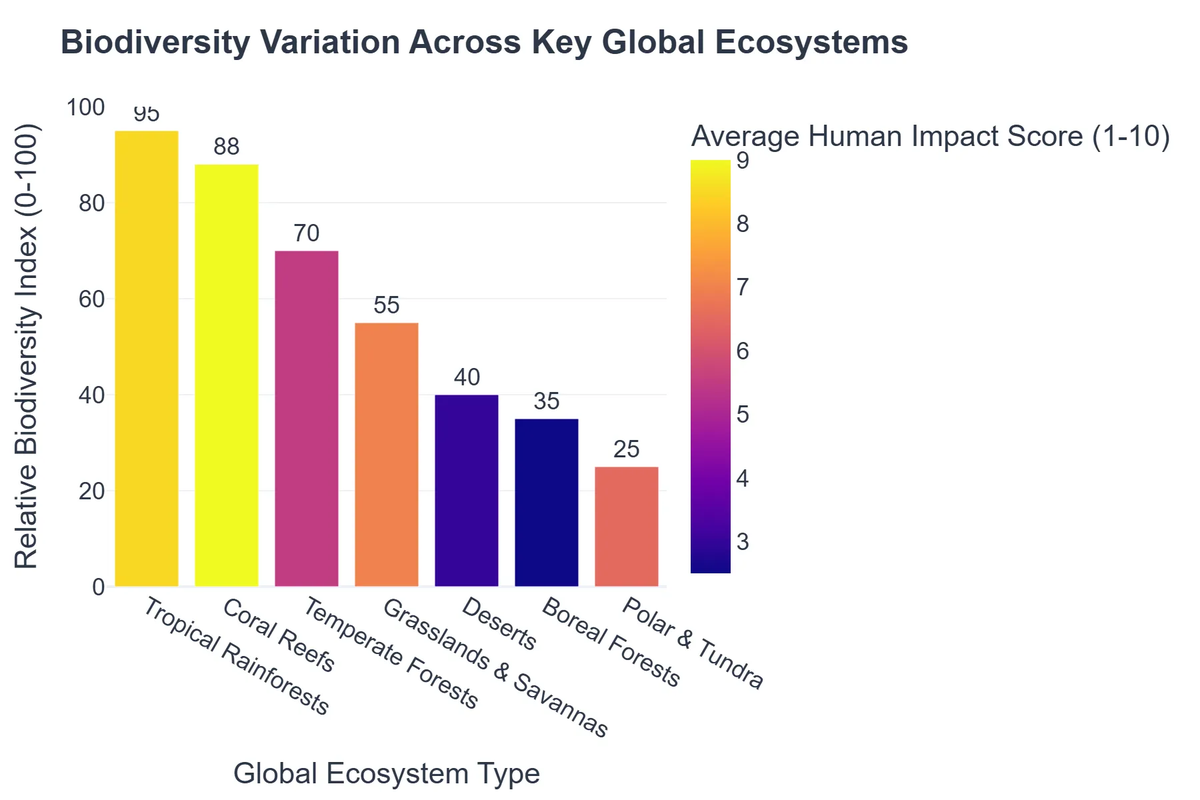
- ➡️ Variety of Habitats: From coral reefs and rainforests to deserts, wetlands, and polar ice caps, Earth boasts an incredible range of distinct habitats, each supporting unique life forms.
- ➡️ Ecological Processes: This includes the diversity of processes like nutrient cycling, water filtration, pollination, and decomposition, all of which are essential for the functioning of the planet.
- ➡️ Interconnectedness: Ecosystems are not isolated; they are interconnected. The health of one ecosystem can directly impact others, highlighting the need for a holistic approach to conservation. The vastness of Earth’s natural systems is also explored in our guide on Biomes and Biodiversity: Shaping Life on Earth.
Measuring Biodiversity: Tools and Techniques
Quantifying biodiversity is a complex but essential task for scientists and conservationists. Various tools and techniques are employed to assess the health and richness of biological systems.
Indices and Metrics
Scientists use a range of quantitative indices to measure biodiversity, providing a standardized way to compare different areas or track changes over time.
- 📊 Shannon Index (H’): This index considers both the number of species (richness) and their relative abundance (evenness). A higher Shannon index indicates greater biodiversity.
- 📊 Simpson Index (D): This measures the probability that two individuals randomly selected from a sample will belong to the same species. A lower Simpson index indicates higher diversity.
- 📊 Species Richness Counts: The simplest measure, which is just the total number of species. While easy to calculate, it doesn’t account for evenness.
- 📊 Alpha, Beta, and Gamma Diversity:
- ✨ Alpha Diversity: Diversity within a particular area or ecosystem (e.g., number of species in a single forest).
- ✨ Beta Diversity: The difference or turnover of species between different ecosystems (e.g., comparing species in two different forests).
- ✨ Gamma Diversity: The total diversity of a region, representing the combination of alpha and beta diversities across a larger landscape.
Challenges in Measurement
Despite advancements, measuring biodiversity remains fraught with challenges.
- 🚧 Undiscovered Species: Millions of species, especially microorganisms and invertebrates, remain undiscovered and undescribed, particularly in remote or deep-sea environments.
- 🚧 Methodological Variability: Different sampling methods, timeframes, and taxonomic expertise can lead to varying results, making comparisons difficult.
- 🚧 Scale Dependency: Biodiversity varies greatly depending on the spatial and temporal scale at which it is measured.
- 🚧 Data Gaps: Comprehensive, long-term data sets are often scarce, particularly for less charismatic or commercially valuable species. For a practical guide on this, one might consult resources like Biodiversity measurement approaches – A practitioner’s guide.
The Intrinsic Value and Benefits of Biodiversity
Beyond its scientific definition, biodiversity holds immense intrinsic, economic, social, and cultural value. It is the bedrock upon which all life, including human civilization, depends.
Ecosystem Services: Nature’s Free Gifts
Biodiversity underpins a vast array of essential “ecosystem services” – the benefits that humans freely gain from the natural environment and from properly-functioning ecosystems.
- 💧 Water Purification: Forests and wetlands filter pollutants, ensuring clean drinking water.
- 🌬️ Air Purification: Plants absorb carbon dioxide and release oxygen, cleaning the air we breathe.
- 🍎 Pollination: Insects, birds, and other animals pollinate crops and wild plants, essential for food production.
- 🌱 Soil Formation and Nutrient Cycling: Microorganisms, fungi, and insects break down organic matter, enriching soil and cycling nutrients.
- ⚖️ Climate Regulation: Forests act as carbon sinks, helping to regulate global temperatures.
- 🌊 Flood and Erosion Control: Wetlands, mangroves, and forests absorb excess water and stabilize soil, preventing natural disasters.
Economic and Social Benefits
The economic value of biodiversity is often underestimated, yet it is foundational to many industries and livelihoods.
- 💰 Agriculture and Food Security: Genetic diversity in crops and livestock provides resilience against diseases and changing climates. Wild relatives of cultivated plants offer vital genetic material for breeding new, more resilient varieties.
- 💊 Medicine and Pharmaceuticals: Many modern medicines are derived from natural compounds found in plants, animals, and microorganisms. The Amazon rainforest alone is a vast untapped pharmacy.
- 🎣 Fisheries and Forestry: Healthy aquatic ecosystems support thriving fisheries, while diverse forests provide timber and non-timber forest products.
- 🏞️ Tourism and Recreation: Ecotourism, wildlife viewing, and outdoor recreation generate significant revenue and employment worldwide, driven by natural beauty and diverse ecosystems.
Cultural and Ethical Significance
Biodiversity is deeply intertwined with human cultures, spirituality, and ethical considerations.
- 🎨 Inspiration and Aesthetics: Nature’s beauty inspires art, music, literature, and spiritual practices across cultures.
- 🌍 Cultural Identity: Many indigenous cultures have profound connections to their local ecosystems, with biodiversity playing a central role in their traditions, ceremonies, and way of life.
- 🤝 Ethical Responsibility: There is a growing recognition that humanity has an ethical obligation to protect other species and the natural world, irrespective of their direct utility to humans. This intrinsic value emphasizes the right of all life forms to exist.
Threats to Biodiversity: A Looming Crisis
Despite its immense value, global biodiversity is facing unprecedented threats, leading to what many scientists term the “sixth mass extinction event.” Understanding these threats is critical for developing effective conservation strategies.
Habitat Loss and Fragmentation
This is by far the leading cause of biodiversity loss. As human populations expand and resource consumption increases, natural habitats are converted for agriculture, urban development, infrastructure, and resource extraction.
- 🏗️ Deforestation: Clearing forests for logging, cattle ranching, and agriculture destroys habitats for countless species.
- 🏘️ Urbanization: Expanding cities and suburbs pave over natural areas, reducing available living space for wildlife.
- 🛣️ Infrastructure Development: Roads, dams, and mines fragment remaining habitats, isolating populations and disrupting ecological processes.
Climate Change
Global warming is altering ecosystems faster than many species can adapt, leading to shifts in geographical ranges, changes in breeding patterns, and increased extinction risks.
- 🌡️ Rising Temperatures: Affecting everything from polar ice caps to coral reefs, leading to habitat destruction (e.g., coral bleaching).
- 🌊 Sea-Level Rise: Threatening coastal wetlands and island ecosystems.
- 🌧️ Altered Weather Patterns: More frequent and intense droughts, floods, and wildfires stress ecosystems.
Pollution and Overexploitation
Contamination of air, water, and soil, along with unsustainable harvesting of natural resources, significantly degrades ecosystems and threatens species.
- 🧪 Chemical Pollution: Pesticides, industrial chemicals, and plastics contaminate environments, harming wildlife and human health.
- 🎣 Overfishing: Depletes fish stocks, disrupting marine food webs.
- 🌲 Unsustainable Logging: Leads to deforestation and loss of old-growth forests.
- 🐘 Poaching and Illegal Wildlife Trade: Directly drives many species to the brink of extinction.
Invasive Alien Species
The introduction of non-native species, whether accidental or intentional, can devastate native ecosystems.
- 🦝 Competition: Invasive species outcompete native ones for resources.
- 🦠 Predation and Disease: They can prey on native species or introduce novel diseases.
- 🔄 Habitat Alteration: Some invasive plants can drastically change the physical structure of habitats.
The Role of Biodiversity in Evolution and Adaptation
Biodiversity is not just a static collection of life forms; it’s a dynamic system intrinsically linked to the processes of evolution and adaptation. It fuels the very mechanisms that allow life to persist and diversify on a changing planet.
Resilience in Changing Environments
A diverse array of genes, species, and ecosystems provides a natural buffer against environmental shocks and changes. When an ecosystem is rich in biodiversity, it is more likely to contain species or genetic variations that can withstand or adapt to new conditions, such as disease outbreaks, climate shifts, or invasive species.
- 🔄 Genetic Bottlenecks: Low genetic diversity makes a species highly vulnerable to extinction from a single threat. High diversity provides a ‘genetic toolkit’ for survival.
- 🌿 Functional Redundancy: In diverse ecosystems, multiple species may perform similar ecological roles (e.g., several species of decomposers). If one species declines, others can pick up the slack, maintaining ecosystem function.
- 📈 Adaptive Capacity: The greater the genetic variability within a population, the higher the chance that some individuals will possess traits enabling them to survive and reproduce in altered conditions, passing those advantageous traits to future generations. This is a core tenet of The Code of Life: Decoding Genetics, Evolution, and Existence.
The Engine of Natural Selection
Biodiversity, particularly genetic diversity, is the raw material upon which natural selection acts. Without variation, there can be no selection, and thus no evolution.
- 🧪 Mutation: The ultimate source of new genetic variation, leading to new traits.
- 🌱 Selection Pressure: Environmental challenges (e.g., new predators, climate extremes, resource scarcity) act as selection pressures, favoring individuals with advantageous traits.
- ➡️ Evolutionary Trajectories: Over time, these advantageous traits become more common in the population, leading to the evolution of new adaptations and, eventually, new species. This continuous process has given rise to the astonishing biological richness we observe today.
Conservation Strategies: Protecting Our Natural Heritage
Given the pressing threats, effective conservation strategies are paramount. These efforts often fall into two main categories: in-situ and ex-situ conservation, complemented by policy and international cooperation.
In-situ Conservation
This approach focuses on protecting species in their natural habitats, which is generally considered the most effective way to preserve biodiversity.
- 🌍 Protected Areas: Establishing national parks, wildlife sanctuaries, biosphere reserves, and marine protected areas.
- 🌳 Habitat Restoration: Repairing degraded ecosystems to improve their ability to support biodiversity.
- 👨👩👧👦 Sustainable Resource Management: Promoting practices that allow human use of resources without depleting them (e.g., sustainable forestry, fishing quotas).
- 🔄 Ecological Corridors: Creating pathways that connect fragmented habitats, allowing species to move between areas and maintain genetic flow.
Ex-situ Conservation
This involves conserving components of biodiversity outside their natural habitats, often as a backup measure or for species that cannot survive in the wild.
- 🔬 Zoos and Botanical Gardens: Breeding programs for endangered species, public education, and scientific research.
- 🌱 Seed Banks and Gene Banks: Storing seeds, spores, or genetic material (e.g., DNA, tissue cultures) in controlled conditions to preserve genetic diversity for future use.
- 🐟 Aquariums and Captive Breeding Centers: Similar to zoos, but focused on aquatic species.
- ❄️ Cryopreservation: Freezing sperm, eggs, or embryos for long-term storage.
Policy, Legislation, and International Cooperation
Effective conservation requires strong legal frameworks and global collaboration.
- 📜 National Laws: Enacting and enforcing laws that protect endangered species, regulate pollution, and mandate environmental impact assessments.
- 🌐 International Agreements: Treaties like the Convention on Biological Diversity (CBD) and CITES (Convention on International Trade in Endangered Species of Wild Fauna and Flora) aim to coordinate global efforts. More on global frameworks can be found in Biodiversity Target Setting.
- 🤝 Community Involvement: Engaging local communities in conservation efforts, recognizing their traditional ecological knowledge and ensuring their livelihoods are considered.
- 💰 Financial Mechanisms: Developing innovative funding mechanisms for conservation, including payments for ecosystem services and biodiversity offsets.
Biodiversity and Human Well-being: An Interconnected Future
The health of biodiversity is directly intertwined with the health and prosperity of human societies. Our well-being, both physically and culturally, depends on a thriving natural world.
Food Security and Health
Biodiversity is the foundation of our food systems and a critical component of human health.
- 🍚 Dietary Diversity: A wide range of crops and livestock ensures food security and nutritional variety. Relying on too few species makes global food systems vulnerable.
- 💊 Natural Medicines: As previously mentioned, a vast number of modern pharmaceuticals originate from natural sources. Loss of species means potential cures and treatments are lost before they are discovered.
- 🧠 Mental and Physical Health: Access to biodiverse natural environments has been linked to reduced stress, improved mental health, and enhanced physical activity.
Disease Regulation
Healthy ecosystems with high biodiversity can play a crucial role in regulating disease transmission, including zoonotic diseases that jump from animals to humans.
- 🛡️ Dilution Effect: In diverse ecosystems, pathogens may encounter more species that are not competent hosts, “diluting” their ability to spread to suitable hosts, including humans.
- 🐛 Vector Control: Natural predators and a balanced ecosystem can control populations of disease vectors like mosquitoes and ticks.
- 🦠 Ecological Buffers: Intact natural habitats can act as barriers, reducing human exposure to novel pathogens.
Sustainable Development Goals
The concept of biodiversity is central to achieving many of the United Nations’ Sustainable Development Goals (SDGs), a blueprint for a more sustainable and equitable future for all.
- 🎯 SDG 15 (Life on Land): Directly aims to protect, restore, and promote sustainable use of terrestrial ecosystems, sustainably manage forests, combat desertification, and halt and reverse land degradation and biodiversity loss.
- 🎯 SDG 14 (Life Below Water): Focuses on conserving and sustainably using the oceans, seas, and marine resources for sustainable development.
- 🎯 Indirect Contributions: Biodiversity also contributes indirectly to other SDGs, such as No Poverty (SDG 1), Zero Hunger (SDG 2), Good Health and Well-being (SDG 3), Clean Water and Sanitation (SDG 6), and Climate Action (SDG 13).
The Future of Biodiversity: Challenges and Opportunities
The path forward for biodiversity conservation is fraught with challenges, but also ripe with opportunities for innovation, collaboration, and a renewed commitment to stewarding our planet’s life support systems. The need to define biodiversity consistently and act on that understanding has never been more urgent.
Technological Advancements in Conservation
New technologies are revolutionizing how we monitor, understand, and protect biodiversity.
- 📡 Remote Sensing and GIS: Satellite imagery and Geographic Information Systems provide powerful tools for mapping habitats, tracking deforestation, and monitoring changes in land use.
- 🧬 eDNA (Environmental DNA): Analyzing DNA traces left in water or soil allows for non-invasive detection of species, even rare or elusive ones.
- 🤖 AI and Machine Learning: Used to process vast amounts of ecological data, identify patterns, predict extinction risks, and optimize conservation interventions.
- ड्रोन Drones: Used for aerial surveys, anti-poaching surveillance, and even seed dispersal in restoration projects.
Global Initiatives and Citizen Science
Collective action, from international agreements to individual contributions, is essential for tackling the biodiversity crisis.
- 🤝 International Conventions: Continued strengthening and implementation of global agreements like the CBD and new ambitious targets for biodiversity protection.
- 🧑🔬 Citizen Science: Engaging the public in data collection (e.g., bird counts, plant identification apps) significantly expands monitoring capabilities and fosters public engagement.
- 🌱 Rewilding and Ecological Restoration: Large-scale efforts to restore degraded ecosystems and reintroduce keystone species, aiming to bring back wildness and ecological function.
- 🗣️ Education and Advocacy: Raising public awareness and advocating for stronger environmental policies are critical for driving change.
The future of biodiversity depends on our collective ability to recognize its profound value, understand the threats it faces, and implement effective, collaborative solutions. It is a shared responsibility to safeguard this irreplaceable heritage for generations to come. For more on the different aspects of Earth’s biological richness, consider reading Types of Biological Diversity: Understanding Earth’s Richness.
Recommended Video
What are the three main levels of biodiversity?
The three main levels of biodiversity are genetic diversity (variation within species), species diversity (variety of different species), and ecosystem diversity (variety of habitats, communities, and ecological processes).
Why is biodiversity important for human well-being?
Biodiversity is vital for human well-being as it provides essential ecosystem services such as clean air and water, pollination of crops, soil fertility, climate regulation, and sources for medicines and food.
What are the primary threats to global biodiversity?
The primary threats to global biodiversity include habitat destruction and fragmentation, climate change, pollution, invasive alien species, overexploitation of resources, and disease.
How can individuals contribute to biodiversity conservation?
Individuals can contribute to biodiversity conservation by reducing their carbon footprint, supporting sustainable products, advocating for conservation policies, participating in local restoration projects, and educating others about its importance.