

The Illusion of Nothingness: Understanding Black Hole Appearance
When we ponder the universe’s most enigmatic objects, the concept of a black hole often conjures images of a cosmic void. Yet, understanding the true black hole appearance isn’t as simple as imagining an empty space. Instead, it involves grasping the profound effects of extreme gravity on light and spacetime. The central, unseeable region is defined by its boundary: the event horizon.
💡 Key Takeaways
- Black holes don’t ‘look’ like holes; their appearance is due to the extreme warping of spacetime around them.
- The event horizon is the boundary beyond which nothing, not even light, can escape the black hole’s gravity.
- The ‘appearance’ of a black hole is largely defined by the accretion disk of gas and dust spiraling into it, creating a bright ring.
- Gravitational lensing distorts the light from background objects, further shaping how a black hole’s immediate vicinity is perceived.
“The ‘appearance’ of a black hole isn’t about seeing the object itself, but rather the dramatic ballet of light and spacetime around its event horizon. It’s where the fabric of reality itself takes center stage.”
— Astrid Bellweather, Astrophysicist & Science Communicator
In This Article
- → The Illusion of Nothingness: Understanding Black Hole Appearance
- — 💡 Key Takeaways
- → The Event Horizon: The Point of No Return
- — 💡 What Defines the Event Horizon?
- — ➡️ Spacetime Curvature and Light
- → Visualizing the Unseeable: What Black Holes Look Like
- — The “Shadow” and Accretion Disk
- — How the Event Horizon Telescope Revolutionized Our View
- → Distortions and Gravitational Lensing
- — Gravitational Lensing Explained
- — Approaching the Event Horizon: A Journey
- → Beyond the Horizon: Theoretical Insights
- — Singularity and Interior Physics
The Event Horizon: The Point of No Return
At the heart of a black hole’s mystique lies the event horizon – a theoretical boundary surrounding a black hole beyond which neither light nor any other radiation can escape. It’s not a physical surface you could stand on, but rather a “point of no return,” a boundary in spacetime. This concept is fundamental to comprehending the `black hole face` as we perceive it.
💡 What Defines the Event Horizon?
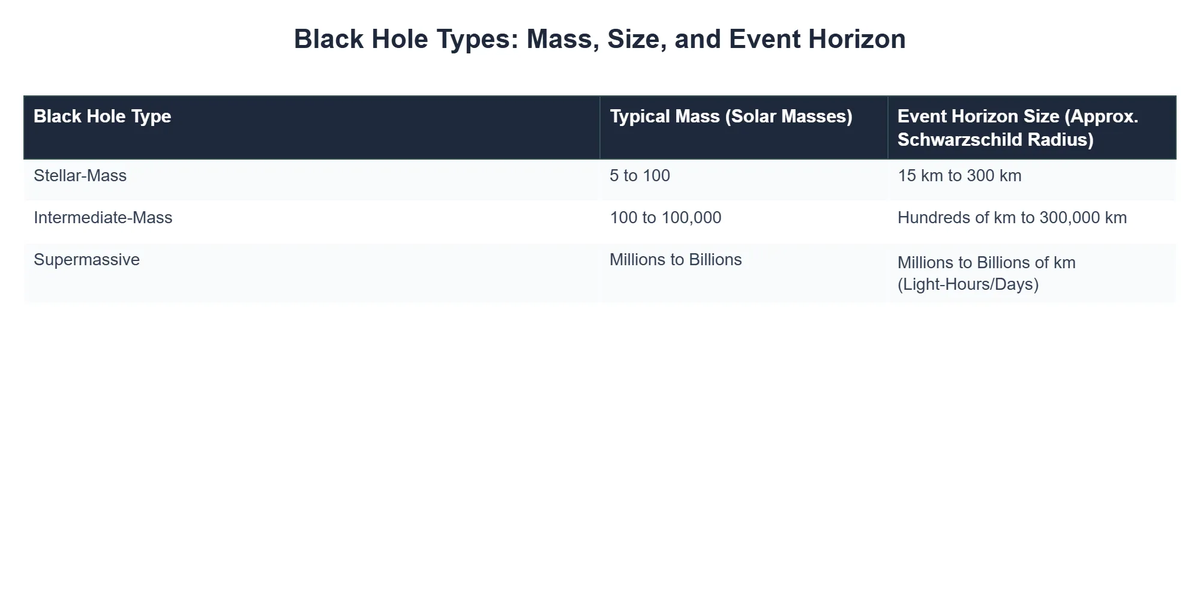
- ✅ Escape Velocity: The event horizon is the distance from a black hole where the escape velocity, the speed needed to break free from its gravitational pull, exceeds the speed of light. Since nothing can travel faster than light, anything crossing this boundary is trapped.
- ➡️ Gravitational Singularity: At the very center of a black hole is a singularity, a point where matter is crushed to infinite density and spacetime curvature becomes infinite. The event horizon is a distant “shell” around this singularity.
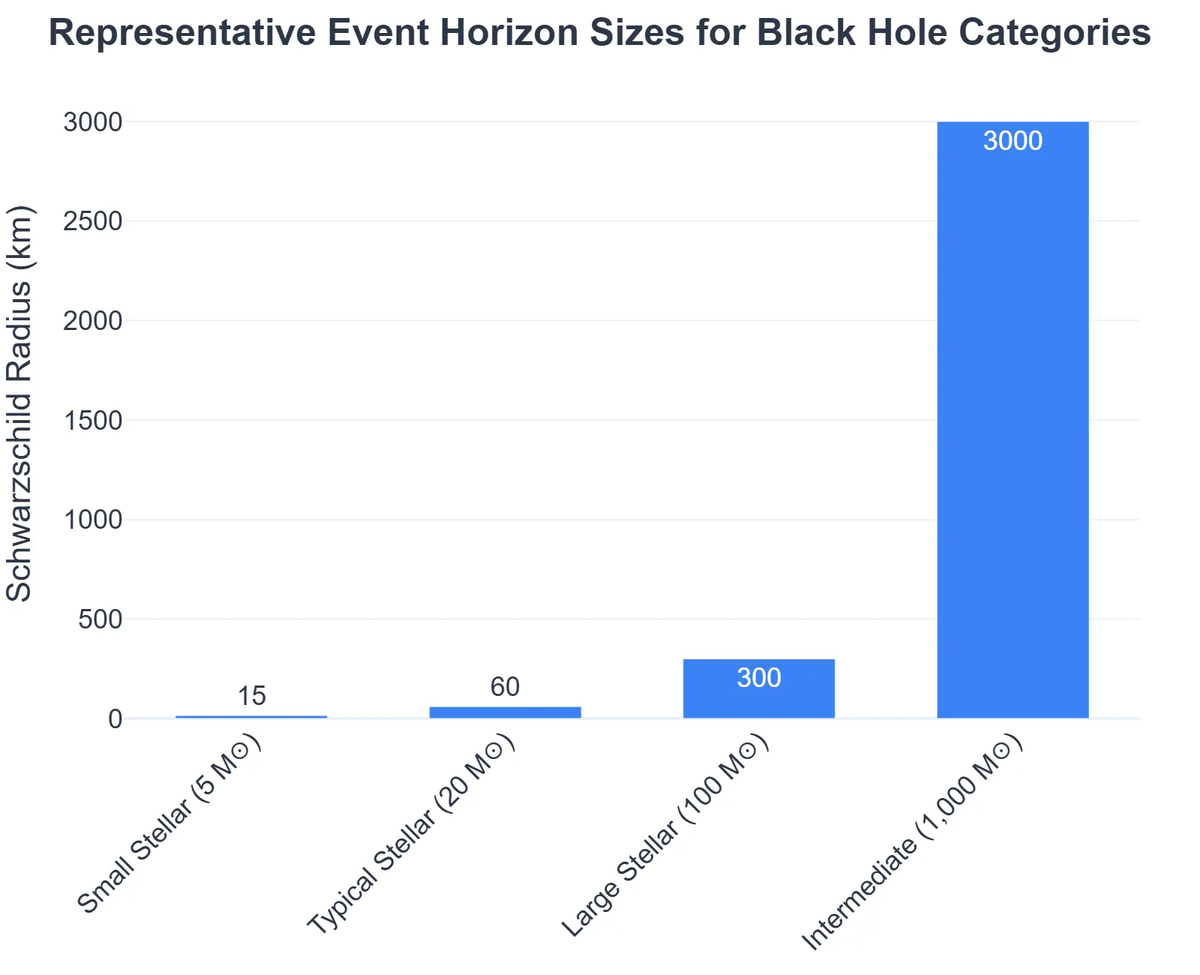
- 🌀 Schwarzschild Radius: For non-rotating black holes, the radius of the event horizon is known as the Schwarzschild radius. This concept is crucial to defining the size of a black hole’s observable “edge.” To learn more about this, explore our article on Schwarzschild Black Hole and Radius: Understanding Spacetime.
➡️ Spacetime Curvature and Light
The immense mass of a black hole dramatically warps the fabric of spacetime around it. Imagine space and time as a stretched rubber sheet; a black hole creates a deep, inescapable well. As light approaches this well, its path is bent. If light crosses the event horizon, it’s pulled irrevocably towards the singularity. This extreme bending of light is what ultimately dictates what we can (or cannot) observe about a black hole.
For a more detailed look into this fascinating boundary, see our piece on Event Horizon: Exploring the Edge of a Black Hole.
Visualizing the Unseeable: What Black Holes Look Like
If light can’t escape, how do we “see” a black hole? The answer lies not in directly observing the black hole itself, but in observing its effects on the surrounding environment. The actual black hole appearance is more about what it isn’t and how it distorts its surroundings.
The “Shadow” and Accretion Disk
The most iconic visual representation of a black hole involves a dark central region surrounded by a glowing ring. This “dark central region” is often referred to as the black hole’s shadow. It’s larger than the event horizon because light paths that would just graze the event horizon are still bent back into the black hole, creating an apparent larger void.
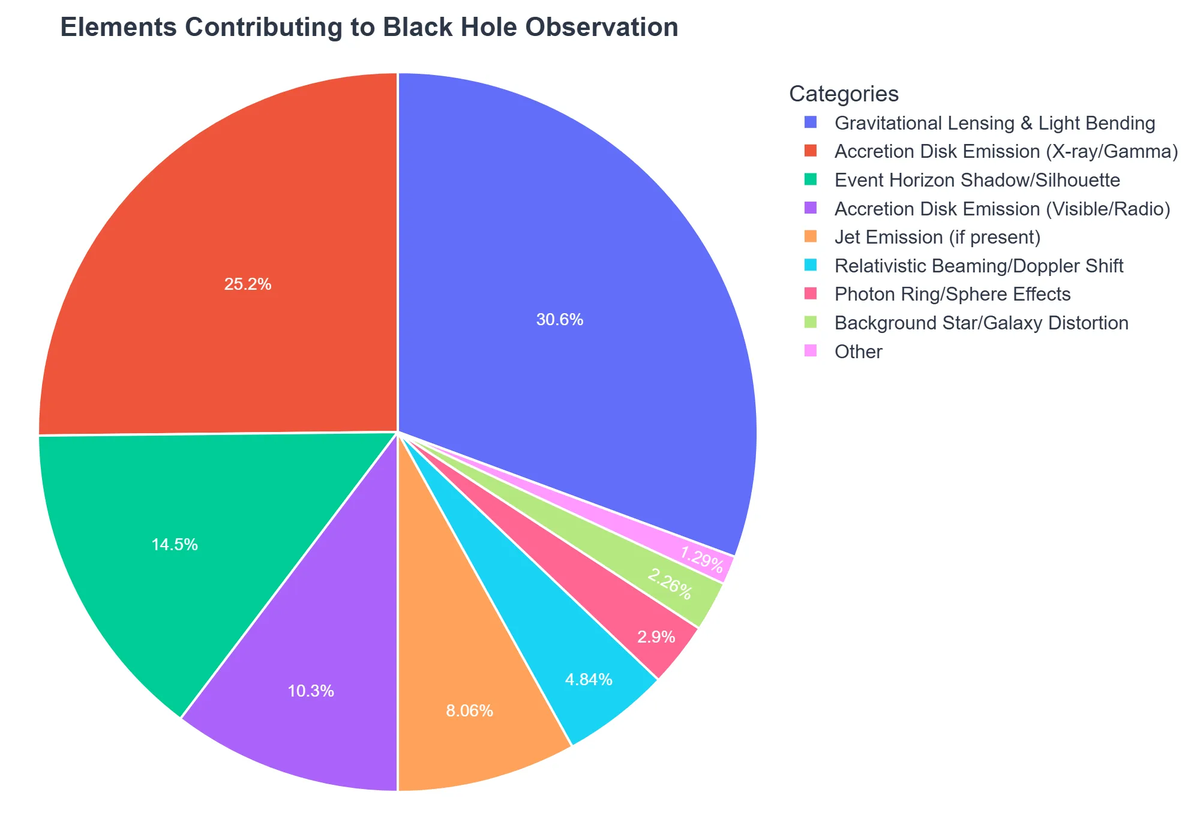
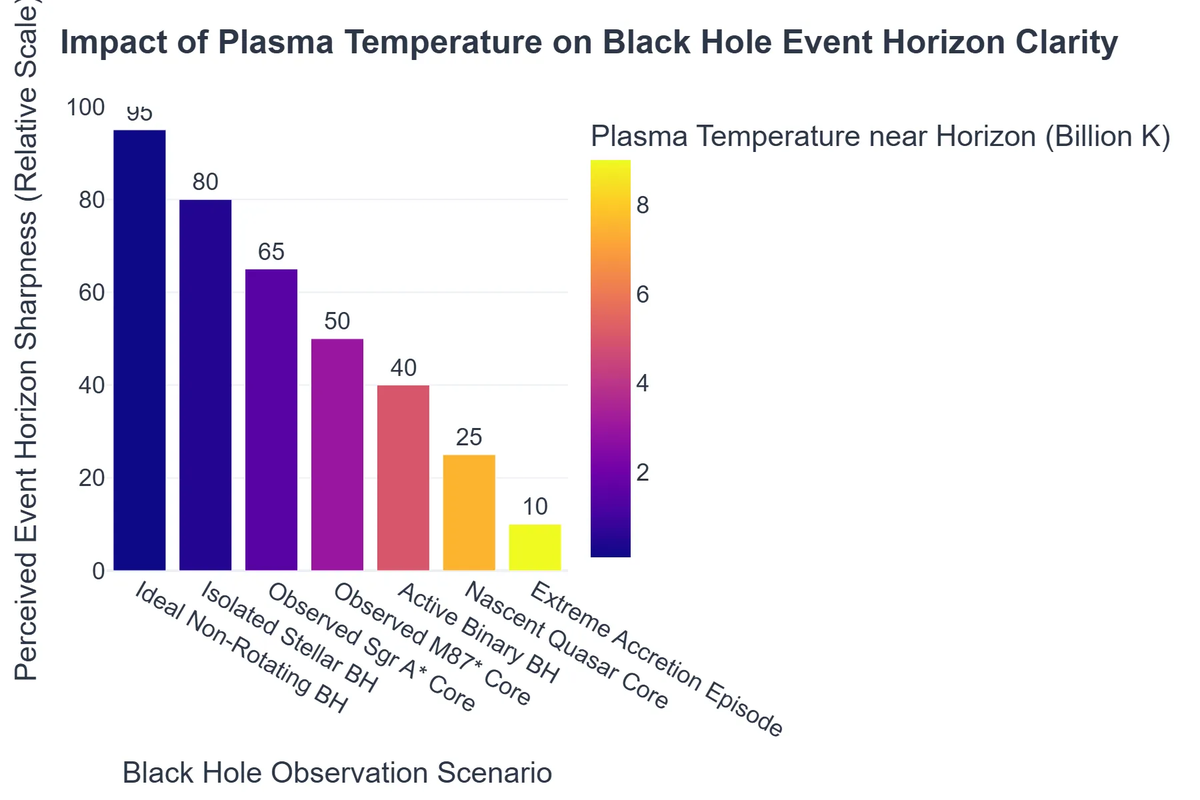
Surrounding this shadow is the accretion disk – superheated gas and dust spiraling into the black hole at incredible speeds. This material is accelerated to immense temperatures, emitting powerful X-rays and other forms of radiation, making it glow intensely. It’s this glowing accretion disk, distorted by the black hole’s gravity, that forms the luminous “ring” we associate with black hole images.
How the Event Horizon Telescope Revolutionized Our View
For decades, images of black holes were purely theoretical or artistic interpretations. That changed dramatically with the Event Horizon Telescope (EHT). In 2019, the EHT collaboration released the first-ever image of a black hole, specifically the supermassive black hole at the center of galaxy Messier 87 (M87*). This groundbreaking image showed exactly what was predicted: a dark central “shadow” against the backdrop of its glowing accretion disk.
This image wasn’t a photograph in the traditional sense, but rather a reconstruction based on radio waves collected by a global network of telescopes. It provided concrete evidence for the existence and visual characteristics of black holes, validating decades of theoretical physics. You can dive deeper into this historic achievement by reading about the First Black Hole Image: Decoding the M87* EHT Image or visiting the Event Horizon Telescope website.
Distortions and Gravitational Lensing
The extreme gravity near a black hole does more than just trap light; it dramatically distorts the light from objects behind it or around it. This phenomenon is known as gravitational lensing, and it plays a significant role in the overall black hole appearance.
Gravitational Lensing Explained
Imagine looking through a massive, invisible lens in space. That’s essentially what a black hole does to light. Light rays passing near the black hole are bent, causing objects behind it to appear distorted, magnified, or even to create multiple images. This effect can bend light from distant galaxies, making them appear as arcs or rings around the black hole’s immediate vicinity. This is why the accretion disk itself appears warped and brighter on one side – the light from the back of the disk is bent around the black hole towards us.
NASA provides an excellent overview of black hole anatomy and how these effects manifest. You can explore more at NASA’s Black Hole Anatomy page.
Approaching the Event Horizon: A Journey
If you were to hypothetically approach a black hole, the visual effects would be bizarre. As you near the event horizon, light from stars and galaxies behind you would appear to converge and intensify into a narrow “portal” due to extreme lensing. The light from your own spacecraft, if you could see it, would redshift dramatically, eventually fading from view as it struggles to escape the growing gravitational pull. Time itself would appear to slow down from an outside observer’s perspective, though for you, time would proceed normally until you crossed the boundary. Once across the event horizon, escape is impossible, and all paths lead only to the singularity.
Recommended Video
Beyond the Horizon: Theoretical Insights
While the event horizon marks the boundary of our observable universe relative to a black hole, theoretical physics delves into what might lie beyond it. This is where our understanding transitions from observation and indirect imaging to pure theoretical models.
Singularity and Interior Physics
Beyond the event horizon lies the singularity – a point of infinite density where the known laws of physics, as we understand them, break down. What exactly happens inside a black hole, or at the singularity, remains one of the greatest unsolved mysteries in physics. Theories range from the possibility of new physics taking over to the concept of “wormholes” connecting to other parts of the universe or even other universes. However, these are highly speculative and not yet supported by observational evidence.
Ultimately, the black hole appearance is not about seeing a solid object, but about witnessing the extreme warping of space and time around an object of unimaginable density. It’s a testament to the profound and often counter-intuitive nature of the cosmos, a journey into the heart of Cosmic Queries: Probing the Mysteries of the Universe.
What is the event horizon of a black hole?
The event horizon is the theoretical boundary around a black hole beyond which the gravitational pull is so strong that no particles or electromagnetic radiation (like light) can escape, effectively making it a point of no return.
Can we actually ‘see’ a black hole?
No, we cannot directly see a black hole because its gravity prevents light from escaping. What we ‘see’ or detect is the effect of its extreme gravity on surrounding matter, such as the accretion disk of superheated gas and dust, or gravitational lensing of background stars.
What makes the ‘shadow’ of a black hole?
The ‘shadow’ of a black hole is the region where light rays are captured by the black hole’s gravity, creating a dark silhouette against the bright backdrop of an accretion disk or distant light source. It’s larger than the event horizon due to the bending of light.
How does an accretion disk contribute to a black hole’s appearance?
An accretion disk is a structure formed by diffuse material orbiting a massive central body. For black holes, this material heats up to extreme temperatures due to friction and gravitational forces, emitting intense X-rays and other radiation, making the area around the black hole glow brightly.