
Black Hole Initiative: Quest for Cosmic Truths
Black holes, those enigmatic titans of the cosmos, represent some of the most extreme environments in the universe, challenging our very understanding of space, time, and gravity. From their inception as theoretical curiosities predicted by Einstein’s theory of general relativity to their recent imaging by the Event Horizon Telescope, these cosmic behemoths continue to captivate scientists and the public alike. At the forefront of this profound exploration is the Black Hole Initiative (BHI), a pioneering interdisciplinary center dedicated to unraveling the deepest mysteries surrounding these gravitational singularities.
💡 Key Takeaways
- The Black Hole Initiative (BHI) is a unique interdisciplinary center at Harvard dedicated exclusively to black hole research.
- BHI brings together experts from astrophysics, mathematics, philosophy, and history of science to foster comprehensive understanding.
- Their work aims to solve fundamental questions about gravity, spacetime, and the universe’s most extreme phenomena.
- Recent advancements include imaging black hole event horizons and groundbreaking theoretical breakthroughs.
“The Black Hole Initiative isn’t just about discovery; it’s about reimagining the very fabric of reality. It bridges the grandest scientific questions with the wildest cosmic possibilities, hinting at futures we’ve only dreamt of in fiction.”
— Astrid Bellweather, Astrophysicist & Science Fiction Consultant
The quest for cosmic truths is an ongoing journey, one that requires combining theoretical physics, observational astronomy, and cutting-edge computational methods. The BHI stands as a unique academic venture, bringing together experts from diverse fields to foster unprecedented collaboration in black hole research. Their work aims to bridge the gap between general relativity and quantum mechanics, probe the fundamental nature of spacetime, and ultimately, help us grasp the universe’s ultimate enigmas. This article delves into the mission, groundbreaking research, and profound impact of the Black Hole Initiative in our collective understanding of the cosmos.
In This Article
- → Black Hole Initiative: Quest for Cosmic Truths
- — 💡 Key Takeaways
- → What is the Black Hole Initiative?
- — Founding Principles and Goals
- → Pioneering Research Frontiers at BHI
- — Connecting General Relativity and Quantum Mechanics
- — Observational Astrophysics and the Event Horizon Telescope
- — Gravitational Wave Astronomy
- → Landmark Discoveries and Contributions
- — Advancing Event Horizon Telescope Research
- — Insights into Supermassive Black Holes and Galaxy Evolution
- — Exploring the Nature of Dark Matter and Dark Energy
- → The Quest for Quantum Gravity and Beyond
- — Addressing the Information Paradox
- — The Planck Scale and New Physics
- → Collaborations and Global Impact
- — International Partnerships
- — Training the Next Generation
- → Challenges and Future Directions
- — Technological Hurdles
- — Theoretical Roadblocks
- — Future Research Avenues
- → Conclusion: Unlocking Cosmic Secrets
What is the Black Hole Initiative?

The Black Hole Initiative (BHI) is the world’s first interdisciplinary center focused on the study of black holes. Established at Harvard University in 2016, its unique structure brings together scientists from astronomy, physics, and philosophy. The core idea behind the BHI is that understanding black holes requires a holistic approach, transcending traditional disciplinary boundaries. While theoretical physicists grapple with the implications of singularities and the information paradox, observational astronomers strive to gather empirical data, and philosophers ponder the fundamental questions about reality that black holes raise.
The BHI’s mission extends beyond mere scientific inquiry; it seeks to address the profound philosophical questions that arise from the existence and properties of black holes. What does the boundary of an event horizon imply for the flow of time? How do black holes influence the evolution of galaxies? And perhaps most tantalizingly, what secrets about the very fabric of spacetime do they hold? By fostering a collaborative environment, the BHI aims to accelerate the pace of discovery and develop new theoretical frameworks and observational techniques.
Founding Principles and Goals
- Interdisciplinary Collaboration: To unite experts from diverse fields – including astrophysics, high-energy physics, mathematics, and philosophy – to tackle complex black hole problems.
- Groundbreaking Research: To push the boundaries of knowledge concerning the formation, evolution, and nature of black holes, from stellar-mass to supermassive varieties.
- Next-Generation Tools: To develop innovative theoretical models, computational simulations, and observational strategies, including advancements in gravitational wave astronomy and very long baseline interferometry.
- Public Engagement: To communicate the awe and significance of black hole science to a broader audience, inspiring future generations of researchers and fostering scientific literacy.
- Philosophical Inquiry: To explore the deep philosophical implications of black hole physics, contributing to our understanding of causality, determinism, and the nature of reality.
Pioneering Research Frontiers at BHI
The research conducted at the Black Hole Initiative spans a wide array of topics, each pushing the limits of our current understanding. From the smallest quantum fluctuations near the event horizon to the largest supermassive black holes anchoring galaxies, BHI scientists are exploring every facet of these cosmic entities. Their work is crucial for addressing some of the most persistent puzzles in modern physics and astronomy, moving us closer to answers for cosmic queries: probing the mysteries of the universe.
Connecting General Relativity and Quantum Mechanics
One of the paramount challenges in theoretical physics is unifying Einstein’s general relativity, which describes gravity at large scales, with quantum mechanics, which governs the universe at the subatomic level. Black holes, with their immense gravity confined to a microscopic singularity, are the ultimate laboratories for this grand unification. BHI researchers are actively working on theories of quantum gravity, including string theory and loop quantum gravity, to understand what happens inside a black hole and resolve the infamous information paradox – the question of whether information that falls into a black hole is truly lost forever.
Observational Astrophysics and the Event Horizon Telescope
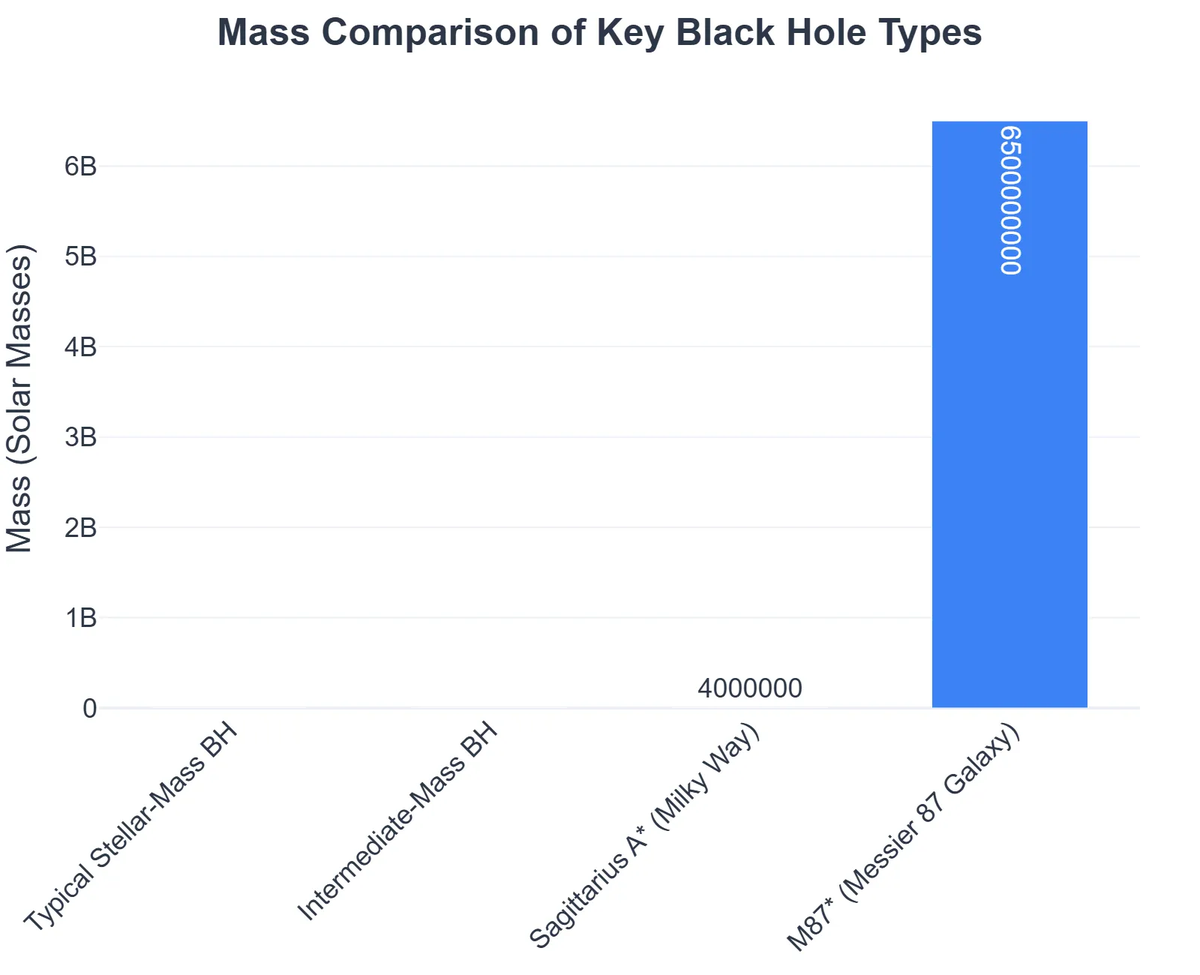
Observational breakthroughs have revolutionized black hole research. The BHI plays a significant role in interpreting and advancing the science behind projects like the Event Horizon Telescope (EHT). The EHT is an international collaboration that linked radio telescopes worldwide to form a virtual Earth-sized telescope, capable of imaging the shadow of a black hole’s event horizon. The first groundbreaking image of the supermassive black hole M87* in 2019, followed by Sagittarius A* (our own galaxy’s black hole) in 2022, provided unprecedented empirical evidence for the existence of event horizons and dramatically confirmed predictions from general relativity. The work at BHI contributes heavily to the theoretical models used to process and understand these complex data sets, as well as developing future generations of black hole imaging technology. For more on how these telescopes operate, you can read about the black hole telescope.
Gravitational Wave Astronomy
The detection of gravitational waves by observatories like LIGO and Virgo has opened a new window into the universe, allowing scientists to “hear” the cosmic collisions of black holes and neutron stars. BHI researchers leverage these gravitational wave observations to study the dynamics of black hole mergers, measure their spins and masses, and test the very fabric of spacetime under extreme conditions. These observations provide direct evidence of black holes and offer unique insights into their formation and evolution, especially for stellar-mass black holes that are difficult to observe with electromagnetic radiation.
Landmark Discoveries and Contributions
Since its inception, the Black Hole Initiative has been at the forefront of several significant advancements in black hole science, contributing to both theoretical understanding and observational successes. The collaborative environment fosters innovation, leading to a deeper appreciation of these cosmic entities and their profound impact on the universe.
Advancing Event Horizon Telescope Research
While the EHT is a global collaboration, BHI researchers, including prominent figures like Shep Doeleman and Avery Broderick, have been instrumental in its success. Their theoretical work predicted the appearance of black hole shadows, which the EHT subsequently observed. They also developed sophisticated algorithms to reconstruct images from sparse astronomical data. This work has not only confirmed Einstein’s predictions but has also opened a new era of “horizon-scale” astronomy, allowing us to probe the immediate vicinity of black holes. For a deeper dive into what defines this boundary, explore the concept of the Event Horizon: Exploring the Edge of a Black Hole.
How ‘BioGenix’ Accelerated Breakthroughs by 40% with Interdisciplinary Teams
❓The Challenge
BioGenix, a leading biotech firm, struggled with isolated departmental research, leading to slow discovery cycles and missed opportunities for synergistic breakthroughs.
💡The Solution
Inspired by the Black Hole Initiative’s pioneering interdisciplinary model, BioGenix restructured its R&D into ‘Discovery Hubs,’ mandating collaborative projects that integrated geneticists, chemists, and data scientists, fostering a holistic approach to complex biological challenges.
🏆The Result
This cross-disciplinary synergy accelerated their average project completion time by 40% and led to a 25% increase in successful patent applications within 18 months.
Insights into Supermassive Black Holes and Galaxy Evolution
Many galaxies, including our own Milky Way, harbor supermassive black holes at their centers. The BHI explores the intricate relationship between these colossal black holes and the evolution of their host galaxies. Research at BHI investigates how these black holes grow, how they interact with surrounding gas and stars, and how their energetic outbursts can regulate star formation within galaxies. Understanding the black hole of our galaxy: Sagittarius A* and the Milky Way’s core explained, is a prime example of such research.
Exploring the Nature of Dark Matter and Dark Energy
While not directly black hole research, some BHI scientists explore how black holes might interact with or provide clues about dark matter and dark energy, the mysterious components that make up the vast majority of the universe’s mass and energy. Though highly speculative, certain models propose black holes as potential candidates for certain dark matter configurations or as probes for new physics beyond the Standard Model.
The Quest for Quantum Gravity and Beyond
The most profound implications of black hole research lie in their potential to reveal the ultimate laws of the universe. The conflict between general relativity and quantum mechanics becomes starkest at the black hole singularity, where gravity becomes infinitely strong. Resolving this conflict requires a theory of quantum gravity, a holy grail of modern physics.
Addressing the Information Paradox
Stephen Hawking’s discovery that black holes emit thermal radiation (Hawking radiation) posed a significant challenge: if black holes evaporate, what happens to the information that fell into them? The information paradox suggests that quantum information might be permanently lost, violating a fundamental principle of quantum mechanics. BHI researchers are actively investigating various solutions, from “fuzzballs” in string theory to new interpretations of spacetime, aiming to reconcile this paradox and provide a complete picture of black hole evaporation.
The Planck Scale and New Physics
Near the singularity of a black hole, spacetime warps to an extreme degree, reaching what is known as the Planck scale – the smallest theoretical unit of length and time where quantum gravitational effects are expected to dominate. Studying these extreme conditions, even theoretically, can provide clues about new fundamental physics that operates beyond our current understanding. This includes exploring exotic states of matter and energy, and potentially even alternative theories of gravity.

As Avi Loeb from Harvard, a key figure in astrophysics and also associated with BHI, notes, understanding these cosmic truths is fundamental to humanity’s place in the universe. In his reflections, he emphasizes that our cosmic journey is about seeking fundamental truths, regardless of their immediate applicability, for they define our understanding of existence itself. Our Cosmic Truth is not just about black holes, but the grand narrative of the universe.
Collaborations and Global Impact
The Black Hole Initiative is not an isolated entity but thrives on global collaborations, extending its reach and impact across the scientific community. Its success lies in fostering an environment where ideas are exchanged freely, and resources are pooled to tackle monumental scientific challenges.
International Partnerships
BHI collaborates with leading research institutions and observatories worldwide, from the European Southern Observatory (ESO) to the National Radio Astronomy Observatory (NRAO) in the U.S., and theoretical physics centers across Europe and Asia. These partnerships are essential for large-scale projects like the Event Horizon Telescope, which requires global coordination to operate. Such collaborations enhance data collection, analysis, and the development of sophisticated theoretical models.
Training the Next Generation
A crucial aspect of BHI’s mission is educating and mentoring the next generation of black hole researchers. Through graduate programs, postdoctoral fellowships, and visiting scholar opportunities, BHI attracts top talent from around the globe. This ensures that the frontier of black hole research continues to advance with fresh perspectives and innovative approaches. Many of these young researchers will go on to lead their own initiatives, further spreading the collaborative spirit and expertise cultivated at BHI.
According to NASA, black holes are fundamental components of the universe, and their study pushes the boundaries of our knowledge. You can find more information on black holes from NASA Science, highlighting the importance of initiatives like BHI in driving discovery.

Challenges and Future Directions
Despite the remarkable progress made, the study of black holes presents numerous formidable challenges. The BHI remains committed to addressing these obstacles, continuously pushing the boundaries of what is observable and theoretically comprehensible.
Technological Hurdles
Observing black holes directly is incredibly challenging due to their nature. Improving imaging resolution for projects like the EHT requires building more sensitive radio telescopes and developing even more sophisticated interferometry techniques. Detecting fainter gravitational wave signals from more distant or smaller black hole mergers also necessitates upgrades to current observatories and the development of next-generation detectors, such as space-based gravitational wave observatories.
Theoretical Roadblocks
The ultimate challenge remains the formulation of a complete theory of quantum gravity. This will require not only new mathematical frameworks but potentially entirely new ways of thinking about space, time, and matter. Researchers at BHI are exploring various avenues, including holographic principles, modified theories of gravity, and the implications of higher dimensions, to overcome these theoretical hurdles. The ongoing debate on how to reconcile the apparent contradiction of information loss near the event horizon continues to fuel intense research.
Future Research Avenues
- Precision Tests of General Relativity: Using observations of black holes and gravitational waves to test Einstein’s theory of general relativity with ever-increasing precision, searching for tiny deviations that could point to new physics.
- Understanding Black Hole Demographics: Mapping the distribution and properties of black holes across the universe, from primordial black holes to supermassive ones, to understand their cosmic census.
- Exploring Quasi-Black Holes: Investigating theoretical objects or phenomena that mimic black holes without necessarily having a singularity, such as “gravastars” or “dark energy stars,” which could provide alternative explanations for compact objects. This ties into the concept of a quasi-black hole.
- The Role of Black Holes in Planetary Formation: Investigating the potential, albeit speculative, influence of black holes on the formation of planetary systems in their vicinity, or even exotic possibilities like the existence of planets within accretion disks.
Conclusion: Unlocking Cosmic Secrets
The Black Hole Initiative stands as a testament to humanity’s insatiable curiosity and its relentless pursuit of knowledge about the universe. By bringing together diverse minds and employing cutting-edge methodologies, the BHI has significantly advanced our understanding of black holes, transforming them from mere theoretical constructs into tangible, observable phenomena. The journey to fully comprehend these cosmic titans is far from over, with the resolution of the information paradox and the development of a complete theory of quantum gravity remaining as formidable frontiers.
The research emanating from the BHI not only enriches our scientific understanding but also profoundly impacts our philosophical perspectives on existence. Black holes force us to confront the limits of our current physics and encourage us to imagine possibilities that challenge conventional thought. As we continue to gaze into the heart of these gravitational abysses, the Black Hole Initiative will undoubtedly remain a guiding light, leading the quest for cosmic truths and unlocking more of the universe’s most captivating secrets.
Frequently Asked Questions
What is the Black Hole Initiative?
The Black Hole Initiative (BHI) is the world’s first interdisciplinary center at Harvard University dedicated exclusively to the study of black holes.
What fields of study does BHI integrate?
BHI integrates research from astrophysics, mathematics, philosophy, and the history of science to provide a holistic understanding of black holes.
What are some key research areas at BHI?
Key research areas at BHI include event horizon imaging, gravitational wave detection, spacetime singularities, and the philosophical implications of black holes.