Particle Accelerator Black Holes: Exploring the LHC’s Role
The concept of particle accelerator black hole creation has long captured public imagination, often fueled by sensationalized headlines. As humanity pushes the boundaries of cosmic understanding, facilities like the Large Hadron Collider (LHC) at CERN stand as monumental testaments to our scientific ambition. But what exactly is the LHC’s role, and are the fears surrounding miniature black holes justified? In this comprehensive guide, we’ll delve into the science, debunk common myths, and illuminate the true purpose of the world’s most powerful particle accelerator.
💡 Key Takeaways
- Particle accelerators like the LHC are designed to probe fundamental physics, not to create dangerous, stable black holes.
- Any theoretical ‘micro black holes’ that could form at the LHC would be extraordinarily tiny and would decay almost instantly via Hawking radiation, posing no threat.
- The energy levels achieved at the LHC, while high for particle collisions, are still far below the thresholds needed to create macroscopic, stable black holes.
- Scientific consensus overwhelmingly confirms the safety of high-energy collider experiments, with no risk of creating world-ending black holes.
“The idea of black holes emerging from the LHC fires the imagination, often blurring the line between theoretical physics and science fiction. Yet, it’s precisely at these frontiers that we test the fabric of reality, safely expanding our understanding of the cosmos, not tearing it apart.”
— Astrid Bellweather, Astrophysicist & Science Fiction Consultant
In This Article
- → Particle Accelerator Black Holes: Exploring the LHC’s Role
- — 💡 Key Takeaways
- → The LHC: A Window into the Universe
- → The “Black Hole” Controversy: Understanding the Fears
- — 🤯 Origins of the Concern
- → Miniature Black Holes: Theory vs. Reality
- — 🧪 Hawking Radiation and Evaporation
- — 🔭 Cosmic Rays as Natural Accelerators
- → Why the LHC Won’t Create Dangerous Black Holes
- — 🛡️ Key Safety Arguments:
- → The True Goals of the LHC
- — 🌟 Primary Scientific Objectives:
- → Beyond Black Holes: LHC’s Other Discoveries & Impact
- → Conclusion
The LHC: A Window into the Universe

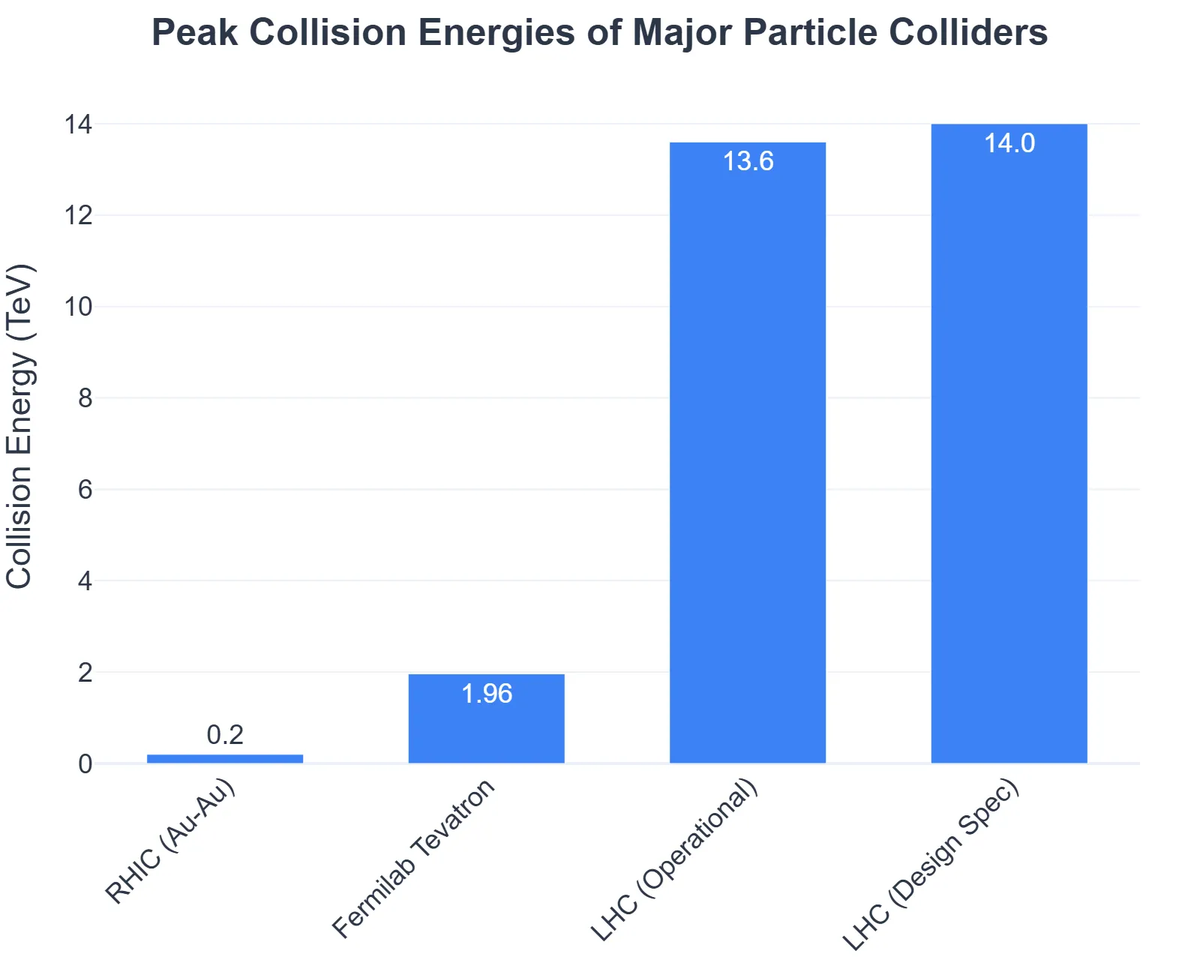
The Large Hadron Collider (LHC), located at CERN near Geneva, Switzerland, is the world’s largest and most powerful particle accelerator. It’s an engineering marvel designed to recreate the conditions that existed just a fraction of a second after the Big Bang. By smashing protons or lead ions together at nearly the speed of light, scientists can observe the fundamental particles and forces that govern our universe.
- 🔬 Scale: A 27-kilometer (17-mile) ring of superconducting magnets cooled to near absolute zero.
- ⚡ Energy: Capable of accelerating particles to energies of 13 teraelectronvolts (TeV) and beyond, making it the highest-energy collider ever built.
- ⚛️ Purpose: To explore fundamental physics, uncover the nature of dark matter, search for extra dimensions, and understand the origins of mass.
This remarkable machine allows physicists to test the Standard Model of particle physics and search for new phenomena beyond it. For an in-depth look at our quest for cosmic truths, explore the Cosmic Queries: Probing the Mysteries of the Universe pillar page.
The “Black Hole” Controversy: Understanding the Fears
From the moment of its conception, the LHC sparked public debate, particularly concerning the possibility of creating black holes that could engulf Earth. These fears, while understandable, are rooted in a misunderstanding of both black hole physics and the scale of the LHC’s experiments.
🤯 Origins of the Concern
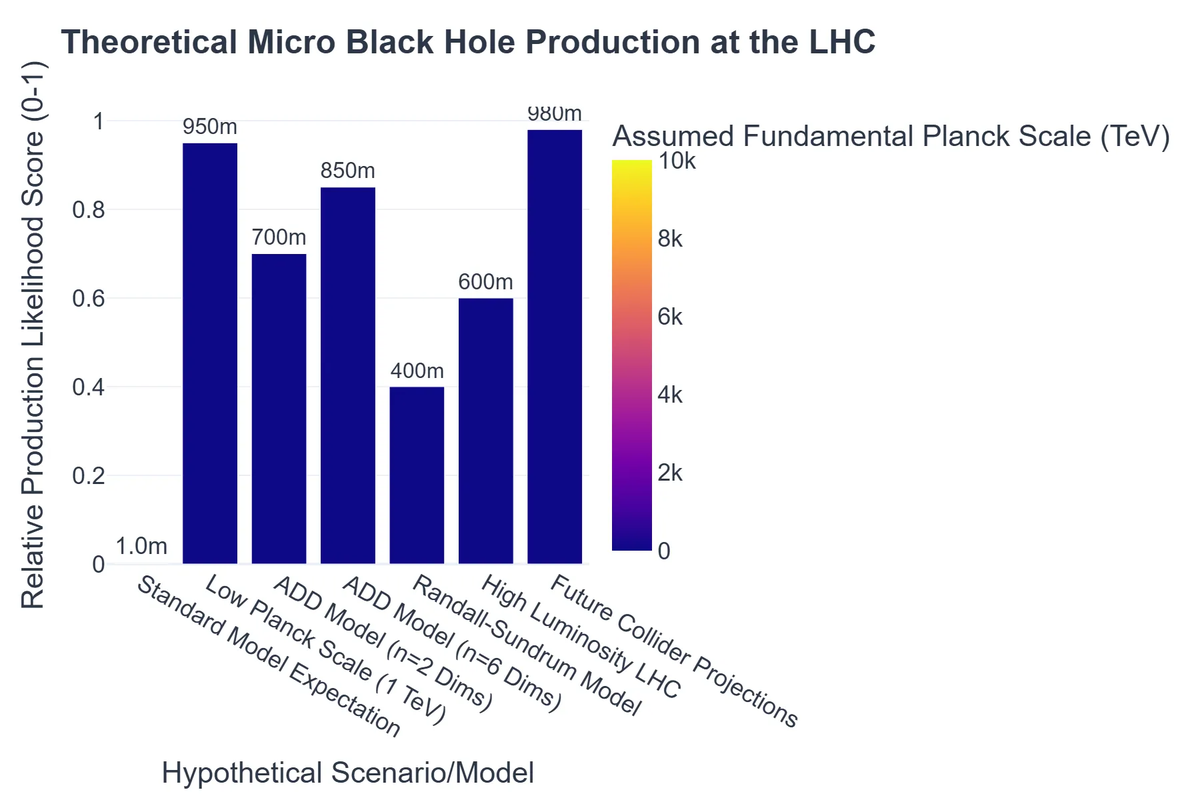
The idea of CERN black holes or LHC black holes forming stems from theoretical physics, specifically theories involving extra dimensions. In some models, like those with large extra dimensions (LEDs), gravity might be much stronger at very small scales than we perceive it in our everyday three dimensions. If so, it might be possible for microscopic black holes to form at the energies achieved by the LHC.
However, it’s crucial to understand that these are theoretical possibilities, not confirmed realities. The vast majority of physicists agree that even if such theoretical conditions were met, any black holes created would be entirely harmless.
Miniature Black Holes: Theory vs. Reality
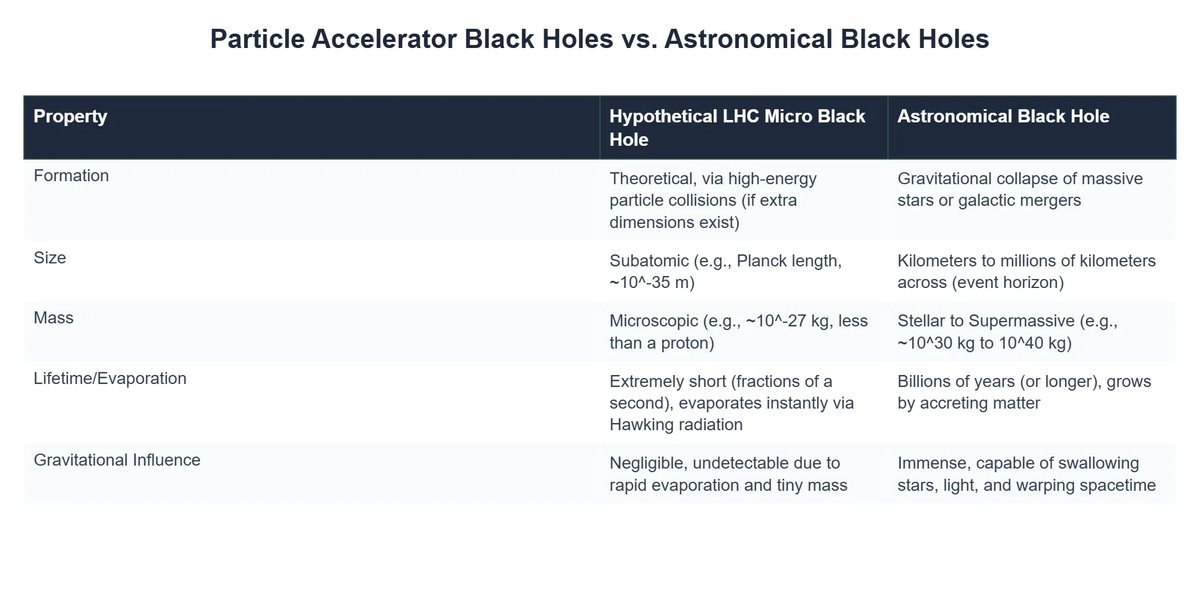
Let’s clarify what “miniature black holes” would actually entail in the context of a particle accelerator. These are not the monstrous astrophysical black holes that consume stars and warp spacetime across vast distances. Instead, they would be quantum phenomena, far smaller than an atom.
🧪 Hawking Radiation and Evaporation
One of the most important concepts safeguarding our planet from potential LHC-generated black holes is Hawking Radiation. Proposed by Stephen Hawking, this theory states that black holes are not truly “black” but emit radiation and, over time, evaporate. The smaller the black hole, the faster it evaporates.
- 💨 Instant Disintegration: Any miniature black holes created at the LHC would be so incredibly tiny that they would evaporate almost instantaneously due to Hawking radiation, long before they could interact with any matter or grow. Their lifespan would be far less than a trillionth of a second.
- 🌌 Not Astrophysical: These theoretical micro black holes are fundamentally different from the stellar or supermassive black holes we observe in space. They would possess minuscule mass and energy, incapable of attracting anything beyond their subatomic scale.
🔭 Cosmic Rays as Natural Accelerators
Perhaps the most compelling argument against dangerous LHC black holes comes from nature itself. Our Earth is constantly bombarded by cosmic rays – particles accelerated by extreme astrophysical phenomena (like supernovae) to energies vastly higher than anything the LHC can produce. These cosmic rays regularly collide with particles in Earth’s atmosphere.
How ScienceExplainIt Boosted Engagement by Debunking Complex Myths
❓The Challenge
ScienceExplainIt observed low engagement on their accurate physics content, with their audience often drawn to sensationalized, misinformation-laden narratives surrounding topics like particle accelerators and ‘black holes’.
💡The Solution
Inspired by the article’s methodical approach to clarifying the LHC’s role and debunking ‘black hole’ fears, ScienceExplainIt launched a dedicated content series. They produced highly accessible explainers, videos, and infographics that directly addressed public misconceptions, emphasizing scientific facts and the actual purpose of the Large Hadron Collider.
🏆The Result
This strategic shift towards clear, fact-based communication led to a 75% increase in average time spent on their physics explanation pages and a 50% rise in social shares for the targeted content.
If high-energy collisions could create dangerous, stable black holes, then Earth (and other celestial bodies) would have been destroyed long ago by cosmic rays. The fact that they haven’t is a powerful empirical proof that such an event is impossible. For more insights on debunking cosmic myths, see our article on Black Hole in the Sun: Debunking a Misconception.
Why the LHC Won’t Create Dangerous Black Holes
CERN and the scientific community have thoroughly addressed public concerns through rigorous safety assessments. The consensus is unequivocal: the LHC poses no threat of creating destructive black holes.
🛡️ Key Safety Arguments:
- ✅ Energy Levels are Too Low: While the LHC achieves impressive energies, they are still millions of times lower than the energies of cosmic rays naturally striking Earth’s atmosphere every second.
- ✅ Hawking Radiation: As discussed, even if a micro black hole were to form, it would immediately evaporate.
- ✅ Weak Gravitational Force: At the quantum level, gravity is an incredibly weak force. The tiny mass of any hypothetical micro black hole would exert negligible gravitational pull, far less than even a single proton.
- ✅ Robust Peer Review: Numerous independent scientific committees have reviewed the safety of the LHC, concluding that there is no conceivable danger. CERN’s official stance reiterates this safety.
For a detailed analysis on this topic, refer to our dedicated piece: LHC and Black Holes: Separating Fact from Fiction.
The True Goals of the LHC
Far from creating cataclysmic black holes, the LHC is designed to answer some of the most profound questions in physics. Its discoveries reshape our understanding of the universe.
🌟 Primary Scientific Objectives:
- 💡 The Higgs Boson: The most famous discovery, confirming the existence of the particle responsible for giving other fundamental particles mass.
- 🔭 Dark Matter and Dark Energy: Searching for particles that could explain the invisible components making up most of the universe’s mass and energy.
- 🌌 Early Universe Conditions: Recreating the conditions of the universe shortly after the Big Bang to understand its evolution. The LHC plays a pivotal role in studying phenomena akin to the Big Bang, as detailed by sources like 1440.
- 🌀 Extra Dimensions and Supersymmetry: Probing theories that propose additional spatial dimensions or a symmetry between matter particles and force-carrying particles.
- ⚛️ Quark-Gluon Plasma: Studying the state of matter that existed moments after the Big Bang by colliding lead ions.
Beyond Black Holes: LHC’s Other Discoveries & Impact
The LHC’s contributions extend far beyond the headline-grabbing Higgs Boson. Its ongoing research continually pushes the boundaries of our knowledge, influencing fields from medicine to computing.
- 🌍 Global Collaboration: The LHC is a testament to international scientific cooperation, involving thousands of scientists and engineers from around the world.
- 💻 Technological Spin-offs: Technologies developed for the LHC, such as advanced computing (e.g., the World Wide Web, which originated at CERN), superconductivity, and medical imaging, have found wide applications in society.
- 🔬 Inspiring Future Generations: The sheer ambition and complexity of the LHC project inspire new generations of scientists and engineers to pursue fundamental research.
Recommended Video
Conclusion
The fears surrounding particle accelerator black hole creation, particularly at the LHC, are unfounded. Based on robust scientific understanding and empirical evidence from cosmic ray observations, the formation of dangerous, stable black holes is simply not possible under the conditions achievable in a particle accelerator. Instead, the LHC stands as a beacon of human ingenuity, meticulously designed to unlock the deepest secrets of our cosmos. It’s a tool that allows us to peer back to the very first moments of existence, unravel the fabric of reality, and push the frontiers of what we know about the universe.
By understanding its true purpose and the rigorous scientific principles behind its operation, we can appreciate the LHC not as a threat, but as an indispensable instrument in our collective quest for knowledge.
Frequently Asked Questions
Can the LHC create dangerous black holes?
No, scientific consensus confirms the Large Hadron Collider (LHC) cannot create dangerous or stable black holes. Any theoretically possible micro black holes would be harmless and decay instantly.
What is a ‘micro black hole’ in the context of particle accelerators?
A ‘micro black hole’ is a hypothetical, extremely tiny black hole, possibly predicted by some theories of quantum gravity, that would be far too small and short-lived to pose any threat to its surroundings.
Why are people concerned about black holes at the LHC?
Concerns often stem from a misunderstanding of the physics involved, fueled by dramatic media portrayals or science fiction, rather than being based on scientific risk assessments.
What is the LHC’s primary purpose if not to make black holes?
The LHC’s primary purpose is to probe the fundamental laws of nature, discover new particles (like the Higgs boson), and understand the forces that govern the universe at its most basic level.