Humanity’s fascination with Mars dates back centuries, fueled by its intriguing reddish hue and the tantalizing possibility of life beyond Earth. For decades, the National Aeronautics and Space Administration (NASA) has been at the forefront of unraveling the Red Planet’s mysteries, executing an ambitious series of robotic missions that have revolutionized our understanding. Now, the ultimate frontier beckons: a direct human mission to Mars.
💡 Key Takeaways
- NASA has conducted numerous successful robotic missions to Mars, gathering invaluable data on its geology, atmosphere, and potential for past life.
- Key missions like Viking, Pathfinder, Spirit, Opportunity, Curiosity, and Perseverance have paved the way for deeper understanding of Mars’s environment.
- Future plans for Mars exploration include sample return missions and the ambitious goal of sending humans to the Red Planet, possibly by the 2030s.
- Overcoming challenges such as radiation, long transit times, and resource sustainability are crucial for successful long-duration human missions to Mars.
“Mars isn’t just a destination; it’s a mirror reflecting our species’ insatiable drive to explore, to innovate, and to imagine a future beyond our home world. Every Martian dust devil captured, every rock analyzed, brings us closer to understanding our place in the cosmic narrative.”
— Astrid Bellweather, Astrophysicist & Science Fiction Consultant
This comprehensive guide delves into NASA’s remarkable journey to Mars, from its pioneering robotic explorers to the ambitious plans for sending astronauts to the Red Planet. We’ll explore the critical missions that have paved the way, the technological hurdles being overcome, and the visionary future that includes permanent human presence. Our journey into Cosmic Queries: Probing the Mysteries of the Universe continues as we examine one of its most compelling chapters.
In This Article
- — 💡 Key Takeaways
- → The Red Planet Beckons: Why Mars?
- → Early Triumphs: Robotic Prowess & Scientific Breakthroughs
- — ➡️ The Pioneer and Viking Era
- — ⚙️ Rovers that Rewrote History
- → The Current Frontier: Unveiling Mars’ Secrets Today
- — 🔬 Perseverance, Ingenuity, and the Search for Ancient Life
- — 🛰️ Orbiter Fleet: Global Surveillance and Data Relay
- → Paving the Way for Humans: NASA’s Vision for a Manned Mars Mission
- — 🚀 The Journey to Mars Architecture
- — 🚧 Overcoming Challenges: Radiation, Resources, and Return
- — 🌕 Lunar Gateway: A Stepping Stone to Deep Space
- → The Role of Private Sector Innovation: Accelerating Humanity’s Reach
- — ✨ SpaceX Starship: A Game-Changer for Mars Transportation
- — 🤝 Collaborative Efforts for a Shared Future
- → Beyond the Horizon: Mars Colonization and the Future of Exploration
- — 🏠 Long-Term Habitation and Self-Sufficiency
- — 🌍 The Ethical and Societal Implications
- → Conclusion: A Future Forged in the Stars
The Red Planet Beckons: Why Mars?
Mars isn’t just a celestial neighbor; it’s a planet of profound scientific interest and a potential future home for humanity. Its allure stems from several key factors:
- ✅ Search for Life: Evidence suggests Mars once harbored liquid water and a thicker atmosphere, making it a prime candidate for past or even present microbial life.
- ✅ Planetary Evolution: Studying Mars provides crucial insights into how planets form and evolve, offering a comparative planetology laboratory right next door.
- ✅ Human Expansion: As Earth’s resources become strained, Mars offers the most viable long-term prospect for human settlement beyond our home planet, driving the vision of `mars colonization`.
- ✅ Technological Advancement: The challenges of reaching and living on Mars push the boundaries of engineering and scientific innovation, yielding benefits that extend far beyond space exploration.
Early Triumphs: Robotic Prowess & Scientific Breakthroughs
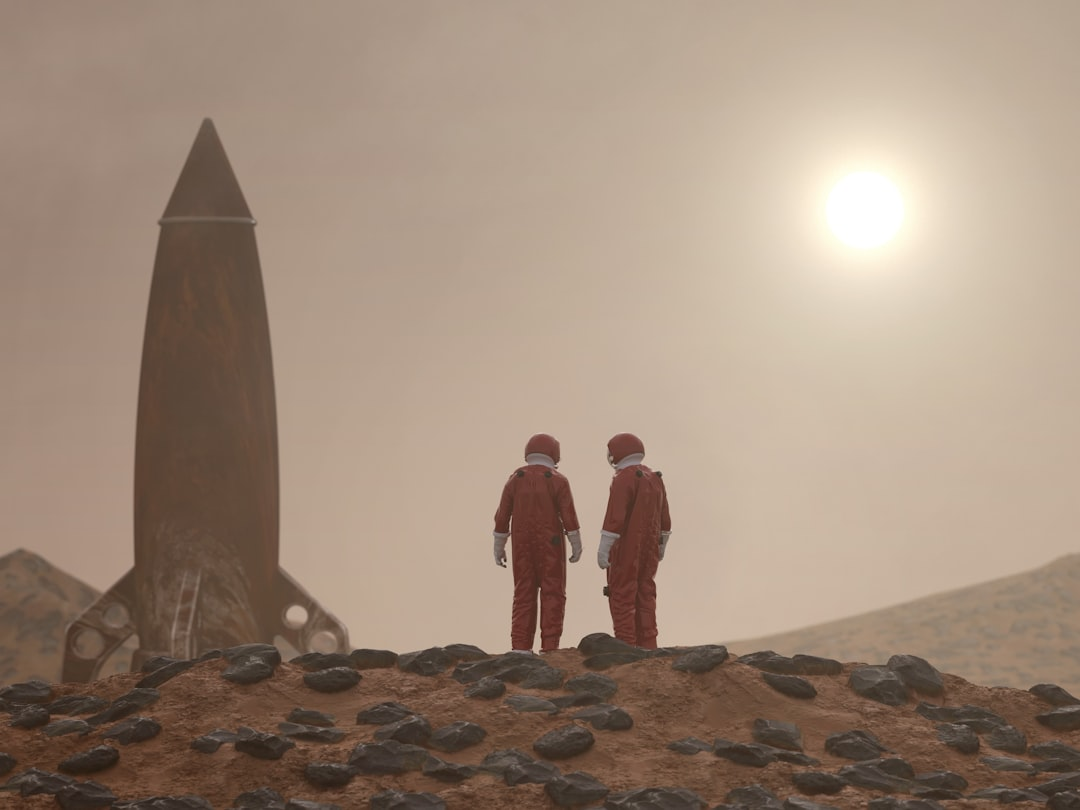
Long before human footsteps can grace its dusty plains, robotic probes have been our eyes and ears on Mars, executing crucial `mars exploration` missions.
➡️ The Pioneer and Viking Era
NASA’s initial forays set the stage for all that followed. Missions like Mariner paved the way, but it was the Viking program in the mid-1970s that truly transformed our understanding.
- 💡 Viking 1 & 2: These twin orbiters and landers were the first successful U.S. missions to land on Mars. They conducted experiments searching for biosignatures, took the first images from the Martian surface, and provided invaluable atmospheric and geological data.
- 💡 Data Revolution: The Viking missions delivered a trove of data that reshaped scientific theories about Mars, confirming its cold, arid nature but also hinting at its watery past.
⚙️ Rovers that Rewrote History
The late 20th and early 21st centuries saw the deployment of increasingly sophisticated rovers, each pushing the boundaries of remote planetary exploration. For more on these incredible machines, explore NASA Robots: Exploring the Robotic Frontier of Space.
- ✅ Sojourner (Mars Pathfinder, 1997): This small, six-wheeled rover was the first to successfully roam the Martian surface, proving the concept of mobile exploration.
- ✅ Spirit and Opportunity (Mars Exploration Rovers, 2004): These hardy rovers far exceeded their expected lifespan, discovering compelling evidence of past liquid water on Mars and its potential for habitability. Opportunity, in particular, operated for nearly 15 years.
- ✅ Curiosity (Mars Science Laboratory, 2012): A true mobile laboratory, Curiosity confirmed that ancient Mars had the chemical ingredients and environmental conditions necessary to support microbial life. It continues to explore Gale Crater.
The Current Frontier: Unveiling Mars’ Secrets Today
The latest generation of `nasa mars mission` operations continues to deepen our knowledge, directly informing the path toward a future manned Mars mission.
🔬 Perseverance, Ingenuity, and the Search for Ancient Life
The Mars 2020 mission represents a significant leap forward, directly addressing the goal of finding signs of ancient microbial life and preparing for sample return.
- ✅ Perseverance Rover: Landed in Jezero Crater in February 2021, Perseverance is collecting samples of Martian rock and regolith for future return to Earth. It’s equipped with advanced instruments to characterize the geology and potential biosignatures of its landing site.
- ✅ Ingenuity Helicopter: The small robotic helicopter that accompanied Perseverance became the first aircraft to achieve powered, controlled flight on another planet, demonstrating a new capability for aerial exploration on Mars.
🛰️ Orbiter Fleet: Global Surveillance and Data Relay
While rovers explore locally, a constellation of orbiters provides a global perspective and serves as critical communication relays.
- ➡️ Mars Reconnaissance Orbiter (MRO): Provides high-resolution imaging, atmospheric profiling, and crucial data relay for surface missions.
- ➡️ Mars Odyssey: Maps the distribution of water ice and provides long-term monitoring of the Martian environment.
- ➡️ MAVEN (Mars Atmosphere and Volatile Evolution): Studies Mars’ upper atmosphere to understand how the planet lost its water and atmosphere over time.
Paving the Way for Humans: NASA’s Vision for a Manned Mars Mission
The ultimate goal of `mars exploration` for NASA is to send humans to the Red Planet. This ambitious undertaking, known as the Journey to Mars, involves a series of complex steps and groundbreaking technological advancements. For insights into the immediate future, see NASA Mars Mission 2026: The Next Giant Leap.
🚀 The Journey to Mars Architecture
NASA’s strategy for a human mission to Mars is multi-phased, building on lessons learned from the International Space Station and lunar missions:
- Earth-Reliant: Focus on testing technologies and capabilities in Earth’s orbit.
- Proving Ground: Operations in cis-lunar space (around the Moon) to develop capabilities for deep space missions, utilizing platforms like the Lunar Gateway.
- Earth Independent: Extended missions to Mars and its moons, relying less on Earth for supplies and more on in-situ resource utilization.
This vision is detailed in reports like NASA’s “Journey to Mars – Pioneering Next Steps in Space Exploration” which outlines the strategic framework for human missions beyond Earth orbit. Learn more about NASA’s Journey to Mars.

🚧 Overcoming Challenges: Radiation, Resources, and Return
Sending humans to Mars presents immense challenges:
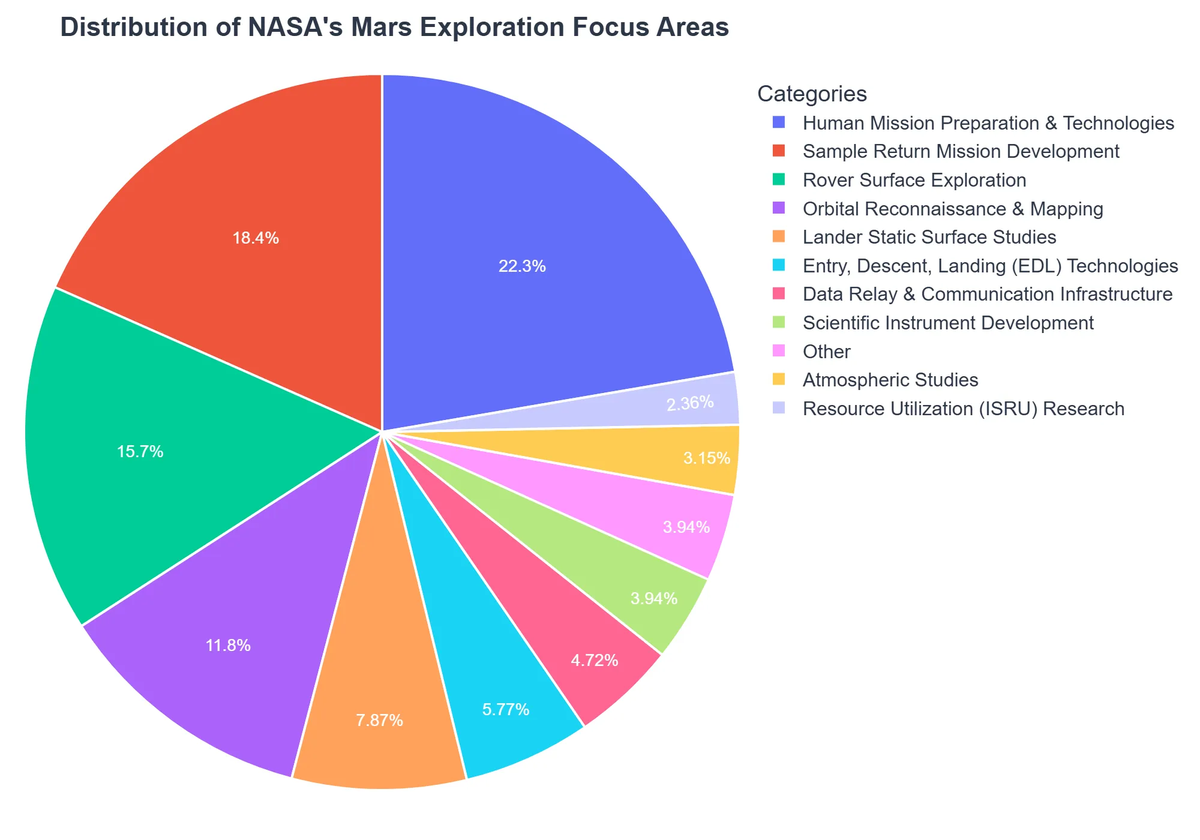
- ✅ Radiation Shielding: Protecting astronauts from dangerous solar and galactic cosmic radiation during transit and on the Martian surface.
- ✅ Life Support Systems: Developing closed-loop systems for air, water, and waste recycling to minimize supplies needed from Earth.
- ✅ In-Situ Resource Utilization (ISRU): The ability to “live off the land” by converting Martian resources (like water ice) into propellant, oxygen, and building materials.
- ✅ Medical & Psychological Health: Maintaining astronaut well-being during long-duration missions in isolation.
- ✅ Entry, Descent, and Landing (EDL): Safely landing large payloads, including human habitats and return vehicles, on Mars.
🌕 Lunar Gateway: A Stepping Stone to Deep Space
The Lunar Gateway, an orbital outpost around the Moon, is a crucial component of NASA’s Artemis program and a stepping stone for Mars. It will allow for testing technologies and procedures for deep space human habitation before venturing to Mars. Explore more about the broader space race in Latest Moon and Mars Missions: The New Space Race.
The Role of Private Sector Innovation: Accelerating Humanity’s Reach
While NASA leads the charge, the burgeoning private space industry is playing an increasingly vital role in making human Mars missions a reality.
✨ SpaceX Starship: A Game-Changer for Mars Transportation
Companies like SpaceX are developing revolutionary transportation systems designed with Mars in mind.
- ✅ Reusable Transport: SpaceX Starship is envisioned as a fully reusable, super heavy-lift launch and landing system capable of transporting large numbers of humans and vast amounts of cargo to Mars. Its reusability is key to reducing the cost and increasing the frequency of Mars missions.
- ✅ Rapid Development: SpaceX’s iterative development approach is accelerating progress toward operational Mars transportation.
🤝 Collaborative Efforts for a Shared Future
NASA actively partners with commercial companies and international space agencies, leveraging diverse expertise and resources to achieve common goals. This collaborative model is essential for the complexity and scale of a Mars mission.
Beyond the Horizon: Mars Colonization and the Future of Exploration
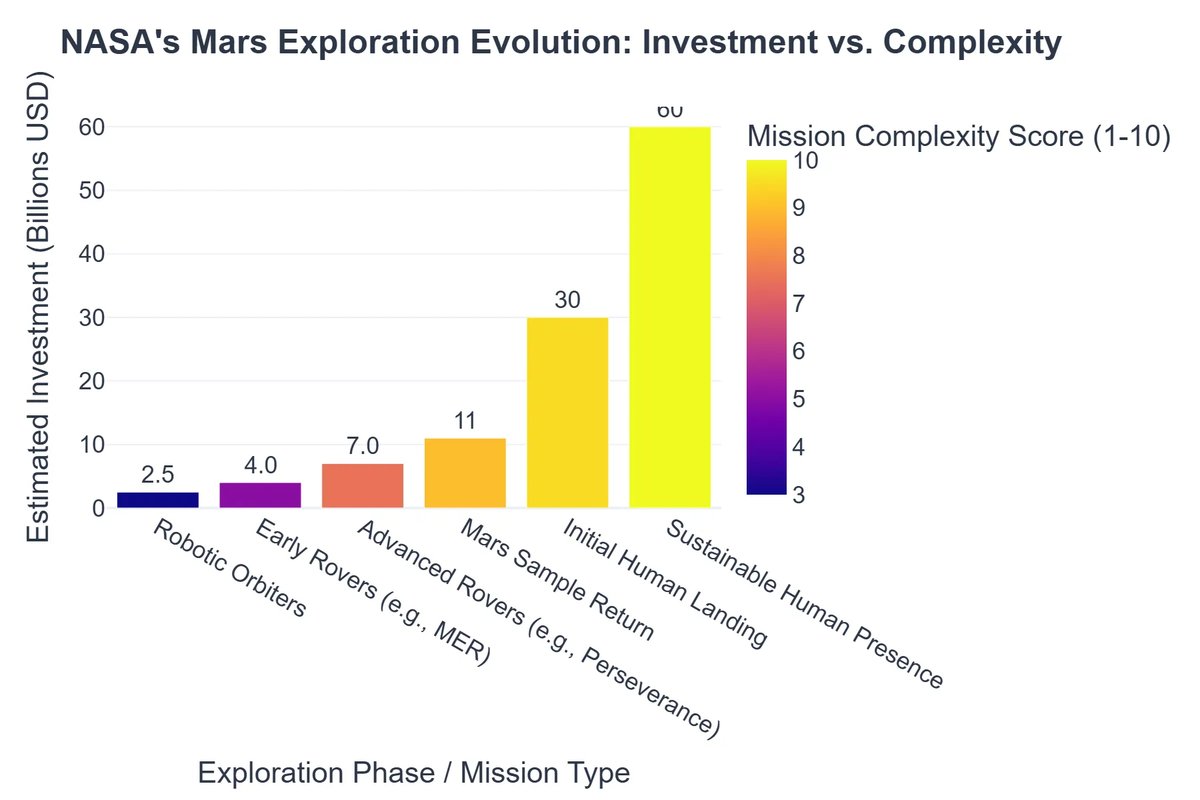
The ultimate long-term vision of `future of mars exploration` extends beyond transient visits to establishing a sustained human presence on the Red Planet.
🏠 Long-Term Habitation and Self-Sufficiency
Establishing permanent Martian outposts will require:
- ✅ Sustainable Habitats: Developing resilient, radiation-shielded habitats, potentially using local materials.
- ✅ Food Production: Cultivating crops in controlled environments, reducing reliance on Earth-supplied food.
- ✅ Energy Generation: Utilizing solar, nuclear, or geothermal energy sources for power.
- ✅ Resource Extraction: Efficiently extracting water, oxygen, and propellants from Martian soil and atmosphere.
NASA continues to lead research into these areas, paving the way for a future where humans not only visit Mars but live and thrive there. Learn more about NASA’s human exploration goals on their official site: Humans to Mars – NASA.
🌍 The Ethical and Societal Implications
The journey to `mars colonization` also raises profound ethical and societal questions, from planetary protection (avoiding contamination of Mars) to the governance of a multi-planetary civilization.
Recommended Video
Conclusion: A Future Forged in the Stars
NASA’s journey to Mars is a testament to human ingenuity, perseverance, and our insatiable drive to explore. From the initial flybys and landers to the current rovers meticulously analyzing the Martian surface, every `nasa mars mission` has brought us closer to understanding our neighboring planet and preparing for the ultimate leap.
With cutting-edge technology, global collaboration, and the ambitious spirit of innovation embodied by entities like SpaceX Starship, the dream of a human mission to Mars is no longer science fiction but an achievable goal. The challenges are immense, but the potential rewards—new scientific discoveries, technological advancements, and the expansion of humanity’s footprint beyond Earth—are even greater. The Red Planet awaits, and humanity is steadily charting its course.
Frequently Asked Questions
What are some of NASA’s most famous Mars missions?
Some of NASA’s most famous Mars missions include Viking 1 and 2 (first successful landers), Pathfinder (first rover, Sojourner), Mars Exploration Rovers (Spirit and Opportunity), Curiosity, and the Perseverance rover, which is currently active.
When does NASA plan to send humans to Mars?
NASA’s long-term goal is to send humans to Mars, potentially in the 2030s. This ambitious timeline depends on the success of precursor robotic missions, technological developments, and continued funding for the Artemis program and other initiatives.
What is the primary scientific goal of Mars exploration?
The primary scientific goals of Mars exploration are to determine if life ever arose on Mars, characterize the climate and geology of Mars, prepare for human exploration, and search for resources like water ice that could support future missions.
How long does a trip to Mars take?
A one-way trip to Mars typically takes about seven to nine months, depending on the launch window and orbital mechanics. The entire round trip, including time spent on the Martian surface, could last anywhere from 1.5 to 3 years.