Understanding Marine Ecosystems and Their Diversity
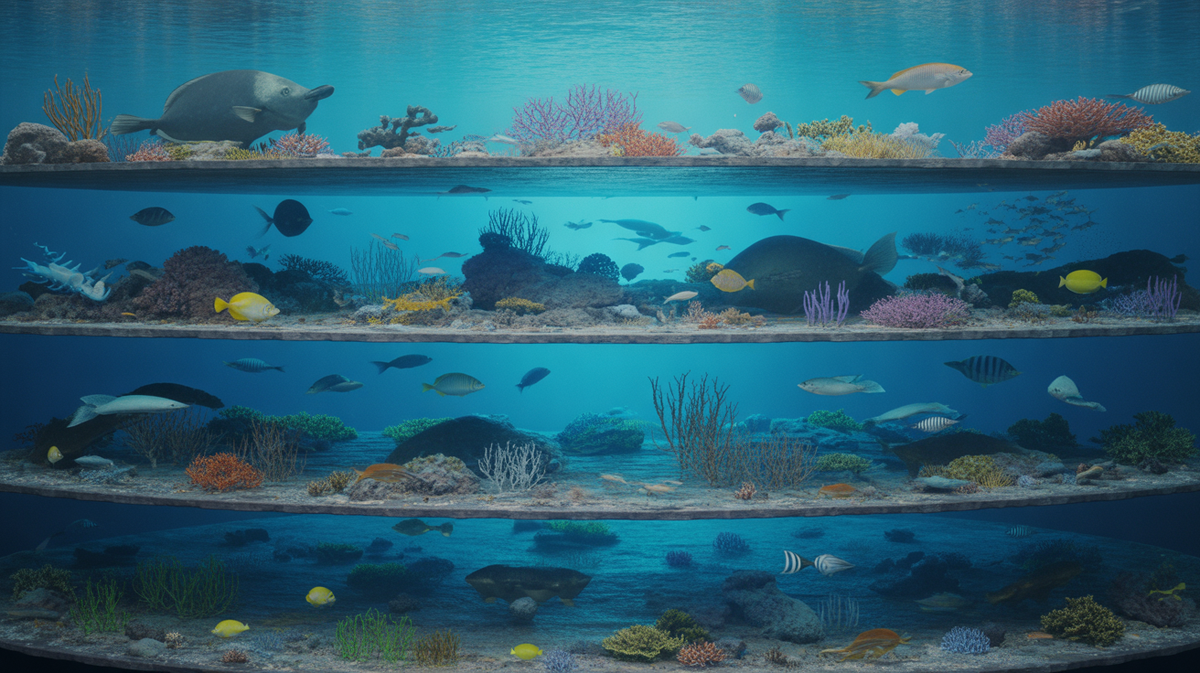
The vast, blue expanse covering over 70% of our planet is far more than just water; it’s a dynamic tapestry of interconnected living organisms and their non-living environments, collectively known as marine ecosystems. These complex systems are home to an astonishing array of life, embodying the true meaning of ocean life diversity.
💡 Key Takeaways
- Marine ecosystems encompass a vast array of habitats, supporting immense biodiversity.
- From microscopic plankton to colossal whales, ocean life plays crucial roles in global cycles.
- Key marine environments include coral reefs, kelp forests, estuaries, and the deep ocean.
- Understanding and protecting these ecosystems is vital for planetary health and human well-being.
“The oceans are not just vast bodies of water; they are dynamic, interconnected living systems. Understanding their intricate biodiversity is key to comprehending our planet’s past, present, and future climate.”
— Dr. Marcus Sterling, PhD, Planetary Geoscientist & Climatologist
From the sunlit surface waters teeming with microscopic plankton to the crushing pressures and perpetual darkness of the deep sea, every corner of the ocean supports unique forms of life, each perfectly adapted to its specific conditions. Understanding these ecosystems is not just about appreciating their beauty; it’s crucial for grasping how our planet functions and how humanity depends on the health of its oceans. For a broader perspective on the foundational elements of our planet, explore Earth’s Unseen Forces: The Hidden Dynamics of Our Planet.
In This Article
- → Understanding Marine Ecosystems and Their Diversity
- — 💡 Key Takeaways
- → Exploring Different Marine Ecosystems
- — 🌊 Coastal Ecosystems
- — 🌌 Open Ocean (Pelagic) Ecosystems
- — 🕳️ Deep-Sea Ecosystems
- → The Abundance of Ocean Life Diversity
- → The Vital Importance of Marine Ecosystems
- → Threats and the Call for Conservation
Exploring Different Marine Ecosystems
The ocean is not a uniform environment. Instead, it’s divided into a multitude of distinct habitats, each with its own physical characteristics and unique communities of organisms. These different marine ecosystems range dramatically in their depth, temperature, light penetration, and proximity to land.
🌊 Coastal Ecosystems
These are highly productive areas found near land, often influenced by freshwater runoff and fluctuating tides. They support an immense amount of biodiversity due to abundant light and nutrients.

- ✅ Estuaries: Where rivers meet the sea, creating brackish water. They serve as vital nurseries for many fish and invertebrate species.
- 🌿 Mangrove Forests: Tropical and subtropical trees that thrive in saltwater, forming dense, protective root systems that stabilize coastlines and provide habitat.
- 🌲 Kelp Forests: Underwater forests of large brown algae found in cooler, nutrient-rich waters. They are biodiversity hotspots, sheltering a wide range of marine animals.
- 🐚 Rocky Intertidal Zones: Areas exposed to air at low tide and submerged at high tide, where organisms must withstand extreme conditions like desiccation and wave action.
- 🐠 Coral Reefs: Often called the “rainforests of the sea,” these vibrant underwater structures built by coral polyps support an incredible concentration of species, despite covering less than 0.1% of the ocean floor. [EXTERNAL_LINK url=”https://www.noaa.gov/education/resource-collections/marine-life/coral-reef-ecosystems” text=”Learn more about coral reef ecosystems from NOAA.”]
🌌 Open Ocean (Pelagic) Ecosystems
Extending beyond the continental shelf, the pelagic zone is vast and characterized by its depth and distance from land. Life here is often thinly distributed but includes some of the largest creatures on Earth.
- ☀️ Sunlight Zone (Epipelagic): The top layer, where sunlight penetrates, allowing photosynthesis to occur. It’s home to phytoplankton, zooplankton, and many large predatory fish and marine mammals.
- 🌙 Twilight Zone (Mesopelagic): Dimly lit, where only faint light penetrates. Organisms here often have large eyes or bioluminescence.
- 🌑 Midnight Zone (Bathypelagic): Complete darkness, high pressure, and near-freezing temperatures. Life is sparse, often reliant on “marine snow” falling from above.
🕳️ Deep-Sea Ecosystems
These are the most extreme environments on Earth, characterized by crushing pressure, total darkness, and cold temperatures. Despite these challenges, they harbor unique and often bizarre life forms.
- 🌋 Hydrothermal Vents: Fissures in the seafloor that release superheated, mineral-rich water. Life here thrives on chemosynthesis, forming unique food webs independent of sunlight.
- 🦴 Cold Seeps: Areas where hydrocarbons (like methane) seep from the seafloor, supporting chemosynthetic communities.
- 🌊 Abyssal Plains: Vast, flat stretches of the deep ocean floor, where life is sustained by falling organic matter.
For an in-depth exploration of the ocean’s vast biomes, check out our article on Marine Biome: Exploring Earth’s Vast Ocean Ecosystems.
The Abundance of Ocean Life Diversity
The sheer volume of water and the range of habitats contribute to the unparalleled ocean life diversity. Life forms in the ocean range from microscopic bacteria to the largest animal on Earth, the blue whale.
- 🦠 Microorganisms: Phytoplankton (plant-like algae) and zooplankton (animal-like organisms) form the base of almost all marine food webs, producing much of the oxygen we breathe.
- 🦑 Invertebrates: This incredibly diverse group includes corals, jellyfish, anemones, sponges, mollusks (octopuses, squids, clams), crustaceans (crabs, lobsters, shrimp), and echinoderms (starfish, sea urchins).
- 🐟 Fish: With over 30,000 known species, fish exhibit an astounding array of adaptations, from tiny gobies to massive sharks and tuna.
- 🐢 Marine Reptiles: Sea turtles, sea snakes, marine iguanas, and saltwater crocodiles are examples of reptiles adapted to marine life.
- 🐬 Marine Mammals: Whales, dolphins, porpoises, seals, sea lions, manatees, and sea otters are warm-blooded, air-breathing mammals that have evolved to thrive in the marine environment.
- 🌱 Marine Plants and Algae: Though less prominent than terrestrial plants, seagrasses and various forms of algae (macroalgae like kelp, and microscopic phytoplankton) are vital primary producers in many marine ecosystems.
This incredible variety of life, both in terms of species and their ecological roles, highlights the concept of Species Diversity: Examples and Ecological Importance.
The Vital Importance of Marine Ecosystems
The health of marine ecosystems is inextricably linked to the well-being of the entire planet and humanity. Their functions extend far beyond simply housing aquatic life.
- 🌬️ Oxygen Production: Marine phytoplankton are responsible for producing at least 50% of the oxygen in Earth’s atmosphere through photosynthesis.
- 🌡️ Climate Regulation: Oceans absorb vast amounts of carbon dioxide, acting as a critical carbon sink, and distribute heat around the globe through ocean currents, influencing global weather patterns.
- 🍔 Food Security: Fish and seafood provide a primary source of protein for billions of people worldwide.
- 💰 Economic Benefits: Marine ecosystems support multi-billion dollar industries, including fisheries, tourism, recreation, and shipping.
- 🛡️ Coastal Protection: Features like coral reefs, mangrove forests, and salt marshes act as natural barriers, protecting coastlines from storm surges, erosion, and tsunamis.
- 🔬 Scientific Research & Medicine: The unique biochemistry of marine organisms offers vast potential for new drugs and scientific discoveries.
The intricate ways in which these systems support life and planetary processes underscore the principles of Ecosystem Functioning: How Nature Sustains Life. For further reading on the broader connections between marine life and planetary health, see [EXTERNAL_LINK url=”https://www.cbd.int/article/exploring-linkages-between-ocean-biodiversity-8June2022″ text=”Exploring the linkages between the ocean and biodiversity by the Convention on Biological Diversity (CBD).”]
Recommended Video
Threats and the Call for Conservation
Despite their resilience and immense value, marine ecosystems and their unparalleled ocean life diversity face severe and escalating threats, largely due to human activities.
- 🗑️ Pollution: Plastic pollution, chemical runoff, agricultural fertilizers, and oil spills devastate marine habitats and wildlife.
- 🎣 Overfishing: Unsustainable fishing practices deplete fish stocks, disrupt food webs, and can damage habitats like coral reefs and seafloor communities.
- 🔥 Climate Change: Rising ocean temperatures lead to coral bleaching and changes in species distribution. Ocean acidification, caused by increased CO2 absorption, makes it harder for shell-forming organisms to build their structures.
- 🏗️ Habitat Destruction: Coastal development, destructive fishing gear (like bottom trawling), and dredging destroy critical habitats like mangroves, seagrass beds, and coral reefs.
- 🚢 Shipping & Noise Pollution: Commercial shipping contributes to noise pollution that disrupts marine mammals, and introduces invasive species via ballast water.
Protecting these vital systems requires global cooperation, sustainable practices, and increased awareness. Efforts like creating marine protected areas, regulating fisheries, reducing pollution, and combating climate change are crucial to safeguard the future of marine life. [EXTERNAL_LINK url=”https://www.msc.org/en-au/what-we-are-doing/oceans-at-risk/marine-biodiversity” text=”The Marine Stewardship Council (MSC) provides insights into marine biodiversity and risks.”] Preserving the richness of our oceans is fundamental to the continued health of Ecosystem Diversity: Crucial for Life on Earth.
What defines a marine ecosystem?
A marine ecosystem is a community of living organisms (biotic factors) interacting with their non-living environment (abiotic factors) in a saltwater setting, such as oceans, seas, or estuaries.
Why are marine ecosystems important to Earth?
Marine ecosystems are crucial as they produce much of the world’s oxygen, regulate climate, absorb carbon dioxide, provide food resources, and support a vast array of biodiversity essential for planetary health.
What are common threats to marine biodiversity?
Major threats include climate change leading to ocean acidification and warming, overfishing, pollution (plastics, chemicals), habitat destruction, and invasive species.
How can individuals contribute to marine conservation?
Individuals can help by reducing their carbon footprint, making sustainable seafood choices, reducing plastic consumption, participating in cleanups, and supporting marine conservation organizations.