

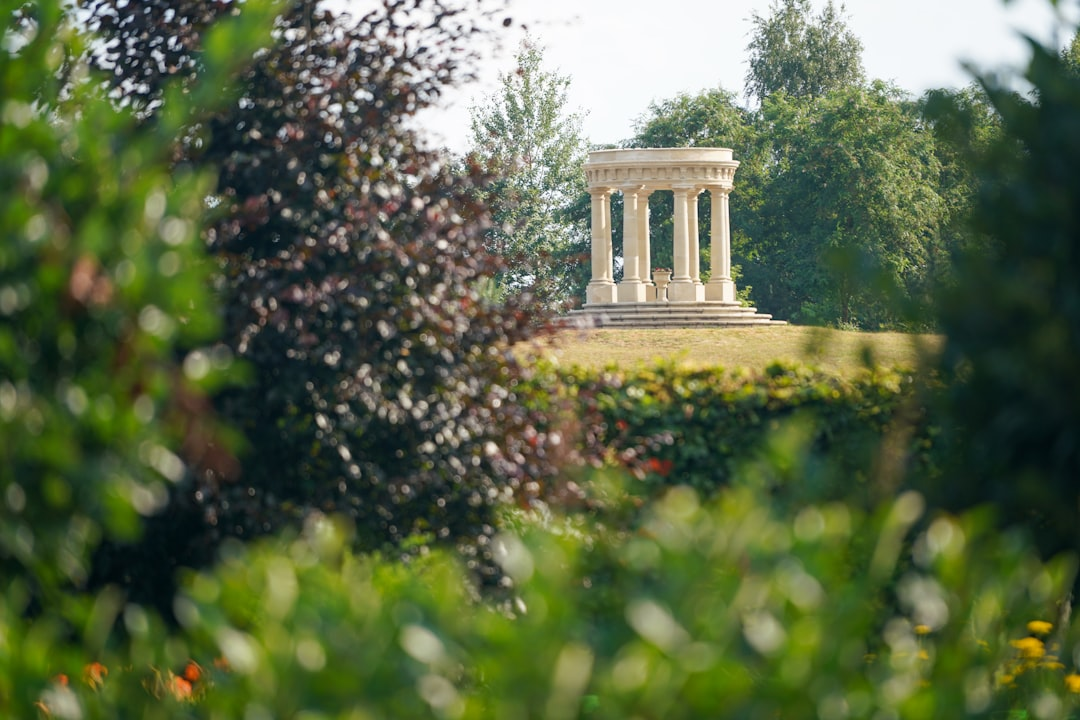
Unveiling the Enigma of the Eleusinian Mysteries
For nearly two millennia, the Eleusinian Mysteries stood as the most revered and enigmatic sacred rites of ancient Greece. Practiced annually in Eleusis, a small town northwest of Athens, these secret initiation ceremonies were dedicated to Demeter, the goddess of agriculture and harvest, and her daughter Persephone, queen of the underworld. Unlike public festivals, the Mysteries were accessible only to initiates, who swore an oath of secrecy regarding the core rituals and knowledge gained.
💡 Key Takeaways
- The Eleusinian Mysteries were the most revered and secretive religious rites of ancient Greece, spanning nearly 2,000 years.
- Centered around the myth of Demeter and Persephone, the rituals promised initiates a hopeful afterlife.
- Participation was open to all, regardless of social status, though a strict vow of secrecy protected the core doctrines.
- Despite their significance, much about the specific rites remains unknown due to their highly confidential nature.
“The enduring enigma of the Eleusinian Mysteries isn’t just about what we don’t know, but how their profound secrecy shaped the spiritual lives of countless ancient Greeks, offering a unique glimpse into their deepest beliefs about life and death.”
— Sebastian Thorne, Historian & Field Archaeologist
The profound impact of these rites on individuals, from philosophers like Plato and Cicero to ordinary citizens, is undeniable. Participants believed that through initiation, they gained a blessed afterlife, peace in the present, and a deeper understanding of life, death, and rebirth. This makes them a fascinating subject within the study of Ancient Mysteries: Unraveling the World’s Most Enduring Enigmas.
In This Article
- → Unveiling the Enigma of the Eleusinian Mysteries
- — 💡 Key Takeaways
- — The Mythic Foundation: Demeter, Persephone, and Hades
- → The Road to Eleusis: Initiation and Secrecy
- — Who Could Participate?
- — The Oath of Silence: Why We Know So Little
- → The Sacred Journey: Rites and Speculations
- — The Process of the Greater Mysteries
- — What Did Initiates “See”?
- → The Legacy and Decline of the Mysteries
- — Why Were They So Enduring?
- — The End of an Era
The Mythic Foundation: Demeter, Persephone, and Hades
At the heart of the Eleusinian Mysteries lay the myth of Demeter and Persephone. This foundational narrative provided the theological and emotional framework for the rituals:
- ✅ Persephone’s Abduction: Hades, god of the underworld, abducted Persephone while she was gathering flowers, dragging her into his realm to be his queen.
- ✅ Demeter’s Grief: Demeter, distraught, wandered the Earth searching for her daughter, neglecting her divine duties. This caused a great famine, threatening all life.
- ✅ Divine Intervention: Zeus intervened, orchestrating a compromise. Persephone would spend part of the year with Hades in the underworld and part on Earth with her mother.
- ✅ Symbolism of Seasons: This cycle became the mythical explanation for the changing seasons, with Persephone’s return marking the arrival of spring and fertility.
The Mysteries were not merely a retelling of this myth but an experiential journey designed to allow initiates to personally connect with its themes of loss, search, reunion, and the promise of renewal.
The Road to Eleusis: Initiation and Secrecy
Becoming an initiate into the Eleusinian Mysteries was a multi-stage process, culminating in the Greater Mysteries held in autumn. The Lesser Mysteries, held in spring, served as a preliminary purification and preparation.
Who Could Participate?
Remarkably, the Mysteries were open to almost anyone who met a few basic criteria, regardless of social status, gender, or even nationality, as long as they could understand Greek. The primary requirements were:
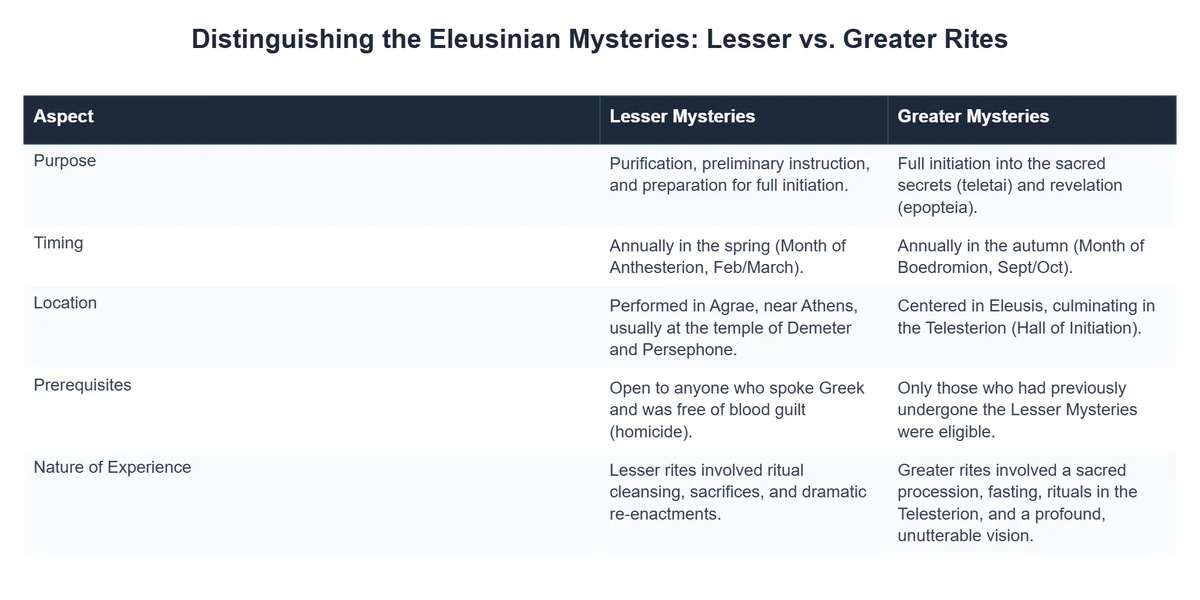
- ➡️ Not having committed murder.
- ➡️ Being free from ritual impurity.
This inclusivity stands in contrast to many other ancient cults, contributing to their widespread appeal and longevity for nearly two millennia. From peasants to emperors, a diverse array of individuals sought the insights offered at Eleusis.
The Oath of Silence: Why We Know So Little
A central tenet of the Eleusinian Mysteries was the strict oath of secrecy taken by all initiates. This oath forbade them from revealing what they saw, heard, or experienced within the sacred precinct of the Telesterion (the Hall of Initiation). This is precisely why, despite their prominence, so much about the Eleusinian Mysteries remains shrouded in speculation. Even ancient authors who were initiates themselves, like Cicero, hint at their profound impact but meticulously avoid revealing the specifics. This enduring silence is a testament to the power and reverence surrounding the rites.
As The Archaeologist notes, “The enduring whisper of the Eleusinian Mysteries lies in their very secrecy. What truly happened within the Telesterion remains one of antiquity’s most tantalizing unsolved riddles.”
The Sacred Journey: Rites and Speculations
While the details of the ultimate sacred revelation (the epopteia) remain secret, historical and archaeological evidence, combined with fragments from ancient writers, allow us to reconstruct a general outline of the Eleusinian experience.
The Process of the Greater Mysteries
The Greater Mysteries spanned several days in early autumn, following a specific sequence:
- 1️⃣ Procession to the Sea (Agryrmos): Initiates gathered in Athens, performed purification rites (bathing in the sea), and made sacrifices.
- 2️⃣ Sacred Procession to Eleusis: A grand procession, including the Hierophant (chief priest) and other sacred officials, carried the sacred objects (Hiera) from Athens to Eleusis along the Sacred Way. This was a symbolic journey mirroring Demeter’s search.
- 3️⃣ Fasting and the Kykeon: Upon arrival in Eleusis, initiates underwent a period of fasting. This fast was broken by consuming the kykeon, a sacred drink made of barley, water, and pennyroyal. The exact properties and significance of the kykeon are a subject of ongoing debate, with some scholars speculating about psychoactive properties, as explored by Veronica’s Art.
- 4️⃣ The Telesterion and the Revelation: The climactic moment occurred within the Telesterion, the vast Hall of Initiation. Here, in darkness, the initiates witnessed the sacred objects (the hiera) revealed by the Hierophant. What exactly was shown or enacted remains the ultimate secret. It likely involved light, sound, and a symbolic representation of the myth’s core themes.
For those interested in how we piece together knowledge about ancient civilizations, our article on Archaeology’s Latest Finds: Unearthing Ancient Mysteries offers further insights into methods used to understand such historical enigmas.
Eleusinian Mysteries: Insights and Challenges
Pros
- ✔Offered profound spiritual experience and hope for the afterlife.
- ✔Promoted inclusivity among initiates, transcending social status.
- ✔Deeply influenced ancient Greek philosophy, art, and culture.
Cons
- ✖Strict secrecy severely limits historical understanding of the rituals.
- ✖Potential for financial barriers limited participation for the very poor.
- ✖Lack of transparency prevented public scrutiny of practices.
What Did Initiates “See”?
Without breaching the oath, ancient sources hint at a powerful, transformative experience, often described in terms of bright light, sudden understanding, or a vision of beauty. It was likely a non-verbal, deeply emotional, and spiritual revelation rather than a simple theatrical performance. Many scholars believe the core experience involved witnessing the symbol of fertility and renewal, perhaps a re-enactment of the return of Persephone or the sprouting of a grain.
The experience aimed to provide comfort regarding death and a sense of belonging to something divine and eternal. This profound sense of spiritual awakening set the Eleusinian Mysteries apart from other forms of Lost Worlds & Forgotten Histories: Unearthing the Past’s Greatest Riddles in the ancient world.
The Legacy and Decline of the Mysteries
The Eleusinian Mysteries flourished for nearly two millennia, from Mycenaean times (around 1500 BCE) until their suppression in the late 4th century CE. Their enduring popularity speaks volumes about their perceived value.
Why Were They So Enduring?
- 💡 Promise of a Blessed Afterlife: This was a significant draw in a world where the afterlife was often depicted as a dreary existence.
- 💡 Profound Personal Experience: The initiations offered a direct, emotional, and sensory experience that resonated deeply with participants.
- 💡 Inclusivity: Their openness to diverse groups fostered wide appeal.
- 💡 Official Support: The Athenian state actively supported the Mysteries, recognizing their importance and prestige.
The End of an Era
The decline of the Mysteries came with the rise of Christianity. As the Roman Empire adopted Christianity as its official religion, pagan cults were increasingly suppressed. In 392 CE, Emperor Theodosius I issued decrees that effectively banned pagan worship, leading to the destruction of many ancient temples, including the Telesterion at Eleusis. This marked the definitive end of one of the most significant and mysterious religious traditions of the ancient world.
Recommended Video
The Eleusinian Mysteries remain a captivating study, representing a powerful example of ancient Greek religion’s complexity and its deep connection to the human experience of life, death, and the eternal cycle of nature. Though their deepest secrets are lost to time, their legacy continues to inspire wonder and scholarly inquiry.
What were the Eleusinian Mysteries?
They were secret religious initiation rites celebrated annually in ancient Greece at Eleusis, dedicated to the goddesses Demeter and Persephone.
Who could participate in the Mysteries?
Almost anyone could participate, including men, women, and even slaves, provided they spoke Greek and had not committed certain severe crimes.
Why were the Eleusinian Mysteries kept secret?
The secrecy was paramount, ensuring the profound spiritual experience remained exclusive and protected from misinterpretation or profanation. Revelation of the rites was punishable by death.
What was the purpose of the Mysteries?
Initiates sought a deeper understanding of life, death, and the afterlife, hoping to achieve spiritual purification and a more favorable destiny after death.