
Have you ever gazed at the night sky and felt an overwhelming sense of wonder, pondering the infinite possibilities beyond our world? For millennia, humanity has been driven by an insatiable curiosity about the cosmos, a quest to understand our origins, our place, and our future within the grand tapestry of the universe.
This definitive guide, “Cosmic Queries: Probing the Mysteries of the Universe,” invites you on an unparalleled journey through the cutting-edge of space exploration and astrophysics. It’s designed to transform your understanding from passive observer to informed participant, equipping you with profound insights into everything from cosmic origins and deep space missions to the commercialization of space and the search for extraterrestrial life, revealing why the pursuit of cosmic knowledge is more critical now than ever before.
💡 Key Takeaways
- Gain a comprehensive understanding of the universe, from its enigmatic origins and fundamental physics to the ongoing quest for life beyond Earth.
- Explore the cutting-edge of space exploration, including robotic deep space missions, human spaceflight, and the burgeoning commercialization of space.
- Discover the critical role of planetary science, defense strategies, and innovative space infrastructure in shaping humanity’s cosmic future.
- Unravel complex cosmic phenomena like black holes, and learn how public engagement brings the wonders of space closer to everyone.
In This Article
- — 💡 Key Takeaways
- → 🌌 Cosmic Origins & Fundamental Physics
- — ⚛️ The Big Bang: More Than Just a Bang
- — 🌌 Echoes of Creation: The Cosmic Microwave Background (CMB)
- — 🔬 The Universe’s Fundamental Building Blocks
- — ✨ Dark Matter & Dark Energy: The Unseen Majority
- — 🚀 Charting the Future: Advancing Cosmic Discovery
- → 🚀 Robotic & Deep Space Missions
- — 🤖 The Unsung Heroes: Why Robots Reign in Deep Space
- — 🔭 Key Players & Groundbreaking Missions
- — ⚙️ The Engineering Marvels Behind the Machines
- — 🚀 What’s Next? Pushing the Boundaries
- → 🔴 Mars Exploration & Future
- — 🚀 Why Mars? The Enduring Allure
- — 🛰️ Current Martian Explorers & Their Discoveries
- — 🚧 Overcoming the Red Planet’s Challenges for Humans
- — ➡️ The Road Ahead: From Samples to Settlements
- — 💡 Practical Insights for Aspiring Martians (or Observers!)
- → 👨🚀 Human Spaceflight & Lunar Exploration
- — 🚀 A Storied Past: From Earth Orbit to the Moon
- — 🌕 The Lunar Resurgence: Artemis and Beyond
- — 🛡️ Overcoming the Deep Space Frontier’s Challenges
- — 🔬 Terrestrial Benefits: Spinoff Technologies
- — 🔭 Beyond the Moon: The Martian Horizon
- → 💰 Space Travel & Commercialization
- — 🚀 The New Space Race: From Public to Private
- — 🛰️ Key Pillars of Space Commercialization
- — 🚧 Challenges & Non-Obvious Hurdles
- — 🌌 The Horizon: What’s Next?
- → 🔬 Planetary Science & Defense
- — 🔭 Unpacking Planetary Science
- — 🛡️ The Imperative of Planetary Defense
- — 🚀 Our Defensive Arsenal & Future Tech
- — 🤝 Global Collaboration & Cosmic Stewardship
- → 👽 Astrobiology & Unexplained Phenomena
- — 🧪 What is Astrobiology?
- — 🔭 The Hunt for Biosignatures & Habitable Worlds
- — 🤔 The Fermi Paradox & The Drake Equation
- — 👽 Unexplained Aerial Phenomena (UAPs): Beyond the Fringe
- — 🌌 Our Next Steps in Cosmic Exploration
- → ⚙️ Space Operations & Infrastructure
- — 🛰️ The Backbone of Space Endeavors
- — 🌍 Ground Control: More Than Just Buttons
- — 🚀 Launch Systems & Orbital Insertion Precision
- — 🛰️ On-Orbit Operations & Maintenance
- — ♻️ The Growing Challenge: Space Debris & Decommissioning
- — 💡 Practical Insights for Future Innovators
- → ✨ Public Engagement & Experiencing Space
- — 🌌 Observatories & Planetariums: Gateways to the Cosmos
- — 🔬 Citizen Science: Becoming a Cosmic Contributor
- — 🔭 Backyard Astronomy & Astrophotography: Your Personal Window
- — ✨ Virtual & Augmented Realities: Immersive Journeys
- — ✈️ The Rise of Astrotourism & Space Travel
- — 🗣️ Engaging with Experts: Talks, Festivals & Online Platforms
- → ⚫ Black Holes & Extreme Cosmic Phenomena
- — What ExactlyIsa Black Hole?
- — 🚪 The Event Horizon & The Point of No Return
- — 🔬 Detecting the Undetectable: How We “See” Black Holes
- — Beyond Black Holes: Other Extreme Cosmic Powerhouses
- — 🌊 The Echoes of Spacetime: Gravitational Waves
- → 📚 Additional Resources
- — 📚 Recommended Reading & Digital Libraries
- — 🎓 Online Learning Platforms & MOOCs
- — 📺 Documentaries & Engaging Series
- — 🎧 Podcasts & Audio Exploration
- — 🔭 Citizen Science & Community Engagement
- — 📱 Sky-Gazing Apps & Virtual Observatories
🌌 Cosmic Origins & Fundamental Physics

Welcome, fellow cosmic explorers! Our journey into the universe’s grand narrative begins at its very inception, delving into the profound questions of how it all started and what fundamental laws govern its existence. This isn’t just theoretical musing; it’s about piecing together an incredible cosmic puzzle using observational evidence and cutting-edge physics.
⚛️ The Big Bang: More Than Just a Bang
When we talk about the “Big Bang,” many envision a giant explosion in space. That’s a common misconception we need to unpack immediately. Instead, think of the Big Bang as the expansion of space itself from an extremely hot, dense state. It wasn’t an event that happened in space, but rather the beginning of space, time, and matter as we know them.
- ✅ Expansion, Not Explosion: The universe isn’t expanding into anything; it’s simply getting larger. Galaxies aren’t flying away from a central point, but the space between them is stretching, carrying them along for the ride.
- ➡️ Cosmic Inflation: A crucial, non-obvious insight is the theory of
cosmic inflation . Proposed to resolve several puzzles of the standard Big Bang model (like the flatness and horizon problems), inflation suggests a brief, hyper-rapid expansion of the universe in its first tiny fraction of a second. This “stretch” smoothed out irregularities and set the stage for the universe we see today. - 💡 Common Pitfall: Don’t confuse the Big Bang with the origin of everything from nothing. The theory describes the evolution of the universe from an initial state, not necessarily the creation of that initial state itself. That’s a philosophical and quantum gravity question that continues to challenge our understanding.
🌌 Echoes of Creation: The Cosmic Microwave Background (CMB)
One of the most compelling pieces of evidence for the Big Bang and inflation is the
- 🔭 A Snapshot of the Early Universe: The CMB provides an unparalleled snapshot of the universe in its infancy. Satellites like
NASA’s WMAP and theEuropean Space Agency’s (ESA) Planck mission have mapped these temperature fluctuations with incredible precision. - 📈 Revealing Cosmic Parameters: The tiny temperature variations in the CMB (on the order of microkelvins) are incredibly important. They represent the seeds of structure – the slight density differences that eventually grew, through gravity, into galaxies, clusters, and the large-scale cosmic web we observe today. Analyzing these fluctuations allows cosmologists to determine fundamental properties of the universe, such as its age, expansion rate, and composition.
- 💫 Polarization Insights: A less-known aspect is the
polarization of the CMB . Studying this polarization can offer clues about the inflationary period, potentially detecting gravitational waves generated during that incredibly early phase. Missions likeLiteBIRD are designed to probe this for deeper insights.
🔬 The Universe’s Fundamental Building Blocks
Beyond its grand origins, the universe operates on fundamental principles dictated by particles and forces. The
- ⚛️ Particles and Forces: The Standard Model includes fundamental particles like
quarks (which make up protons and neutrons),leptons (like electrons and neutrinos), and force-carrying particles calledbosons (like photons for electromagnetism, gluons for the strong force, and W and Z bosons for the weak force). The crowning achievement was the discovery of theHiggs Boson atCERN’s Large Hadron Collider (LHC) , which explains how particles acquire mass. - 🧪 Beyond the Standard Model: Despite its success, the Standard Model is incomplete. It doesn’t incorporate
gravity (our fourth fundamental force), nor does it account fordark matter ordark energy , which constitute about 95% of the universe’s energy density. This incompleteness is a significant frontier in fundamental physics, driving research into theories like supersymmetry, string theory, and extra dimensions. - 💡 Experimental Frontiers: Facilities like the LHC continue to push the boundaries, searching for new particles, evidence of extra dimensions, or tiny deviations from Standard Model predictions that could point to new physics. Experiments searching for
proton decay or the nature ofneutrino mass are also critical in this quest.
✨ Dark Matter & Dark Energy: The Unseen Majority
Here’s where the “mystery” truly deepens. Observations across vast cosmic scales consistently show that the universe contains far more mass and energy than can be accounted for by the visible matter described by the Standard Model.
- 🌑 Dark Matter: We infer the existence of
dark matter from its gravitational effects. Galaxies spin too fast to hold themselves together with only visible matter, and galaxy clusters are much more massive than their visible components suggest. Dark matter is thought to be a new type of particle that doesn’t interact with light or other electromagnetic forces, making it “dark” and incredibly elusive. Experiments are underway deep underground (e.g.,XENONnT ,LUX-ZEPLIN ) to directly detect these weakly interacting massive particles (WIMPs), one of the leading candidates. - 🌌 Dark Energy: Even more perplexing is
dark energy , which is responsible for the observed accelerating expansion of the universe. Far from slowing down due to gravity, the universe’s expansion is speeding up! Dark energy is a mysterious force that acts in opposition to gravity on cosmic scales, though its nature remains one of the greatest unsolved problems in physics. The leading candidate is the cosmological constant, representing the energy of empty space itself. - ➡️ Cosmic Dominance: It’s a humbling thought: the matter and energy we are made of, and that we can directly observe with telescopes, constitute less than 5% of the universe’s total energy budget. The vast majority is dark matter (about 27%) and dark energy (about 68%). Understanding these components is paramount to completing our picture of cosmic origins and evolution.
🚀 Charting the Future: Advancing Cosmic Discovery
Probing these cosmic mysteries requires continuous innovation in technology, instrumentation, and data analysis. This isn’t just about bigger telescopes; it’s about smarter ones, capable of detecting the faintest signals and processing immense datasets.
- 🛰️ Next-Generation Observatories: Missions like the
James Webb Space Telescope (JWST) are already pushing the boundaries, observing the earliest galaxies and probing the atmospheres of exoplanets. Future concepts include even larger space telescopes, gravitational wave observatories (likeLISA ), and sophisticated ground-based arrays designed to detect dark matter directly or map the universe’s large-scale structure with unprecedented precision. - 📈 Data Science & AI: The sheer volume and complexity of astronomical data necessitate advanced computational techniques. Machine learning, artificial intelligence, and sophisticated statistical methods are crucial for sifting through petabytes of information, identifying subtle patterns, and extracting meaningful scientific insights from cosmic noise.
- 💰 Funding Innovation: The advancement of cosmic research is often fueled by strategic investments in cutting-edge technology. For example, the
NASA Small Business Innovation Research (SBIR) program actively solicits proposals for new technologies that can support future missions and scientific endeavors, including those related to fundamental physics, astrophysics, and the study of cosmic origins. As detailed in theNASA SBIR-2024-Phase 1 Solicitation (https://www.nasa.gov/wp-content/uploads/2024/01/sbir-24-i-v2.pdf?emrc=67817da557633), NASA is consistently looking for innovative solutions for everything from advanced detectors and cryogenic systems to novel data processing algorithms. This highlights the practical, actionable pathways through which new ideas become the tools of cosmic discovery. - 💡 Interdisciplinary Approaches: The biggest breakthroughs often come from combining insights from cosmology, particle physics, quantum gravity, and even computer science. The universe’s mysteries are too grand to be confined to single disciplines.
- Origin of the Universe Theories: Exploring Cosmic Beginnings
- Dark Matter: Unveiling the Invisible Force Shaping Our Universe
- Alternate Dimension Theories: Exploring Beyond Our Reality
- Higgs Boson: Understanding the God Particle Theory
- False Vacuum Theory: The Fate of the Universe
- JWST NASA: Unlocking the Universe’s Deepest Secrets
- TESS NASA: Discovering Habitable Exoplanets Beyond Our Solar System
- NASA Hubble Telescope: A Cosmic Legacy
- Solar System Formation: Key Theories and Evolution
- Quantum Mechanics Explained: Understanding Reality’s Bizarre Rules
🚀 Robotic & Deep Space Missions
While human spaceflight captures our imagination with its daring feats, it’s the tireless work of our robotic emissaries that truly extends humanity’s reach across the solar system and beyond. These sophisticated machines are our eyes, ears, and hands in environments too hostile, too distant, or too prolonged for human explorers. They operate silently in the vacuum, gathering invaluable data that reshapes our understanding of the cosmos.
🤖 The Unsung Heroes: Why Robots Reign in Deep Space
Deep space missions are incredibly challenging, and that’s precisely why robotic probes are the primary pioneers. Their advantages are manifold:
- ✅ Endurance Beyond Human Limits: Robots don’t need life support, food, or sleep. They can operate for decades, enduring extreme radiation, frigid temperatures, or crushing pressures that would instantly kill a human. Think of the Voyagers, still sending data from interstellar space after more than 45 years!
- ✅ Resilience in Hostile Environments: From the corrosive atmosphere of Venus to the radiation belts of Jupiter, robots can be designed and hardened to withstand conditions that are simply incompatible with human biology.
- ✅ Cost-Effectiveness: While incredibly expensive, a robotic mission is generally far less costly and less complex than a crewed mission of similar scope, primarily due to the absence of human safety requirements and life support systems.
- 💡 Non-Obvious Insight: The Iterative Hardening Process. A common misconception is that a space probe is built once and launched. In reality, the development of flight-ready hardware involves an exhaustive, iterative process of designing, building, and subjecting components to brutal simulations of launch forces, vacuum, extreme temperatures, and radiation. This “space hardening” is a specialized engineering discipline, ensuring that every microchip and connector can survive the unforgiving journey and operational environment.
🔭 Key Players & Groundbreaking Missions
Let’s look at some of the titans of robotic exploration, each pushing the boundaries of discovery:
- ➡️ Mars Rovers (Spirit, Opportunity, Curiosity, Perseverance): These mobile laboratories have explored the Martian surface for years, drilling into rocks, analyzing soil, and sending back breathtaking panoramas. Perseverance, for example, is not only collecting samples for future return to Earth but also deployed the Ingenuity helicopter, demonstrating powered flight on another planet.
- ➡️ Voyager 1 & 2: Launched in 1977, these intrepid probes completed the “Grand Tour” of the outer planets before continuing their journey into interstellar space, providing our first up-close look at Jupiter, Saturn, Uranus, and Neptune. They continue to send back data from billions of miles away, serving as our farthest outposts.
- ➡️ New Horizons: This mission provided the first-ever close-up images of Pluto and its moons in 2015, then continued to the Kuiper Belt to explore Arrokoth in 2019, revealing a pristine, primordial object from the solar system’s early days. Its speed was unparalleled.
- ➡️ James Webb Space Telescope (JWST): While not a “rover,” JWST is a monumental robotic observatory orbiting nearly a million miles from Earth. Its infrared vision allows it to peer back to the earliest galaxies, reveal hidden star formation, and even characterize the atmospheres of exoplanets. It represents the pinnacle of remote robotic scientific inquiry.
- 💡 Non-Obvious Insight: The Latency Challenge. Operating probes millions or billions of miles away isn’t like driving a remote-control car. Due to the finite speed of light, commands can take minutes or even hours to reach a distant probe, and replies take just as long. This necessitates a high degree of autonomy in robotic spacecraft, allowing them to make critical decisions, navigate, and even troubleshoot problems independently, based on pre-programmed instructions and onboard AI.
⚙️ The Engineering Marvels Behind the Machines
Behind every iconic image and groundbreaking discovery lies an astonishing feat of engineering. Building a deep space probe is about managing extreme constraints and demanding performance:
- ✅ Power Sources: Far from the sun, solar panels are often insufficient. Many deep space missions (e.g., Voyagers, Curiosity, Perseverance) rely on Radioisotope Thermoelectric Generators (RTGs), which convert heat from the natural decay of plutonium-238 into electricity, providing reliable power for decades. Closer to the sun, like for the Juno mission to Jupiter, advanced solar panel arrays can still be viable.
- ✅ Communication Systems: Staying connected across astronomical distances requires the Deep Space Network (DSN) – a global network of giant radio antennas managed by NASA. Probes are equipped with high-gain antennas to beam faint signals back to Earth, often with sophisticated error correction codes to ensure data integrity over noisy channels.
- ✅ Scientific Instruments: Each probe is a custom-built toolkit. From spectrometers that analyze chemical compositions to sophisticated cameras, magnetometers, and drills, these instruments are designed to operate flawlessly in extreme conditions and collect specific data types vital for scientific inquiry.
- 💡 Non-Obvious Insight: Weight and Power Trade-offs. Engineers must constantly balance scientific ambition with the harsh realities of launch mass and available power. Every gram added to a probe means more fuel needed for launch, increasing cost. Every watt consumed by an instrument reduces power available for other systems or requires a larger, heavier power source. This forces ingenious design choices and prioritization, where every component is scrutinized for its necessity and efficiency. The rigorous testing environment and the long-term, incremental advancements in materials science and computational capabilities, often cultivated at institutions like NASA Ames Research Center, are the unsung heroes behind these successes. As highlighted in “Atmosphere of Freedom: 70 Years at the NASA Ames Research Center,” https://www.nasa.gov/wp-content/uploads/2023/03/sp-4314-2010.pdf such centers are pivotal in developing the foundational technologies that enable spacecraft to withstand the extreme rigors of space.
🚀 What’s Next? Pushing the Boundaries
The future of robotic deep space exploration is even more ambitious:
- ➡️ Europa Clipper: Set to launch soon, this mission will conduct detailed reconnaissance of Jupiter’s moon Europa to investigate whether it harbors conditions suitable for life, focusing on its subsurface ocean.
- ➡️ Dragonfly: A rotorcraft designed to fly across Saturn’s largest moon, Titan, exploring diverse locations to study its organic chemistry and habitability.
- ➡️ Advanced Autonomy and AI: Future probes will feature even greater levels of artificial intelligence, allowing them to make more complex decisions, navigate hazardous terrain, and conduct scientific observations with minimal human intervention. This is crucial for truly interstellar missions where communication delays would be measured in years.
- ➡️ Miniature Probes and Swarms: Smaller, more numerous spacecraft, including deep-space CubeSats, could revolutionize exploration by providing distributed sensing capabilities or enabling riskier, more specialized investigations.
- 💡 Non-Obvious Insight: The Rise of Private Industry. While NASA and other national space agencies have historically led deep space exploration, companies like SpaceX (with its Starship development) and others are developing heavy-lift capabilities that could dramatically reduce the cost of sending large robotic payloads to the outer solar system, potentially opening new avenues for scientific missions and resource exploration.
- NASA Voyager Mission: Exploring the Interstellar Frontier
- New Horizons Mission: Beyond Pluto
- Deep Space 1: Revolutionizing Space Exploration
- Dragonfly Mission to Titan: Exploring an Alien Ocean World
- Europa Mission: Quest for Life on Jupiter’s Moon
- Juno Mission: Discoveries from Jupiter
- Cassini Mission: Unveiling Saturn’s Secrets
- Galileo Mission to Jupiter: Unraveling Jovian Mysteries
- Lucy Mission: Exploring Jupiter’s Trojan Asteroids
- Juno Space Probe: Exploring Solar System Mysteries
🔴 Mars Exploration & Future
Mars, the enigmatic Red Planet, has long captivated humanity’s imagination, serving as a beacon for our cosmic curiosities. It stands as the most accessible and potentially habitable world beyond Earth, making it the focal point for ambitious robotic and eventual human missions. Our journey to Mars isn’t just about discovery; it’s about understanding the potential for life beyond Earth, testing the limits of human endurance, and perhaps, establishing humanity’s first off-world outpost.
🚀 Why Mars? The Enduring Allure
The fascination with Mars isn’t merely romantic; it’s driven by compelling scientific and strategic reasons. Geologically, Mars offers a window into the early solar system, preserving evidence of processes that have long vanished on Earth. Crucially, evidence strongly suggests Mars once harbored vast quantities of liquid water, an essential ingredient for life. This raises the profound question: Did life ever emerge on Mars? Furthermore, its relative proximity makes it the most viable next step for human space exploration, a crucial stepping stone before venturing deeper into the solar system.
- ✅ Past Habitability: Extensive geological and mineralogical data point to a warmer, wetter ancient Mars, potentially capable of supporting microbial life. Probing its past helps us understand planetary evolution.
- ➡️ Resource Potential: The presence of water ice (especially at the poles and sub-surface) is critical. This ice isn’t just for drinking; it can be broken down into hydrogen for fuel and oxygen for breathing, crucial for In-Situ Resource Utilization (ISRU) for future missions.
- 💡 Stepping Stone for Humanity: Mars represents the most plausible target for human settlement beyond Earth, offering a testbed for the technologies and psychological challenges of long-duration space travel.
🛰️ Current Martian Explorers & Their Discoveries
The Martian surface is currently a busy hub of robotic activity, spearheaded by international space agencies. These missions are not just collecting data; they are actively shaping our understanding of Mars’ past, present, and future habitability.
- ✅ NASA’s Perseverance Rover & Ingenuity Helicopter: Launched in 2020, Perseverance is NASA’s most sophisticated Martian laboratory. Operating in Jezero Crater, a suspected ancient lakebed, its primary mission is astrobiology – searching for signs of ancient microbial life and collecting rock and regolith samples for potential return to Earth. A non-obvious insight here is the rover’s shift from simply “following the water” to actively “seeking biosignatures” within the geological context of an ancient lake.
- ➡️ Ingenuity: A technological marvel, the small Ingenuity helicopter proved that powered, controlled flight is possible in Mars’ thin atmosphere, paving the way for future aerial scouts and data collection on the Red Planet. Its success has opened up entirely new ways to explore extraterrestrial surfaces.
- ✅ China’s Tianwen-1 Mission: China’s ambitious mission, which arrived in 2021, successfully deployed an orbiter, lander, and the Zhurong rover to Utopia Planitia. Zhurong’s discoveries have included evidence of recent water activity and sub-surface ice, demonstrating China’s growing prowess in deep space exploration.
- ✅ ESA’s Trace Gas Orbiter: This mission, part of the ExoMars program, continues to monitor Mars’ atmosphere for trace gases like methane, which could indicate geological or even biological activity.
🚧 Overcoming the Red Planet’s Challenges for Humans
While Mars beckons, sending humans is an undertaking fraught with immense challenges that require groundbreaking technological and scientific solutions. These aren’t just engineering problems; they delve into fundamental questions of human physiology, psychology, and long-term sustainability in an alien environment.
- ✅ Radiation Exposure: Unlike Earth, Mars lacks a strong global magnetic field and a thick atmosphere to shield against harmful cosmic rays and solar particle events. Protecting astronauts during transit and on the surface is paramount. This requires advanced shielding materials and potentially real-time radiation monitoring and forecasting.
- ➡️ Atmospheric Conditions: Mars’ atmosphere is incredibly thin (less than 1% of Earth’s) and primarily carbon dioxide. This necessitates robust habitats and spacesuits, and makes atmospheric braking for landing a significant engineering feat. Additionally, the constant dust storms pose a threat to equipment and human health.
- 💡 Distance and Time Delay: A one-way trip to Mars takes 6-9 months, with communication delays ranging from 3 to 22 minutes. This isolation and inability for real-time problem-solving with Earth-based teams place unprecedented demands on crew autonomy and mental resilience.
- ⚙️ Life Support & Resources: Creating self-sustaining habitats that can provide breathable air, water, food, and waste recycling for years without resupply from Earth is a monumental task. This is where foundational research into closed-loop life support systems and human factors in space environments, a specialty of institutions like the NASA Ames Research Center for over 75 years, becomes absolutely critical.
➡️ The Road Ahead: From Samples to Settlements
The current robotic missions are laying the groundwork for the ultimate goal: human exploration and eventual settlement. The vision for Mars is not just a flags-and-footprints mission but a long-term commitment to understanding and potentially inhabiting another world.
- ✅ Mars Sample Return (MSR): This ambitious joint NASA-ESA campaign aims to retrieve the samples cached by the Perseverance rover and bring them back to Earth for in-depth analysis. This is considered the Holy Grail of Mars science, as Earth-based labs offer capabilities far beyond what can be sent to Mars.
- ➡️ Human Missions: NASA’s Artemis program, while focused on the Moon as a stepping stone, is developing the technologies and operational experience necessary for a crewed Mars mission, potentially in the late 2030s or early 2040s. Companies like SpaceX, with their Starship development, are also aggressively pursuing the goal of sending humans to Mars, envisioning large-scale colonization. Their approach emphasizes rapid reusability and high payload capacity as key enablers.
- 💡 Long-term Vision: Martian Settlements: Beyond initial exploratory missions, the long-term vision includes establishing permanent human outposts. This would require advanced ISRU (In-Situ Resource Utilization) capabilities to live off the land, growing food in Martian soil, extracting water, and manufacturing building materials. The ultimate frontier of this vision is terraforming, though this remains a distant and highly theoretical prospect.
💡 Practical Insights for Aspiring Martians (or Observers!)
The journey to Mars is a global endeavor, and there are many ways for the curious mind to engage with this epic quest.
- ✅ Follow Mission Updates: Regularly check official sources like NASA JPL’s Mars Exploration Program website, ESA’s Mars Express and ExoMars pages, and SpaceX’s development updates. These platforms provide real-time news, stunning imagery, and scientific results.
- ➡️ Engage with Citizen Science: Projects on platforms like Zooniverse sometimes offer opportunities to help classify Martian images or analyze data, directly contributing to scientific discovery.
- 💡 Think Beyond the Headlines: Understand that every rover wheel turn and every orbital pass is part of a meticulous, long-term strategy that builds upon decades of prior research. The “overnight success” of a new discovery is often the culmination of years of quiet, persistent scientific and engineering effort.
- Mars Missions 2024: The Space Race Reloaded
- NASA Mars Mission 2026: The Next Giant Leap
- Mars Sample Return Mission: Bringing Mars Home
- Perseverance Rover Mission: Searching for Ancient Life on Mars
- Curiosity Mars Mission: A Decade of Red Planet Discoveries
- Mars Opportunity Rover: A Decade of Red Planet Discovery
- Perseverance Rover: Searching for Ancient Life on Mars
- Mars Colonization: Challenges of Settling the Red Planet
- Colonizing Mars: Scientific and Ethical Challenges
- Mars Climate Orbiter: Lessons from a Failed Mission
👨🚀 Human Spaceflight & Lunar Exploration
Our journey through the cosmos wouldn’t be complete without acknowledging humanity’s most audacious endeavor: sending ourselves beyond Earth’s protective embrace. Human spaceflight is not merely about scientific inquiry; it’s a testament to our innate drive to explore, pushing the boundaries of what’s possible, and challenging us to innovate like never before.
🚀 A Storied Past: From Earth Orbit to the Moon
For decades, human spaceflight was the exclusive domain of government agencies, driven by geopolitical ambition and a thirst for scientific firsts. From the early days of Project Mercury, putting the first Americans into orbit, to the Gemini program’s pioneering spacewalks and rendezvous techniques, each mission built critical experience.
- ✅ Apollo’s Legacy: The crowning achievement of this era was undoubtedly the Apollo program, which saw humans set foot on the Moon for the first time in 1969. This monumental feat demonstrated an unprecedented scale of engineering and human cooperation, proving that with immense political will and resources, nearly anything is achievable.
- 💡 Orbital Outposts: Following Apollo, the focus shifted to establishing a permanent human presence in low Earth orbit (LEO). The Skylab space station, and later the Mir station, paved the way for the ultimate orbital laboratory: the International Space Station (ISS). For over two decades, the ISS has continuously hosted rotating crews, serving as a vital platform for microgravity research, international collaboration, and testing technologies for longer-duration missions.
🌕 The Lunar Resurgence: Artemis and Beyond
After a hiatus of over 50 years, humanity is embarking on a bold return to the Moon, but this time with a very different strategy. The Artemis program, led by NASA, represents a new era of lunar exploration focused not just on “flags and footprints” but on establishing a sustainable presence.
- ➡️ Key Components: Artemis leverages powerful new hardware like the Space Launch System (SLS), the world’s most powerful rocket, and the advanced Orion spacecraft, designed for deep-space travel. Future plans include the Gateway, a small orbiting outpost around the Moon, which will serve as a staging point for lunar landings and a vital research lab.
- 🤝 Commercial Partnerships: A significant non-obvious insight into the Artemis era is the integral role of private industry. Companies like SpaceX, with its Starship Human Landing System, and Blue Origin are not just contractors; they are developing crucial capabilities for lunar access and infrastructure. This public-private partnership model aims to make space exploration more cost-effective and commercially viable, opening doors for broader participation.
- 💡 Sustainable Presence: The long-term vision involves establishing a sustained human presence on the lunar surface, learning to live and work off-world, and utilizing resources like lunar ice for fuel and life support. This sustainable approach is crucial for the next giant leap: missions to Mars.
🛡️ Overcoming the Deep Space Frontier’s Challenges
Venturing beyond Earth’s protective magnetic field and atmosphere presents a formidable array of challenges that require ingenious solutions.
- ⚠️ Radiation Exposure: Perhaps the most significant threat for deep-space missions is radiation. Galactic Cosmic Rays (GCRs) and unpredictable solar flares can cause acute radiation sickness, increase cancer risk, and damage electronic systems. Developing effective shielding, faster transit times, and potentially even pharmacological countermeasures are critical areas of research.
- 🦴 Microgravity’s Toll: While extensively studied on the ISS, the long-term effects of microgravity on human physiology remain a concern. Bone density loss, muscle atrophy, cardiovascular deconditioning, and fluid shifts require rigorous exercise regimens and advanced nutritional strategies to mitigate.
- 🧠 Psychological Resilience: The isolation, confinement, and extreme stress of long-duration missions far from Earth demand exceptional psychological resilience from astronauts. Crew cohesion, robust communication systems, and mental health support are paramount.
- 💨 Lunar Dust: Often underestimated, lunar dust is a notorious adversary. It’s abrasive, clingy due to electrostatic forces, and can damage equipment, abrade spacesuits, and pose health risks if inhaled. Developing dust mitigation strategies, from advanced materials to electrostatic removers, is a priority for lunar surface operations.
🔬 Terrestrial Benefits: Spinoff Technologies
While the direct goals of human spaceflight are extraterrestrial, one of its most profound impacts is the often-overlooked return on investment here on Earth. The extreme demands of space exploration drive innovation that translates into practical, everyday applications.
- ✅ Everyday Innovation: From water purification systems that ensure safe drinking water in remote areas to advanced materials used in sports equipment and medical devices, the technologies developed for space missions find surprising applications. Even fire-resistant materials, improved weather forecasting, and specialized surgical tools have roots in aerospace research.
- 💡 Economic Impact: Beyond direct products, the space industry stimulates job growth and fosters a highly skilled workforce, pushing the boundaries in fields like robotics, artificial intelligence, and advanced manufacturing. As detailed in NASA’s Spinoff 2015 publication, “technologies developed for exploration and discovery often lead to innovations that benefit daily life” (Spinoff 2015, p. 2). This ripple effect underscores the broader societal value of investing in human spaceflight.
🔭 Beyond the Moon: The Martian Horizon
The ultimate goal for human spaceflight in the coming decades is Mars. The Moon serves as a proving ground, a crucial stepping stone where we can refine technologies, practice long-duration surface operations, and test life support systems in a deep-space environment before attempting the arduous journey to the Red Planet.
- ➡️ A Multi-Year Journey: A crewed mission to Mars would involve a round trip lasting several years, exposing astronauts to even greater challenges in terms of radiation, psychological strain, and logistical complexity.
- ⚙️ Technological Leaps: Technologies like in-situ resource utilization (ISRU) – living off the land by extracting water or oxygen from the Martian environment – will be vital to reduce the mass that needs to be launched from Earth, making such missions feasible.
Human spaceflight, therefore, is more than just a scientific endeavor; it’s a grand human adventure, an engine of innovation, and a powerful symbol of our collective aspiration to understand and ultimately live among the stars. The lessons learned and technologies developed on our journey to the Moon and beyond will continue to enrich life right here on Earth.
- Project Gemini: Paving the Way for Apollo
- Artemis Mission: Essential Insights for Competitive Exams
- Artemis & VIPER: Exploring the Next Lunar Rovers
- Famous Space Missions: Sunita Williams & Beyond
- NASA Skylab: A Look Back at the Pioneering Space Station
- NASA CAPSTONE: Paving the Way for the Lunar Gateway
- LRO NASA: Mapping the Moon
- NASA Moon Missions: 1969 to Today
- NASA VIPER: Lunar Rover Hunting for Water Ice
- Gemini Missions: NASA’s Stepping Stone to the Moon
💰 Space Travel & Commercialization
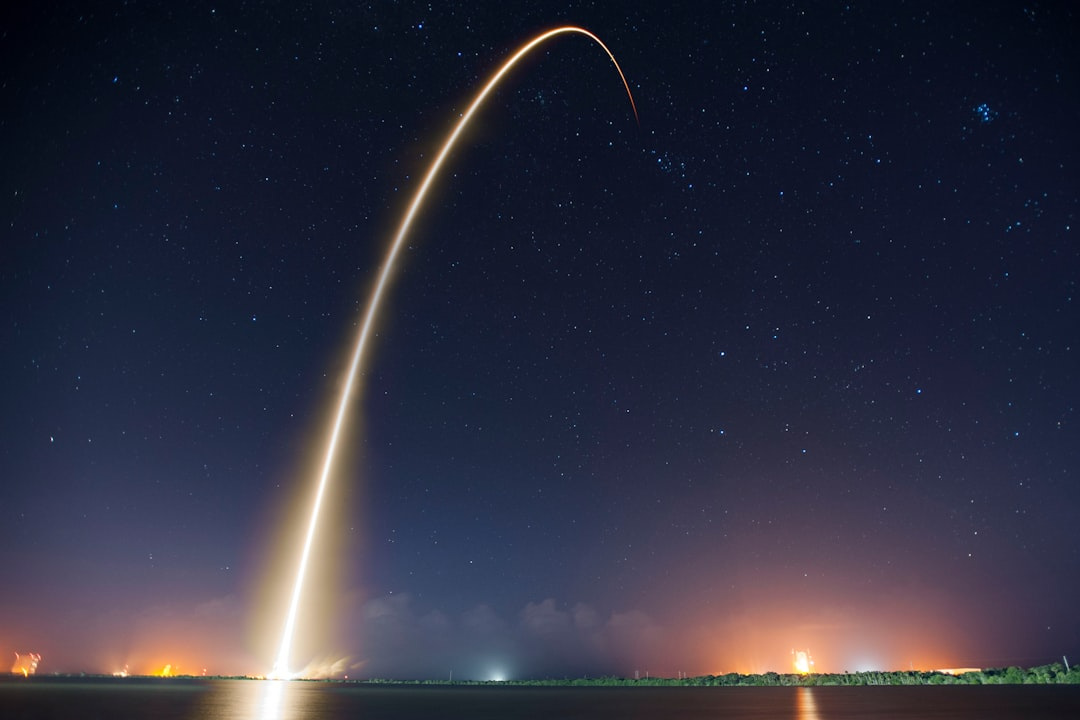
The space industry is no longer solely the domain of national governments and vast, taxpayer-funded agencies. We’ve entered an exhilarating era where private enterprise is not just participating, but actively leading the charge in exploring, utilizing, and ultimately, commercializing the cosmos. This paradigm shift, often dubbed the “New Space Race,” is redefining our relationship with space, moving it from a realm of pure scientific endeavor to a vibrant economic frontier.
🚀 The New Space Race: From Public to Private
For decades, space exploration was primarily driven by geopolitical competition and scientific curiosity, largely funded by agencies like NASA, Roscosmos, and ESA. While their foundational work laid the groundwork, the early 21st century witnessed the emergence of agile, private companies with audacious goals. This transition has been propelled by several factors:
- ✅ Decreasing Launch Costs: Innovations like reusable rockets (pioneered by companies such as SpaceX with their Falcon 9) have dramatically lowered the barrier to entry for space access.
- ➡️ Miniaturization of Technology: Smaller, more powerful satellites and sensors have opened up new applications and reduced mission costs.
- 💡 Venture Capital Influx: Billions of dollars from private investors are fueling ambitious projects, indicating strong confidence in the commercial viability of space.
- 💰 Demand for Space Services: Growing global demand for high-speed internet, earth observation data, and in-orbit services.
This shift means that instead of just government-mandated missions, we now see companies like Axiom Space planning and operating commercial modules for the International Space Station, and eventually their own private space stations. It’s a fundamental change from a supply-driven industry to a demand-driven market.
🛰️ Key Pillars of Space Commercialization
Commercialization isn’t just about launching rockets; it encompasses a diverse ecosystem of services and industries:
- 🚀 Space Tourism & Private Human Spaceflight: Companies like Virgin Galactic and Blue Origin are offering sub-orbital and orbital experiences for private citizens. Beyond these, SpaceX’s Crew Dragon has already carried private astronauts to the ISS for companies like Axiom Space. This is no longer sci-fi; it’s a booking on a waiting list.
- 📡 Satellite Constellations & Connectivity: Massive networks of satellites, such as SpaceX’s Starlink and OneWeb, are providing global broadband internet, especially to underserved areas. This is a game-changer for remote communities and global communication.
- 🌍 Earth Observation & Remote Sensing: Companies like Planet Labs operate vast fleets of small satellites, providing high-resolution imagery and data for everything from agriculture and urban planning to disaster response and environmental monitoring. The insights derived are immense.
- 🏭 In-Space Manufacturing & Research: The ability to manufacture specialized materials, pharmaceuticals, or even 3D print tools in the microgravity environment of space holds immense promise. Companies are exploring everything from fiber optics with superior properties to bio-fabrication. The International Space Station (ISS) itself is a testament to this, increasingly serving as a commercial research platform.
- 📦 Orbital Logistics & Debris Management: As more objects populate orbit, services for satellite servicing, refueling, de-orbiting defunct satellites, and active debris removal are becoming critical. This is a burgeoning market for companies like Northrop Grumman’s MEV (Mission Extension Vehicle).
- ⛏️ Resource Utilization (Future): While still nascent, concepts like asteroid mining and lunar resource extraction (e.g., for water ice on the Moon) are serious long-term ventures for future economic expansion beyond Earth.
🚧 Challenges & Non-Obvious Hurdles
While the opportunities are vast, the commercial space sector faces significant obstacles:
- ⚖️ Regulatory Labyrinth: International space law (like the Outer Space Treaty) was drafted in an era of government-led exploration. Applying these frameworks to private, profit-driven entities creates legal complexities regarding liability, ownership, and operational standards. For instance, who regulates tourism to the Moon?
- 🛡️ Insurance & Risk Management: Launching multi-million dollar assets into space is inherently risky. The market for space insurance is sophisticated but constantly evolving, covering not just launch failures but also in-orbit malfunctions and potential collisions. This is a significant, often overlooked, operational cost.
- 🛰️ Space Debris: The increasing number of satellites and fragments of old rockets creates a growing risk of collisions, posing a threat to operational spacecraft and long-term sustainability. Companies face pressure to design for de-orbiting or active removal at the end of life.
- 💰 High Capital Investment: Despite decreasing costs, developing new launch vehicles, satellite constellations, or in-orbit facilities still requires enormous upfront capital. Securing sustained funding beyond early venture rounds is critical.
- ➡️ Talent Shortage: The rapid expansion of the sector outpaces the supply of skilled engineers, scientists, and technicians specializing in space-related fields.
A common mistake for newcomers is underestimating the time and capital required to navigate both technical development and the unique regulatory and risk landscape of space. It’s not just about building a rocket; it’s about getting permission to launch it, insuring it, and operating it in a shared, unregulated environment.
🌌 The Horizon: What’s Next?
The trajectory of space commercialization is steep and accelerating. We can anticipate:
- ✅ Expansion of Private Space Stations: Beyond the ISS, companies like Axiom Space and collaborations like Starlab (Voyager Space, Airbus) are planning fully commercial orbital outposts, designed for research, manufacturing, and even media production.
- ➡️ Point-to-Point Terrestrial Travel: Companies like SpaceX are already exploring the long-term potential of using their large rockets (e.g., Starship) for ultra-fast travel between points on Earth, leveraging space technology for terrestrial applications. Imagine flying from New York to Sydney in under an hour.
- 💡 Lunar Economy Development: With renewed interest in returning humans to the Moon (e.g., NASA’s Artemis program), commercial entities are positioning themselves to provide lunar landers (like Intuitive Machines), resource extraction, and infrastructure development services.
- 💰 Growth in Space-Derived Products & Services: As in-space manufacturing matures, we’ll see more tangible products and services that can only be created or optimally produced in space reaching Earth-bound markets.
The era of space commercialization is still in its infancy, yet its growth has been exponential. It promises not just new economic opportunities, but a profound shift in how humanity interacts with and benefits from the vastness beyond our atmosphere. This frontier is open for business, and the innovations are just beginning.
- Earth to Moon Travel Time: Exploring Space Travel Times
- Mars Trip Planning: Costs, Realities & Future of Space Travel
- Space Travel Cost: A Guide to Space Flight Expenses
- Space Travel Price: What to Expect for Your Journey
- SpaceX Flights: Shaping the Future of Space Travel
- Private Space Travel Companies: Your Gateway to Space
- Suborbital Space Flight: The Future of Space Tourism
- Commercial Space Flight Cost: How Much Does it Cost?
- Interstellar Travel: Is it Possible? Challenges and Future
- Richard Branson’s Space Flight: Commercial Space Tourism
🔬 Planetary Science & Defense

🔭 Unpacking Planetary Science
As an expert in cosmic queries, you quickly learn that understanding our cosmic neighborhood is not merely an academic exercise; it’s a fundamental pillar of our future. Planetary science is the broad, interdisciplinary field dedicated to studying planets, moons, and planetary systems—including our own Solar System and beyond. It encompasses everything from the formation of protoplanetary disks to the evolution of atmospheres, the search for life, and the dynamics of celestial bodies. Think of it as the ultimate geological, atmospheric, and biological survey of the cosmos.
What makes it so captivating is its dual mandate:
- ✅ Discovery: Unraveling the mysteries of alien worlds. How did Mars lose its water? Is there a subsurface ocean on Europa? What makes Titan’s atmosphere so unique? Missions like NASA’s Perseverance and Curiosity rovers on Mars, the upcoming Europa Clipper, and the proposed Dragonfly mission to Titan are direct embodiments of this quest.
- ✅ Understanding Context: Placing Earth within a broader cosmic framework. By studying other planets, we gain crucial insights into our own planet’s past, present, and potential future. For instance, understanding the runaway greenhouse effect on Venus helps us better appreciate Earth’s delicate climate balance.
Non-Obvious Insight: A common misconception is that planetary science is only about distant exoplanets. While the James Webb Space Telescope (JWST) is revolutionizing exoplanet atmospheric characterization, a huge part of planetary science focuses on our own Solar System, providing tangible data points critical for understanding planetary formation and evolution models that apply universally.
🛡️ The Imperative of Planetary Defense
Now, let’s pivot to a more immediate concern: protecting our home. Planetary defense is the applied science and engineering dedicated to detecting, tracking, and mitigating the threat of Near-Earth Objects (NEOs)—asteroids and comets whose orbits bring them close to Earth. This isn’t science fiction; it’s a critical, ongoing effort to safeguard civilization. The dinosaurs didn’t have a space program; we do.
Why is this so vital?
- ➡️ Historical Precedent: The geological record is littered with evidence of massive impacts that caused extinction events. The impact that wiped out the dinosaurs 66 million years ago is the most famous example, but it’s not the only one.
- ➡️ Known Threats: While no large, catastrophic impactor is currently on a collision course with Earth for the foreseeable future, thousands of NEOs are out there. We need to find them, characterize them, and understand their trajectories. Programs like the Pan-STARRS and ATLAS survey telescopes are continuously scanning the skies for these celestial visitors.
- ➡️ Scale of Impact: Even smaller objects, like the Chelyabinsk meteor in Russia (2013), can cause significant damage and injuries. A truly large impact could trigger tsunamis, wildfires, atmospheric changes, and global climate disruption, threatening human civilization.
Pro Tip: The biggest challenge isn’t necessarily deflecting an asteroid, but finding it early enough. A small nudge given decades in advance is far more effective than a massive push just weeks before impact. This is why funding for survey telescopes and orbital tracking systems is so crucial.
🚀 Our Defensive Arsenal & Future Tech
So, what are our options for planetary defense? The core strategies revolve around detection and deflection:
🔭 Detection & Tracking
Before you can defend, you must first detect. This is where a significant portion of planetary defense funding goes.
- ✅ Ground-Based Observatories: Large telescopes worldwide continuously scan the sky. Projects funded by institutions like NASA’s Planetary Defense Coordination Office (PDCO) and ESA’s Planetary Defence Office are at the forefront, identifying and cataloging NEOs.
- ✅ Space-Based Assets: Future missions might involve dedicated space telescopes designed to detect objects that ground-based observatories might miss due to atmospheric conditions or viewing angles (e.g., objects coming from the direction of the Sun).
- 💡 Citizen Science: Believe it or not, amateur astronomers play a significant role! Their observations contribute valuable data to confirm new discoveries and refine orbital paths of known objects. Platforms like the Minor Planet Center rely on this global network.
🛠️ Deflection Technologies
Once an asteroid is identified as a threat, how do we move it? Forget Hollywood’s “blow it up with nukes” trope; real-world solutions are far more nuanced and generally involve a gentle nudge over time.
- ➡️ Kinetic Impactor: This is the most mature and currently favored method. A spacecraft is deliberately crashed into the asteroid to alter its velocity slightly. The change in momentum, even if tiny, can accumulate over years to shift the asteroid’s orbit sufficiently to miss Earth.
- Concrete Example: NASA’s Double Asteroid Redirection Test (DART) mission, launched in 2021, successfully impacted the asteroid Dimorphos in September 2022. This historic mission proved the viability of the kinetic impactor technique, demonstrating our ability to alter an asteroid’s path for the first time.
- ➡️ Gravity Tractor: A less disruptive, but slower, method. A spacecraft would fly alongside the asteroid for an extended period, using its own minuscule gravitational pull to gently tug the asteroid off course. This requires long lead times but is ideal for loosely bound “rubble pile” asteroids.
- ➡️ Laser Ablation (Conceptual): High-powered lasers could vaporize material from the asteroid’s surface, creating a small thrust that, over time, pushes it off course. This is still largely theoretical but shows promise for future development.
Non-Obvious Insight: Nuclear detonations are generally considered a last resort, if at all. They carry risks of fragmentation (creating many smaller, still dangerous pieces) and radioactive contamination, making controlled deflection preferable.
🤝 Global Collaboration & Cosmic Stewardship
Planetary defense is inherently an international endeavor. Asteroids don’t respect national borders, and neither should our efforts to protect ourselves. Organizations like the International Asteroid Warning Network (IAWN) and the Space Mission Planning Advisory Group (SMPAG) facilitate global cooperation, sharing data and coordinating potential responses.
Ultimately, planetary science and defense are about cosmic stewardship—our responsibility to understand, protect, and perhaps one day, responsibly explore our place in the universe. It’s a testament to human ingenuity and our capacity for long-term thinking, ensuring that “cosmic queries” today don’t become “cosmic catastrophes” tomorrow.
- Lunar Geology: Exploring the Moon’s Rocky Past
- Space Geology: Unearthing Planetary Body Secrets
- Defending Earth: The Critical Role of Asteroid Missions
- Uranus: Unlocking NASA’s Ice Giant Secrets
- NASA Venus Expeditions: Unveiling Earth’s Scorching Sister
- NASA DART: Planetary Defense Against Asteroids
- NASA Asteroid Strategy: Defending Earth
- WASP-103b: The ‘Squashed’ Exoplanet and Other Discoveries
- Exoplanet 51 Pegasi b: The First Confirmed Hot Jupiter
- TESS Spacecraft: Discovering Habitable Exoplanets Beyond Our Solar System
👽 Astrobiology & Unexplained Phenomena

Welcome back, fellow cosmic explorer! Our journey through the universe wouldn’t be complete without tackling one of its most compelling and persistent questions: Are we alone? This isn’t just the stuff of science fiction; it’s a rapidly evolving field of rigorous scientific inquiry. We’re talking about astrobiology – the ultimate interdisciplinary quest – and the more recent, systematic examination of Unexplained Aerial Phenomena (UAPs). Let’s dive in.
🧪 What is Astrobiology?
At its core, astrobiology is the scientific study of the origin, evolution, distribution, and future of life in the universe. It’s a sprawling, multidisciplinary endeavor that pulls expertise from astronomy, biology, chemistry, geology, and physics. Think of it as the grand unified theory of life, seeking to understand not just what life is, but where it could be and how it gets there.
- 💡 Non-Obvious Insight: A major challenge in astrobiology isn’t just finding life, but defining it in a universal context. Our Earth-centric definition (carbon-based, water-dependent) might be too narrow. Scientists are exploring alternative biochemistries and energy sources that could sustain life elsewhere.
- ✅ Key Goal: Rather than just looking for “aliens,” astrobiologists primarily search for habitable environments – places where the conditions for life (as we know it, or plausible variations) could exist. This includes liquid water, stable energy sources, and the right chemical building blocks.
🔭 The Hunt for Biosignatures & Habitable Worlds
The search for extraterrestrial life is no longer just passive listening (though that’s still vital). It’s an active, global endeavor leveraging cutting-edge technology. Our primary approach is to identify biosignatures – any substance or phenomenon that provides scientific evidence of past or present life.
- ➡️ Exoplanet Exploration: Thanks to missions like NASA’s Kepler Space Telescope and the Transiting Exoplanet Survey Satellite (TESS), we’ve cataloged thousands of exoplanets. The focus is now shifting to characterizing their atmospheres.
- 🚀 Atmospheric Analysis: The James Webb Space Telescope (JWST) is a game-changer here. It can analyze the light passing through an exoplanet’s atmosphere, revealing the presence of gases like oxygen, methane, or water vapor. While no single gas is a definitive biosignature, certain combinations (e.g., oxygen and methane) in chemical disequilibrium could strongly suggest biological processes.
- 🪐 Solar System Targets: We don’t have to look light-years away. Within our own cosmic backyard, Mars remains a prime target. NASA’s Perseverance Rover is currently collecting rock and soil samples on Mars, which will eventually be returned to Earth for analysis, specifically looking for signs of ancient microbial life. Icy moons like Europa (Jupiter) and Enceladus (Saturn), with their subsurface oceans, are also incredibly compelling due to the presence of liquid water and potential hydrothermal vents. NASA’s Europa Clipper mission is slated to launch soon, designed to investigate Europa’s habitability.
🤔 The Fermi Paradox & The Drake Equation
If life is so common, and the universe so vast and ancient, where is everybody? This question, famously posed by physicist Enrico Fermi, is known as the Fermi Paradox. It highlights the apparent contradiction between the high probability of extraterrestrial civilizations’ existence and the lack of observational evidence or contact.
- 💡 The Drake Equation: Developed by astronomer Frank Drake, this isn’t a calculator to tell you the exact number of civilizations. Instead, it’s a probabilistic framework designed to stimulate scientific dialogue and identify the variables we need to understand better.
- N = R* x fp x ne x fl x fi x fc x L
- N: The number of communicative civilizations in our galaxy.
- R*: The rate of star formation.
- fp: The fraction of those stars with planets.
- ne: The average number of planets that can potentially support life per star.
- fl: The fraction of those planets that actually develop life.
- fi: The fraction of life-sustaining planets where intelligent life emerges.
- fc: The fraction of intelligent civilizations that develop technology capable of interstellar communication.
- L: The length of time such civilizations release detectable signals into space.
- ✅ Practical Use: While many variables are highly speculative (especially fl, fi, fc, L), the equation helps organizations like the SETI Institute (Search for Extraterrestrial Intelligence) focus their efforts. It underscores that even small changes in these fractions can drastically alter the final outcome. Common explanations for the paradox include the “Great Filter” (a barrier that prevents life from developing or surviving beyond a certain point), the “Rare Earth Hypothesis” (that complex life is exceptionally rare), or simply that distances are too vast for us to detect signals yet.
👽 Unexplained Aerial Phenomena (UAPs): Beyond the Fringe
For decades, “Unidentified Flying Objects” (UFOs) were largely relegated to the realm of conspiracy theories and niche enthusiasts. However, in recent years, the conversation has shifted dramatically, thanks to official reports and declassifications from government bodies. The term has evolved to Unexplained Aerial Phenomena (UAPs), reflecting a more neutral and scientific approach.
- ➡️ The Shift in Focus: This newfound legitimacy isn’t primarily driven by a belief in alien visitation, but by concerns over national security and airspace safety. Reports from highly trained military pilots, often corroborated by multiple sensor systems (radar, infrared, visual), compelled official investigations. The Pentagon’s former UAP Task Force (and its successor, the All-domain Anomaly Resolution Office or AARO) exemplifies this shift.
- 💡 Non-Obvious Insight: While the public often jumps to extraterrestrial explanations, the vast majority of UAP sightings are likely prosaic: misidentification of conventional aircraft, balloons, drones, atmospheric phenomena, foreign adversary technology, or sensor glitches. The scientific challenge lies in systematically ruling out these known explanations.
- 📈 Data Collection Challenges: Unlike controlled experiments, UAP observations are often fleeting, anecdotal, and lack robust, reproducible data. This makes scientific analysis difficult. However, the push for more systematic data collection and analysis from official sources is a positive step toward understanding.
- ✅ Scientific Approach: Just like any scientific anomaly, UAPs require empirical evidence, peer review, and falsifiable hypotheses. Until an explanation stands up to rigorous scrutiny and rules out all known possibilities, the “extraterrestrial hypothesis” remains one of many, and one of the least likely, given the vast distances and energy requirements for interstellar travel.
🌌 Our Next Steps in Cosmic Exploration
The quest to understand life’s place in the cosmos is just beginning. What can we expect next?
- 🔭 Advanced Telescopes: Future space telescopes will have even greater capabilities for exoplanet characterization, allowing us to pinpoint Earth-like worlds and analyze their atmospheres with unprecedented precision.
- 🔬 Enhanced Biosignature Detection: Researchers are developing more sophisticated ways to detect subtle signs of life, including “technosignatures” (evidence of technology, like artificial radio signals or mega-structures).
- 🤝 Interdisciplinary Collaboration: The complexity of astrobiology demands even greater collaboration between scientists from diverse fields, sharing data and insights from planetary science to biochemistry.
- ➡️ Continued UAP Scrutiny: We can expect ongoing efforts from governments and scientific organizations to collect and analyze UAP data more transparently and systematically, prioritizing national security and flight safety while remaining open to genuinely unexplained phenomena.
The universe remains a vast, largely unexplored frontier. The mysteries of life’s origin and existence are among the most profound questions we can ask. As our tools and understanding evolve, so too does our capacity to answer them, moving us closer to understanding our true place in the cosmos.
- Has NASA Found Aliens? Evidence and Myths Debunked
- Exoplanets: The Hunt for Habitable Worlds Beyond Our Solar System
- Exoplanets: Discovering Worlds Beyond Our Solar System
- GJ 1214 b: Exploring a Waterworld Exoplanet
- Fermi Paradox: Why Haven’t We Found Alien Life?
- Gliese 581 c: Habitable Zone Exoplanet
- Do Aliens Exist? Evidence of Extraterrestrial Life
- TOI 700 e: Potentially Habitable Exoplanet Discovered
- Extraterrestrial Life: The Search for Planets and Life
- Does NASA Believe Aliens Exist? The Search for Extraterrestrial Life
⚙️ Space Operations & Infrastructure

Welcome to the engine room of the cosmos! While much of our guide explores the vastness and mysteries of the universe, none of it would be possible without the diligent, intricate, and often invisible work that underpins our access to space. Space Operations & Infrastructure is the practical, hands-on discipline that ensures our satellites stay aloft, our probes reach their destinations, and our data flows seamlessly back to Earth.
It’s about far more than just launching rockets; it encompasses the entire lifecycle of a space mission, from the moment a concept takes shape to the very end of a satellite’s operational life. Think of it as the logistical and operational mastery required to extend human presence and technology beyond Earth’s atmosphere.
🛰️ The Backbone of Space Endeavors
At its core, space operations involve the continuous monitoring, control, and maintenance of spacecraft. This isn’t a “set it and forget it” endeavor. Every single satellite, space probe, and crewed mission requires constant attention to ensure it’s functioning correctly, staying in its desired orbit, and executing its scientific or commercial objectives.
- ✅ Telemetry, Tracking, and Command (TT&C): This fundamental trinity is the lifeline. Telemetry is the data the spacecraft sends back about its health and status (temperature, power levels, subsystem performance). Tracking involves knowing precisely where it is. Command is sending instructions to the spacecraft.
- ➡️ Orbital Mechanics Expertise: Understanding how objects move in space is paramount. Without precise calculations and constant adjustments, a satellite could drift out of position, collide with debris, or simply fail to complete its mission.
- 💡 Real-world Example: Consider the global positioning system (GPS). Its accuracy relies on an immense network of satellites, ground stations, and highly precise atomic clocks, all meticulously managed to ensure synchronization and correct orbital placement.
🌍 Ground Control: More Than Just Buttons
While the spacecraft are in orbit, the command center is firmly on Earth. Ground stations are the vital communication hubs, receiving vast streams of data and sending critical commands. These aren’t just single dishes; they are sophisticated, globally distributed networks.
- ✅ Data Ingestion & Processing: Satellites generate terabytes of data daily, from scientific observations to engineering telemetry. This data must be efficiently received, processed, archived, and distributed to scientists and operators.
- ➡️ Command Uplink & Validation: Sending commands to a multi-million or multi-billion dollar asset hundreds of thousands or even millions of miles away requires incredible precision and verification protocols. One wrong command could jeopardize an entire mission.
- 💡 Non-Obvious Insight: The latency involved in communicating with deep-space probes (e.g., the Voyager spacecraft) means that commands must be pre-programmed and meticulously planned, sometimes days or weeks in advance, before being executed autonomously. Major networks like NASA’s Deep Space Network (DSN) and ESA’s ESTRACK are global powerhouses in this regard.
🚀 Launch Systems & Orbital Insertion Precision
The journey into space begins with the raw power of a launch vehicle, but the initial phase of space operations is arguably the most critical and complex.
- ✅ Launch Site Operations: From fuel loading and payload integration to weather monitoring and range safety, the procedures leading up to launch are incredibly intricate and orchestrated by large, highly specialized teams.
- ➡️ Ascent & Orbital Insertion: Once the rocket lifts off, mission control monitors hundreds of parameters in real-time. The final stage of a rocket precisely maneuvers to deposit the satellite into its intended orbit. A tiny deviation here can result in a satellite being unusable, requiring costly correctional burns or even becoming space junk.
- 💡 Concrete Example: Companies like SpaceX (with its Falcon 9 and Starship) and United Launch Alliance (ULA) are not just building rockets; they’ve refined the entire launch operations workflow to a science, aiming for reliability and increasingly, reusability.
🛰️ On-Orbit Operations & Maintenance
Once a satellite is successfully deployed, the long-term work of space operations truly begins. This is where the spacecraft earns its keep, but also where the challenges of the harsh space environment become apparent.
- ✅ Health Monitoring & Anomaly Resolution: Operators continuously monitor the satellite’s power systems, thermal controls, attitude (orientation), and propulsion. When an anomaly occurs—which it inevitably will—teams must quickly diagnose the issue and uplink corrective commands.
- ➡️ Station Keeping & Collision Avoidance: Satellites drift due to subtle gravitational perturbations and atmospheric drag (even in low Earth orbit). Regular “station keeping” burns are required to maintain their precise orbital slots. Furthermore, collision avoidance maneuvers are increasingly common, especially in crowded orbits, to steer clear of space debris.
- 💡 Pro Tip: Modern satellite constellations, such as Starlink, rely heavily on autonomous operations and artificial intelligence to manage thousands of satellites, performing many of these tasks without constant human intervention, while still requiring a robust ground segment for oversight and intervention.
♻️ The Growing Challenge: Space Debris & Decommissioning
As more and more objects are launched into space, managing the end-of-life of satellites and mitigating space debris has become a critical aspect of space operations.
- ✅ Space Situational Awareness (SSA): This involves tracking all objects in orbit – active satellites, spent rocket bodies, and fragments of debris – to predict potential collisions. Organizations like the U.S. Space Force’s 18th Space Defense Squadron are crucial here.
- ➡️ End-of-Life Procedures: Responsible operators adhere to guidelines for decommissioning satellites. For Low Earth Orbit (LEO) satellites, this typically means de-orbiting them into the atmosphere where they will burn up within 25 years. For Geostationary Earth Orbit (GEO) satellites, they are boosted into “graveyard orbits” to prevent them from becoming hazards in the valuable GEO belt.
- 💡 Non-Obvious Insight: The “Kessler Syndrome” describes a theoretical scenario where the density of objects in LEO is so high that collisions create more debris, leading to a cascade of further collisions, rendering certain orbits unusable for generations. This makes proactive debris management and effective decommissioning a non-negotiable imperative for sustainable space use. Companies like ClearSpace are developing technologies for active debris removal (ADR).
💡 Practical Insights for Future Innovators
The field of Space Operations & Infrastructure is dynamic and constantly evolving, driven by new technologies and increasing demand for space-based services. If you’re interested in contributing to this vital area, here’s what to consider:
- ✅ Multidisciplinary Skills: Success in this field requires a blend of aerospace engineering, computer science, data analytics, orbital mechanics, cybersecurity, and even project management.
- ➡️ Growing Demand: With the rise of commercial space (e.g., satellite internet, Earth observation, in-orbit servicing), there’s an increasing need for skilled operators, mission planners, and systems engineers.
- 💡 Actionable Step: Explore internships or entry-level positions with satellite operators (e.g., Maxar Technologies, SES, Planet Labs), launch providers, or government space agencies (e.g., NASA, ESA, JAXA). Understanding the practical application of space theory is key.
- NASA Wallops Flight Facility: A Launchpad for Space
- Chris Kraft: Architect of NASA Mission Control
- Inside NASA Ground Control: The Nerve Center of Space Missions
- TKS Spacecraft: The Soviet Union’s Unsung Spacecraft
- Spacecraft Re-entry: The Perilous Journey Home
- Buran Spacecraft: Unraveling the Mystery of the Soviet Shuttle
- Historic Spacecraft: The Pioneers of Space Exploration
- Cosmos Program: Unveiling the Secrets of Soviet Spacecraft
- China’s PIPL and Lunar Ambitions: Data Privacy in Space Exploration
- Space Exploration Technologies: Driving Humanity to the Stars
✨ Public Engagement & Experiencing Space

As a seasoned explorer of the cosmos, I can tell you that the universe isn’t just for professional astronomers and rocket scientists. It’s for everyone. Public engagement in space, and the various ways we can experience its wonders, is critical not only for inspiring the next generation of innovators but also for fostering a deeper appreciation of our place in the vast cosmic tapestry. This isn’t just about passive consumption; it’s about active participation and real-world connection.
🌌 Observatories & Planetariums: Gateways to the Cosmos
These institutions are perhaps the most accessible entry points for direct cosmic engagement. They serve as vital educational hubs, bringing the universe down to Earth in tangible ways.
- ✅ Beyond the Show: While planetarium shows are fantastic, don’t stop there. Many major observatories, even professional research facilities, have dedicated public visitor centers and offer star parties or public viewing nights. Examples include the Griffith Observatory in Los Angeles, Kitt Peak National Observatory in Arizona, and visitor centers near Mauna Kea in Hawaii.
- ➡️ Local Gems: Often overlooked are local astronomy clubs and community observatories. These groups frequently host public outreach events, providing opportunities to look through high-powered telescopes and interact directly with passionate amateur astronomers. A quick online search for “[Your City] astronomy club” can reveal a surprising number of active communities.
- 💡 Non-Obvious Insight: Ask about “dark sky” programs. Many planetariums and observatories actively promote light pollution awareness and can guide you to the best local spots for unhindered stargazing, often collaborating with International Dark-Sky Association (IDA) designated parks.
🔬 Citizen Science: Becoming a Cosmic Contributor
The age of exclusive scientific research is over. Citizen science projects empower anyone with a computer and curiosity to contribute meaningfully to astronomical discovery.
- ✅ Real Impact: You don’t need a PhD to help scientists analyze data. Platforms like Zooniverse host a multitude of projects, from classifying galaxies in Galaxy Zoo to searching for exoplanets in Planet Hunters TESS data. Your contributions, though small individually, collectively create vast datasets for researchers.
- ➡️ Beyond Classification: Some projects, like those related to meteor showers or asteroid tracking, involve direct observation and data submission, turning your backyard into a mini-observatory. Organizations like the American Meteor Society (AMS) rely on public observations.
- 💡 Common Mistake: Thinking you need advanced scientific knowledge. Most citizen science projects are designed with user-friendly interfaces and clear tutorials, making complex tasks accessible to beginners. The primary requirement is attention to detail and patience.
🔭 Backyard Astronomy & Astrophotography: Your Personal Window
Owning a telescope or even just a pair of binoculars opens up an immediate and personal connection to the cosmos. Astrophotography takes this a step further, allowing you to capture the beauty of the night sky.
- ✅ Starting Simple: For beginners, a good pair of binoculars (e.g., 10×50) is often more effective and less intimidating than a cheap telescope. You can see the Moon’s craters, Jupiter’s moons, and brighter star clusters. Software like Stellarium (free) or apps like SkyView Lite are invaluable for navigation.
- ➡️ Telescope Choices: If you’re ready for a telescope, brands like Celestron and Meade offer excellent entry-level models. For visual observation, a Dobsonian telescope provides the best aperture for the money. For astrophotography, consider a refractor telescope or a DSLR camera with a star tracker.
- 💡 Pro Tip: Before investing heavily, join a local astronomy club. Many clubs have loaner telescopes and members who can provide hands-on guidance, preventing the common mistake of buying the wrong equipment or getting overwhelmed by its complexity. Learning to find objects without GoTo technology also deepens your understanding of the night sky.
✨ Virtual & Augmented Realities: Immersive Journeys
Technology has enabled entirely new ways to experience space, transcending geographical and physical limitations.
- ✅ Explore Beyond Earth: VR platforms, accessible via headsets like Oculus Quest or Valve Index, offer incredibly immersive experiences. Applications such as Titans of Space PLUS or Home Planet allow you to fly through the solar system, explore distant exoplanets, or even walk on Mars. NASA also releases VR experiences that let you explore missions or walk on the International Space Station.
- ➡️ AR for Learning: Augmented Reality apps (e.g., Sky Guide, Star Walk) use your phone’s camera to overlay constellations and celestial objects onto your real-time view of the sky, making it incredibly easy to identify what you’re seeing above.
- 💡 Non-Obvious Insight: These tools aren’t just for entertainment. They are powerful educational platforms that can make abstract astronomical concepts (like the scale of the solar system or the distances to stars) incredibly tangible and intuitive. They can also provide a simulated experience of phenomena that are rare or impossible to witness directly, like black holes or the Big Bang.
✈️ The Rise of Astrotourism & Space Travel
For those seeking a more profound, in-person connection, dedicated astrotourism and the nascent field of commercial space travel offer unparalleled experiences.
- ✅ Dark Sky Pilgrimages: Travel to certified International Dark-Sky Association (IDA) locations. These include national parks and reserves committed to preserving pristine night skies, offering stunning views of the Milky Way and other celestial phenomena. Think places like Aoraki Mackenzie International Dark Sky Reserve in New Zealand or Death Valley National Park in the USA.
- ➡️ Rocket Launches: Attending a rocket launch is an electrifying experience. Facilities like Kennedy Space Center Visitor Complex in Florida or Vandenberg Space Force Base in California offer public viewing opportunities for launches by SpaceX, ULA, and NASA. The sheer power and spectacle are unforgettable.
- 💡 Future Frontier: Commercial space travel is no longer science fiction. Companies like Virgin Galactic and Blue Origin are offering suborbital flights, while SpaceX aims for orbital tourism. While currently prohibitively expensive for most, these ventures signal a future where direct experience of space becomes more widely available. It’s worth keeping an eye on the development of more accessible forms of space tourism, such as high-altitude balloon flights that offer views of Earth’s curvature.
🗣️ Engaging with Experts: Talks, Festivals & Online Platforms
The universe is constantly revealing new secrets, and engaging with those at the forefront of discovery can be profoundly enriching.
- ✅ Public Lectures: Universities, museums, and planetariums frequently host public lectures by leading astronomers, physicists, and engineers. These events offer opportunities for direct Q&A and a deeper dive into current research. Check the events calendars of institutions like the Smithsonian National Air and Space Museum or major universities.
- ➡️ Science Festivals: Large-scale science festivals (e.g., World Science Festival in New York, various science weeks globally) often feature space-themed exhibits, talks, and interactive demonstrations, appealing to all ages and knowledge levels.
- 💡 Online Engagement: Beyond traditional media, a wealth of expert-led content exists online. Follow leading space agencies (NASA, ESA), renowned scientists (e.g., Neil deGrasse Tyson, Brian Cox), and educational channels (Kurzgesagt – In a Nutshell, PBS Space Time, CosmoQuest) on platforms like YouTube, X (formerly Twitter), and specialized science news websites. Many scientists are now very active on social media, sharing insights and answering questions directly.
- NASA Sounds of Space: Exploring the Cosmos
- NASA Virtual Tours: Explore Space from Home
- Animated Black Holes: Visualizing the Invisible
- Pōwehi: The Hawaiian Name for M87 Black Hole
- Top Black Hole YouTube Videos: Your Cosmic Education Guide
- Best Black Hole Websites: Essential Cosmic Exploration Resources
- NOVA’s Black Hole Apocalypse: Exploring Universe’s Destructive Forces
- Google Gravity Black Hole: Play Physics on Your Browser
- Gargantua Black Hole: Fact vs. Fiction in Interstellar
- Event Horizon: A 360° Virtual Reality Black Hole Experience
⚫ Black Holes & Extreme Cosmic Phenomena
The universe is home to phenomena so extreme, they challenge our very understanding of physics. Chief among these are black holes, cosmic enigmas where gravity reigns supreme, bending spacetime to its will. But they are far from the only showstoppers. From the ultra-dense remnants of dead stars to titanic cosmic explosions, these extreme environments offer unparalleled insights into the fundamental laws of nature.
What Exactly Is a Black Hole?
Forget the science fiction portrayal of cosmic vacuum cleaners. A black hole isn’t a “hole” in space, but rather a region where matter has been compressed to an incredibly dense point, creating a gravitational field so powerful that nothing—not even light—can escape once it crosses a certain boundary. They are born from the collapse of massive stars, or in the case of supermassive black holes, their origins are still a topic of intense research, though they reside at the heart of nearly every large galaxy, including our own with Sagittarius A*.
- 💡 Non-Obvious Insight: Despite their immense gravity, a black hole won’t “suck” you in from a distance. If our Sun were magically replaced by a black hole of the same mass, Earth’s orbit wouldn’t change. You only get into trouble if you cross the event horizon.
🚪 The Event Horizon & The Point of No Return
The critical boundary surrounding a black hole is known as the event horizon. This isn’t a physical surface, but rather the point of no return. Once anything—a star, a planet, or even light—crosses this invisible threshold, it is irrevocably drawn towards the singularity, the infinitely dense point at the black hole’s core. Inside, the laws of physics as we know them break down, making it one of the most mysterious places in the cosmos.
- ➡️ Practical Implication: The closer you get to the event horizon, the more extreme the gravitational gradient becomes. For larger objects, this differential gravity would “spaghettify” them, stretching them out like noodles before they even reach the singularity.
🔬 Detecting the Undetectable: How We “See” Black Holes
Since black holes trap light, we can’t directly “see” them. Instead, astronomers detect their presence and study their properties by observing their effects on surrounding matter and spacetime. This involves a suite of cutting-edge observational techniques:
- ✅ Gravitational Influence: We observe stars orbiting an unseen, massive object, like those swirling around Sagittarius A* at the center of the Milky Way. Their rapid, tight orbits provide compelling evidence for a supermassive black hole.
- ✅ Accretion Disks & X-rays: As gas and dust fall towards a black hole, they form a superheated accretion disk. Friction within this disk heats the material to millions of degrees, causing it to emit powerful X-rays that telescopes like Chandra X-ray Observatory can detect.
- ✅ Gravitational Lensing: The extreme gravity of a black hole can bend light from background objects, distorting their images.
- ✅ Direct Imaging (Event Horizon Telescope): In a groundbreaking feat, the Event Horizon Telescope (EHT) collaboration successfully imaged the “shadow” of the supermassive black hole in galaxy M87 in 2019, providing the first direct visual evidence of a black hole and its event horizon.
Beyond Black Holes: Other Extreme Cosmic Powerhouses
The universe’s “extreme” club isn’t exclusive to black holes. Other cosmic phenomena push the boundaries of physics, often linked to the violent deaths of massive stars or the aftermath of black hole formation:
- ➡️ Neutron Stars: The remnants of massive stars that weren’t quite massive enough to form black holes. They are incredibly dense—a teaspoon of neutron star material would weigh billions of tons. Some spin rapidly, emitting beams of radio waves we detect as pulsars (e.g., the Crab Pulsar), while others possess magnetic fields trillions of times stronger than Earth’s, known as magnetars, causing powerful X-ray and gamma-ray flares.
- ➡️ Quasars: These are the most luminous objects in the universe, powered by actively feeding supermassive black holes at the centers of young galaxies. The intense radiation from their accretion disks can outshine entire galaxies.
- ➡️ Gamma-Ray Bursts (GRBs): The most powerful explosions in the universe, believed to be caused by the collapse of supermassive stars into black holes (long GRBs) or the merger of neutron stars (short GRBs). These events, like GRB 970228, release more energy in seconds than our Sun will in its entire lifetime.
🌊 The Echoes of Spacetime: Gravitational Waves
One of the most revolutionary discoveries in modern astrophysics has been the direct detection of gravitational waves. Predicted by Einstein, these ripples in spacetime are generated by the acceleration of massive objects, particularly the most extreme cosmic events:
- ✅ Colliding Black Holes: Observatories like the Laser Interferometer Gravitational-Wave Observatory (LIGO) and Virgo have famously detected gravitational waves from merging black holes and neutron stars. This opened a completely new window into the universe, allowing us to “hear” the cosmos and observe events previously invisible to traditional telescopes.
- 💡 Future Prospects: The continued study of gravitational waves promises to reveal the existence of intermediate-mass black holes, provide insights into the early universe, and potentially even detect cosmic strings or other exotic phenomena. It’s a new era of cosmic exploration, akin to the invention of the telescope.
- Supermassive Black Holes: Cosmic Giants Explained
- Could a Black Hole Threaten Earth? Understanding the Risk
- Saturn Black Hole Myth: Fact vs. Cosmic Fiction
- Black Hole Eating: How Black Holes Consume Stars and Gas
- Artificial Black Hole: Science Fact or Fiction?
- Actual Black Holes: Evidence from Space
- Primordial Black Holes: Early Universe Relics
- Micro Black Holes: Tiny Giants or Curiosities?
- Galactic Black Holes: Understanding Galaxy Centers
- M87 Black Hole: First Image of a Cosmic Giant
📚 Additional Resources

📚 Recommended Reading & Digital Libraries
Diving deeper into cosmic queries often starts with foundational texts and continues with contemporary insights. While the universe constantly reveals new secrets, certain books stand as pillars of understanding, making complex ideas accessible.
- ✅ The Classics: Begin with enduring works like Carl Sagan’s “Cosmos” or Stephen Hawking’s “A Brief History of Time”. These aren’t just books; they’re gateways that inspire wonder and provide a robust conceptual framework for the universe’s grand scale and its intricate laws.
- ✅ Modern Perspectives: For a more current and concise overview, Neil deGrasse Tyson’s “Astrophysics for People in a Hurry” offers digestible explanations of the latest astronomical discoveries and theories. For a deeper dive into theoretical physics, Brian Greene’s works, such as “The Elegant Universe”, are excellent for grappling with concepts like string theory and quantum mechanics.
- 💡 Non-Obvious Insight: Beyond purchasing, explore your local library’s digital resources. Many public and university libraries offer free access to extensive e-book collections, audiobooks, and even academic journals via platforms like OverDrive, Libby, or directly through databases like JSTOR or ScienceDirect. This can save you significant costs while granting access to a wealth of knowledge.
🎓 Online Learning Platforms & MOOCs
Formal education isn’t the only path to becoming a cosmic query expert. The digital age has democratized learning, offering high-quality courses from leading institutions worldwide, often for free or at a minimal cost.
- ✅ University-Level Courses: Platforms like Coursera, edX, and FutureLearn host a plethora of courses on astronomy, astrophysics, cosmology, and planetary science. Search for offerings from prestigious universities such as Caltech, MIT, University of Edinburgh, or Australian National University. Many allow free auditing, giving you full access to lectures and materials without graded assignments.
- ✅ Specialized Learning: Websites like Khan Academy provide excellent foundational physics and astronomy content for free, perfect for solidifying basic principles before tackling more advanced topics. For cutting-edge discussions, look for lecture series or seminars from observatories or research institutes, often freely available on their websites or YouTube channels.
- 💡 Non-Obvious Insight: Don’t just consume; engage. Participate in course forums, join study groups, or even start your own. The act of discussing complex topics with peers and instructors not only reinforces your understanding but also exposes you to diverse interpretations and questions you might not have considered. Look for courses with active communities.
📺 Documentaries & Engaging Series
Visual media offers a powerful way to comprehend the scale, beauty, and mysteries of the universe, bringing abstract concepts to life through stunning visuals and expert narration.
- ✅ Epic Narratives: The “Cosmos” series, both Carl Sagan’s original and Neil deGrasse Tyson’s “Cosmos: A Spacetime Odyssey”, are quintessential viewing. They blend scientific accuracy with captivating storytelling. Other excellent series include BBC’s “The Planets” or “Universe”, which leverage incredible CGI and scientific expertise.
- ✅ Deep Dives: For more focused inquiries, programs from PBS Nova or BBC Horizon often tackle specific cosmic queries, from the search for exoplanets to the nature of dark matter, featuring interviews with the scientists on the front lines of discovery. Streaming services like Netflix, Hulu, and Max (formerly HBO Max) frequently host new and classic space documentaries.
- 💡 Non-Obvious Insight: Watch documentaries with a critical eye, and use them as springboards for further research. If a concept or a scientist’s work particularly intrigues you, pause the show and look up the research papers or books mentioned. This turns passive viewing into an active learning experience, solidifying information and pushing you towards primary sources.
🎧 Podcasts & Audio Exploration
For learning on the go, podcasts offer a convenient and often dynamic way to stay updated on the latest cosmic discoveries and engage with expert discussions.
- ✅ Leading Voices: Tune into StarTalk with Neil deGrasse Tyson for a blend of science, pop culture, and humor, featuring interviews with scientists, comedians, and celebrities. Astronomy Cast, hosted by Fraser Cain and Dr. Pamela Gay, provides a more structured, in-depth look at specific astronomical topics each week, perfect for systematic learning.
- ✅ News & Updates: Podcasts like Science Friday or NPR’s Short Wave often feature segments on new space missions, discoveries, and the latest theories, keeping you abreast of current events in the field.
- 💡 Non-Obvious Insight: Podcasts are excellent for catching up on discussions about very recent discoveries. Unlike books or documentaries, they can be produced quickly, offering almost real-time commentary and initial reactions from experts on groundbreaking news (e.g., the first James Webb Space Telescope images or breakthrough exoplanet findings). Listen with a notebook nearby to jot down concepts or names you want to research further.
🔭 Citizen Science & Community Engagement
The journey of cosmic discovery isn’t just for professional scientists. Citizen science projects allow anyone with a computer or mobile device to contribute meaningfully to ongoing research, providing actionable ways to participate.
- ✅ Contribute to Research: Platforms like Zooniverse host a multitude of citizen science projects where you can classify galaxies, search for exoplanets, analyze images from telescopes like the Hubble Space Telescope, or even help decipher historical astronomical logs. Your contributions, though small individually, collectively power significant scientific breakthroughs.
- ✅ Join Local Groups: Look for local astronomy clubs or stargazing societies in your area. Many offer public viewing nights, lectures, and mentorship for amateur astronomers. These communities are invaluable for hands-on experience, networking, and sharing observations.
- 💡 Non-Obvious Insight: Participating in citizen science isn’t just about contributing data; it’s about developing a scientific mindset. You learn to recognize patterns, apply scientific methodology, and understand the challenges of data analysis. For instance, classifying galaxies on Galaxy Zoo teaches you morphological distinctions that even professional astronomers rely on. It’s a direct link to the scientific process.
📱 Sky-Gazing Apps & Virtual Observatories
Technology has brought the cosmos closer than ever, transforming our devices into powerful tools for exploration and observation.
- ✅ Planetarium Apps: Applications like Stellarium (available for desktop and mobile) or SkyView Lite (mobile) turn your screen into a dynamic planetarium. They allow you to identify stars, constellations, planets, and deep-sky objects simply by pointing your device at the sky. Many also feature time-lapse capabilities to see celestial movements over hours or days.
- ✅ Virtual Telescope Access: Websites like the European Southern Observatory (ESO) or NASA’s Jet Propulsion Laboratory (JPL) offer virtual tours, live streams from telescopes, and access to vast image archives. You can explore the data from the Hubble Space Telescope or the James Webb Space Telescope in stunning detail.
- 💡 Non-Obvious Insight: Use these apps not just for identification, but for planning. Before heading out for stargazing, use a planetarium app to check light pollution maps, moon phases, and the rising/setting times of specific celestial objects you want to observe. Some apps even show satellite passes, allowing you to catch a glimpse of the International Space Station overhead. This turns casual observation into a more targeted and rewarding experience.
- Frances “Poppy” Northcutt: Pioneering NASA Engineer
- Mars Exploration: Past, Present, and Future Missions
This guide serves as your essential compass through the vast expanse of cosmic knowledge, illuminating the profound mysteries and incredible possibilities that define our universe. May it ignite your passion for discovery and inspire you to look up, wonder, and engage with the grand cosmic journey that continues to unfold.
Recommended Video
What are the biggest unanswered questions in cosmology?
Major questions include the nature of dark matter and dark energy, the origin of the Big Bang, and the existence of extraterrestrial life.
How do scientists study the early universe?
Scientists use telescopes like the Webb Space Telescope to observe distant galaxies, effectively looking back in time to the universe’s infancy, and study the Cosmic Microwave Background.
What is the role of dark matter and dark energy?
Dark matter provides extra gravitational pull needed to explain galaxy rotation, while dark energy is theorized to be responsible for the accelerating expansion of the universe.
Could there be life beyond Earth?
While no definitive evidence exists, the vastness of the universe and discovery of exoplanets in habitable zones suggest the potential for life elsewhere is high and an active area of research.